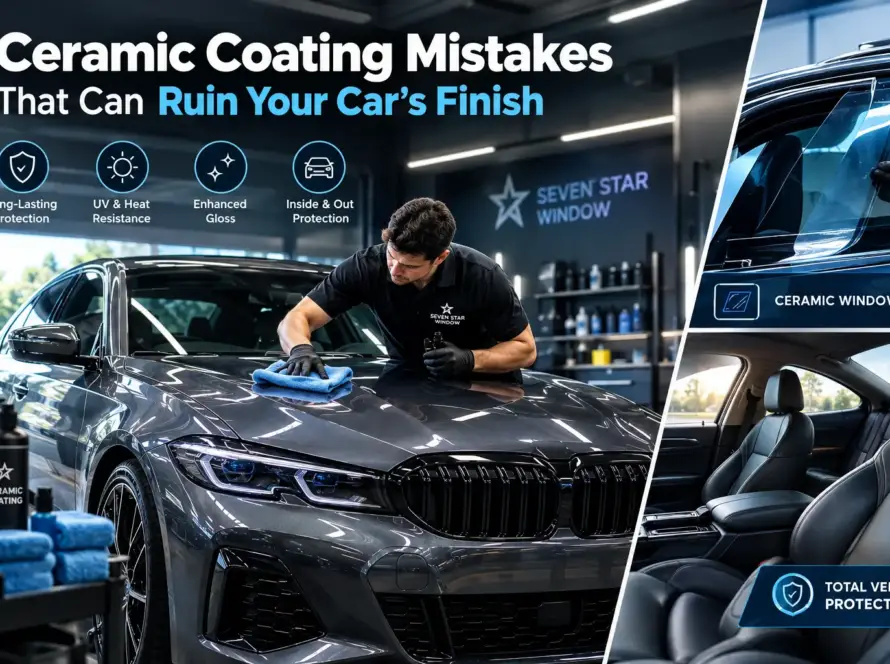
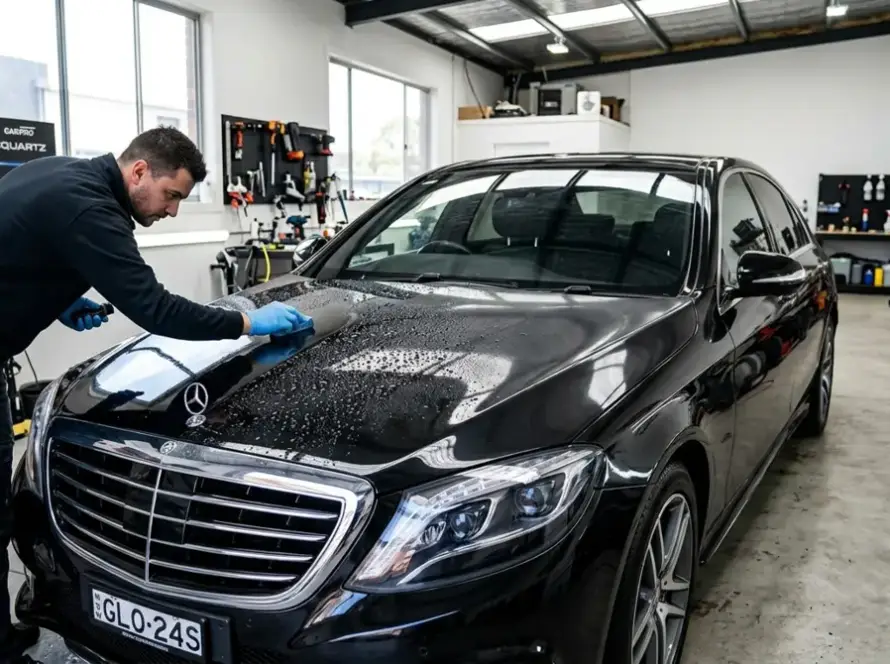
Ceramic coating maintenance means washing your car correctly, avoiding harsh chemicals, and performing light decontamination every few months to keep the hydrophobic layer working at its best. Done right, a well-maintained ceramic coating maintenance can protect your car’s paint for two to five years or even longer!
Ceramic coating is one of the best investments you can make for your car’s paintwork. It locks in that deep, glossy shine and keeps water, dirt, and grime sliding right off. But here’s the thing: it won’t last forever on its own. Knowing how to look after it properly is what separates a coating that lasts two years from one that lasts five or more!
What Is Ceramic Coating and Why Does Maintenance Matter?
Ceramic coating is a liquid polymer that chemically bonds to your car’s clear coat, forming a hard, semi-permanent protective layer. It repels water, resists UV damage, and makes your paintwork far easier to clean than bare paint alone.
But ceramic coatings aren’t maintenance-free. Over time, environmental contaminants think iron fallout, tree sap, bird droppings, and road tar can degrade the hydrophobic properties of the coating. Regular, correct maintenance is what keeps the protective layer strong and your car looking freshly detailed!
Key reasons ceramic coating maintenance matters:
- Preserves hydrophobic (water-repelling) performance
- Prevents premature coating failure
- Protects underlying paintwork from UV oxidation and chemical etching
- Maintains the deep gloss finish you paid for
- Extends the coating’s effective lifespan by years
How to Wash a Ceramic Coated Car: Step-by-Step
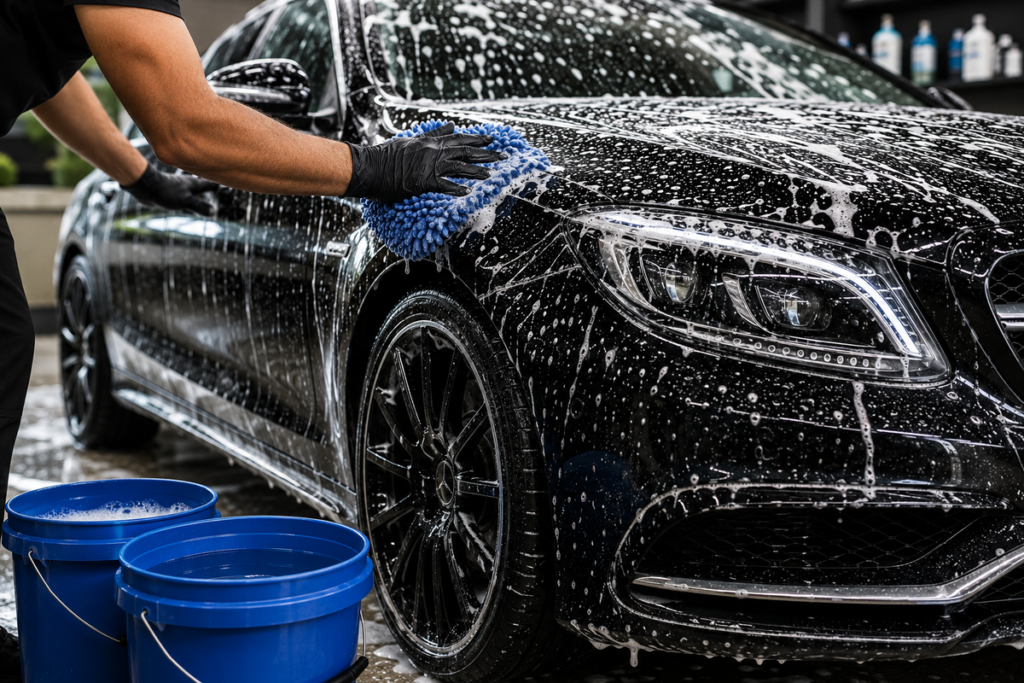
The number one rule of ceramic coating care? The two-bucket wash method. Washing your car the wrong way, with an automatic car wash or a rough sponge is the fastest way to introduce fine scratches and break down your coating!
Here’s how to wash your ceramic coated car safely:
What you’ll need:
- Two buckets (one for soapy water, one for rinsing)
- A pH-neutral car wash shampoo
- A soft microfibre wash mitt
- Microfibre drying towels
- A foam cannon (optional but recommended)
Step-by-step process:
- Rinse the car thoroughly: Use a hose or pressure washer to remove loose dirt and debris before touching the paint.
- Pre-wash with a snow foam: A foam cannon pre-wash lifts stubborn dirt safely without contact.
- Fill your two buckets: One with shampoo solution, one with clean rinse water.
- Wash panel by panel: Use straight, overlapping strokes with your microfibre mitt. Rinse the mitt in the clean bucket between each panel.
- Rinse the car completely: Work from the top down to prevent dirty water running over clean panels.
- Dry immediately: Use a clean microfibre drying towel or a leaf blower to prevent water spots.
Pro tip: Use a pH-neutral shampoo every time. Alkaline or acidic shampoos strip your coating’s hydrophobic layer faster than almost anything else!
Can Automatic Car Washes Damage Ceramic Coating?
Yes, some automatic car washes can damage ceramic coating over time. Brush-style car washes may create fine swirl marks and use harsh detergents that reduce the coating’s hydrophobic performance. Touchless car washes are generally safer, but regular hand washing with a pH-neutral shampoo remains the best way to maintain a ceramic-coated vehicle.
What Products Are Safe to Use on Ceramic Coatings?
Not all car care products are ceramic coating-safe. Using the wrong products is a common mistake that degrades your coating prematurely.
Safe to use:
- pH-neutral car wash shampoos (e.g., Gyeon Bathe, CarPro Lift)
- Ceramic coating-specific detail sprays and boosters (e.g., Gyeon Cure, CarPro Reload)
- Iron fallout removers used sparingly (e.g., Bilt Hamber Korrosol)
- Clay bars or clay mitts (used with plenty of lubrication)
Avoid:
- Automatic car washes with brushes or harsh chemicals
- Wax-based products that can obscure the coating’s hydrophobic layer
- Abrasive polishes or compounds (these will remove the coating)
- Household detergents, dish soap, or all-purpose cleaners with high pH levels
- Solvent-based products not formulated for coated vehicles
How Often Should You Maintain a Ceramic Coating?
Ceramic coating maintenance follows a simple schedule that doesn’t take much time. You’ll notice your coating needs attention when water no longer beads and sheets cleanly off the surface!
In Western Sydney suburbs like Blacktown, Rouse Hill, and Castle Hill, airborne dust, prolonged UV exposure, and hot summer temperatures can cause contaminants to build up more quickly. As a result, regular maintenance is even more important for preserving the coating’s hydrophobic performance and long-term durability.
Weekly or after every drive in wet/dirty conditions:
- Rinse off loose dirt and debris
Every two to four weeks:
- Full two-bucket hand wash using a pH-neutral shampoo
Every three to six months:
- Iron fallout decontamination with a pH-neutral iron remover
- Light clay bar treatment to remove bonded surface contaminants
- Apply a ceramic coating booster or maintenance spray to refresh hydrophobic properties
Once a year:
- Full inspection of the coating’s condition (consult your detailer)
- Professional decontamination detail if required
When Should You Use a Ceramic Coating Booster?
Use a ceramic coating booster every 3 to 6 months or whenever water beading noticeably weakens. A quality booster restores hydrophobic performance, enhances gloss, and helps extend the coating’s lifespan between professional maintenance services.
How to Boost and Refresh Your Ceramic Coating
Ceramic coating boosters sometimes called toppers or maintenance sprays are specially formulated products that refresh the Si02 (silicon dioxide) layer of your coating. Think of them as a “recharge” for your coating’s water-repelling power!
Popular options in Australia include:
- Gyeon Cure – A well-regarded SiO2 spray booster easy to apply after every wash
- CarPro Reload – Designed to bond to and strengthen existing ceramic coatings
- Gtechniq C2v3 – A long-lasting liquid crystal spray suitable for coated and uncoated vehicles
How to apply a ceramic coating booster:
- Wash and dry the car completely
- Spray the booster product onto a clean microfibre applicator or directly onto a panel
- Spread evenly using circular or straight strokes
- Buff off with a clean, dry microfibre towel
- Allow to cure (check product instructions typically 20–60 minutes out of direct sunlight)
Professional Maintenance vs DIY Maintenance
Professional maintenance delivers longer-lasting protection because trained detailers use specialised decontamination, inspection, and ceramic boosters. DIY maintenance is suitable for regular washing, but incorrect techniques or products can reduce the coating’s lifespan.
Common Ceramic Coating Maintenance Mistakes to Avoid

Even with the best intentions, these mistakes can cut your ceramic coating’s lifespan in half. Watch out for these!
- Using a drive-through automatic car wash: Brushes create swirl marks and harsh detergents strip the coating fast.
- Letting bird droppings or tree sap sit: These are chemically aggressive and can etch through the coating within hours in hot weather.
- Wiping a dry, dirty car: Always rinse before touching the paintwork.
- Skipping drying after a wash: Water spots from mineral-rich tap water can bond to the coating and become difficult to remove.
- Using wax or traditional sealants: These products can clog the coating’s pores and reduce its self-cleaning properties.
- Waiting too long between maintenance washes: The longer contamination sits, the harder it is to remove safely.
How Long Does a Ceramic Coating Last With Proper Maintenance?
With proper care, a professionally applied ceramic coating typically lasts between two and five years. Some premium coatings like Gtechniq Crystal Serum Ultra or Ceramic Pro 9H are rated to last five to nine years when correctly maintained and applied.
Consumer-grade DIY coatings generally last one to three years. The difference in longevity comes down to the coating formulation, application quality, and most importantly how consistently you follow a maintenance routine.
Factors that affect ceramic coating lifespan:
- Climate and UV exposure (hotter climates accelerate degradation)
- How frequently the car is driven on unsealed roads
- Whether the car is garaged or parked outdoors
- Wash frequency and technique
- Quality of the original coating application
How to Tell If Your Ceramic Coating Is Still Working
The easiest way to test your ceramic coating is the water bead test. Pour a small amount of water over a clean panel if the coating is healthy, water will bead up into tight, round droplets and sheet off the surface cleanly and quickly!
Signs your coating is still performing well:
- Water beads into tight droplets and rolls off easily
- Dirt and grime rinse away easily with little effort
- The paint surface still has a deep, glossy reflection
- The car feels slick and smooth to the touch after washing
Signs your coating may need attention or reapplication:
- Water no longer beads instead it “sheets” flat or clings to the surface
- Contaminants are harder to remove during washes
- The paint looks dull or lacks depth
- You can feel rough, bonded contaminants on the surface
Need Professional Ceramic Coating Maintenance?
Regular maintenance helps maximise the lifespan of your ceramic coating, but some vehicles benefit from professional decontamination and inspection over time. If your coating no longer beads water, has lost its gloss, or feels rough to the touch, Seven Star Window provides professional ceramic coating maintenance and inspections for drivers across Blacktown, Rouse Hill, Castle Hill, and surrounding areas.
Frequently Asked Questions
Q: Can I take my ceramic coated car through a touchless car wash?
A: Touchless (jet wash only) car washes are generally safer than brush-based automatic washes. However, the high-alkalinity detergents many commercial washes use can still degrade your coating over time. Hand washing with pH-neutral shampoo is always the safest choice for a ceramic coated car.
Q: Do I still need to wax a ceramic coated car?
A: No you don’t need to wax a ceramic coated car, and traditional waxes can actually reduce the coating’s performance. Instead, use a dedicated ceramic coating booster or SiO2 maintenance spray every three to six months to refresh hydrophobic properties.
Q: What happens if bird droppings land on my ceramic coating?
A: Remove bird droppings as quickly as possible ideally within a few hours. Bird droppings are highly acidic and can chemically etch through even a ceramic coating, especially in warm weather. Rinse the area with water first, then gently remove residue with a damp microfibre cloth.
Q: Can I polish a ceramic coated car?
A: Light machine polishing will remove the ceramic coating, as abrasive compounds cut into the protective layer. If your paint has developed light swirl marks or scratches, consult a professional detailer the coating may need to be removed, the paint corrected, and a fresh coating applied.
Q: How soon after applying ceramic coating can I wash my car?
A: Most professional ceramic coatings require a curing period of five to seven days before the first wash. During this time, avoid water contact, parking under trees, and driving in rain. Check your specific product’s instructions, as curing times vary between brands and formulations.
Ceramic Coating Maintenance: Quick-Reference Summary
| Task | Frequency |
| Rinse off loose dirt | After every drive in dirty conditions |
| Full pH-neutral wash | Every 2–4 weeks |
| Iron fallout decontamination | Every 3–6 months |
| Clay bar treatment | Every 3–6 months |
| Coating booster/topper application | Every 3–6 months |
| Professional inspection | Annually |