Paint Protection Film (PPF) in Sydney generally costs between $2,200 and $6,500+, depending on vehicle size, film brand, and coverage area. Front-end protection typically starts around $2,200, while full-body protection ranges from roughly $5,000 to over $6,500 for premium installations.
At Seven Star Window Tinting & Car Care, this range reflects real installations we run week to week across Sydney — not a generic industry estimate.
What Is Car Paint Protection Film (PPF)?

PPF is a clear, self-healing TPU (thermoplastic polyurethane) film applied to a car’s paintwork to protect it from stone chips, UV damage, and light scratches while preserving gloss.
Also known as a “clear bra,” the film sits directly over factory paint and absorbs impact instead of letting it reach the clear coat. Quality films use a hydrophobic top layer that resists staining and self-heals minor swirl marks with heat, which matters in Sydney’s mix of coastal humidity, harsh UV, and motorway grit that wears down paint faster than in milder climates. For a broader overview of protective options beyond PPF alone, see our complete paint protection guide.
Car Paint Protection Film Cost in Sydney
Costs range from around $2,200 for small-car front-end packages to $6,500+ for full-body coverage on luxury or electric vehicles.
| Vehicle Type | Front-End PPF | Full-Body PPF |
| Small Cars | $2,200 – $2,800 | $4,500 – $5,200 |
| Sedans | $2,400 – $3,000 | $4,800 – $5,600 |
| SUVs | $2,700 – $3,400 | $5,200 – $6,000 |
| Luxury Cars | $3,200 – $4,000 | $5,800 – $6,800+ |
| Electric Vehicles | $2,900 – $3,600 | $5,500 – $6,500+ |
Quotes for the same vehicle can vary by hundreds of dollars because “PPF” isn’t a single standardised product — film brand, panel count, and paint prep all shift the final number. Use the table above as a benchmark, then request an itemised quote so you’re comparing like-for-like coverage.
Why Does PPF Cost More in Sydney Than Other Cities?
Sydney pricing sits above many regional and interstate markets due to higher labor rates, premium workshop rent, and imported film costs.
- Sydney labor rates: Certified installers in metro Sydney charge more per hour than regional workshops, reflecting the skill level required for seamless, computer-cut fitment.
- Premium workshop rent: Dust-controlled, climate-stable studios needed for quality PPF installation carry higher overheads in Sydney’s commercial property market.
- Imported TPU films: Premium brands like XPEL and STEK are imported, so exchange rates and freight costs feed directly into retail pricing.
- Computer-cut templates: Precision software-cut patterns reduce waste and improve fitment but require licensing and equipment that smaller regional operators often skip.
- Warranty costs: Sydney installers backing work with manufacturer-registered warranties factor in the cost of that coverage.
- Luxury vehicle complexity: Sydney’s higher concentration of luxury and European vehicles means more curved panels, complex sensors, and camera cut-outs — all adding labor time.
This is why the cheapest quote isn’t always the best value — it often means a cheaper film, a shortcut on preparation, or no genuine warranty behind the work.
Average PPF Prices in Sydney
Individual panel pricing typically ranges from $150 for headlights to $6,800+ for full-body coverage, depending on film brand and panel complexity.
| Package | Typical Price Range |
| Front Bumper | $500 – $750 |
| Bonnet | $600 – $900 |
| Mirrors | $200 – $300 |
| Headlights | $150 – $250 |
| Full Front (bumper, bonnet, mirrors, headlights, fenders) | $2,200 – $3,200 |
| Track Pack (front + rocker panels) | $2,800 – $3,600 |
| Doors (cups + edges) | $250 – $400 |
| Rocker Panels | $400 – $600 |
| Full Body | $4,500 – $6,800+ |
A “Full Front” package covers the highest-impact zones — bonnet, bumper, mirrors, and headlights — at a lower cost than piecing panels together individually, which is why it’s the most commonly booked option for daily-driven cars.
PPF Cost vs Repainting: Which Is Actually Cheaper?
PPF is almost always cheaper than repainting damaged panels, especially once you factor in repeat stone-chip damage over several years.
| Repair | Typical Cost |
| Bonnet repaint | $900 – $1,500 |
| Front bumper repaint | $700 – $1,200 |
| Door repaint | $800 – $1,400 |
| Full front PPF (preventing all of the above) | ~$2,200+ |
A single chipped bonnet can cost close to what a full front PPF package costs upfront — and unlike a repaint, PPF keeps preventing damage for 5–10 years rather than solving one incident. Viewed this way, PPF functions less like a cosmetic add-on and more like paint insurance.
What Affects Car Paint Protection Film Pricing?

PPF pricing is driven mainly by vehicle size, coverage area, film brand, paint condition, and installer experience.
Vehicle Size
Larger panels on SUVs and Utes require more film and labor, pushing prices higher than for small hatchbacks.
Coverage Area
Full-body coverage costs more than front-end protection simply because more film and installation time are required.
Film Brand
Premium brands such as XPEL, STEK, Suntec, and Llama are priced differently based on clarity, self-healing performance, and warranty backing.
Paint Condition
Swirl marks or oxidation on existing paint may need correction before film application, adding to the final cost.
Paint Correction
Machine polishing before installation ensures the film bonds to a flawless surface, adding roughly $150–$500+ depending on paint condition.
Installer Experience
Experienced installers using computer-cut patterns reduce material waste and seam visibility, which is reflected in labor pricing.
Warranty
Longer manufacturer warranties (5–10 years) typically come with a higher upfront cost but better long-term value.
Workshop Environment
A dust-controlled, climate-stable workshop reduces contamination trapped under the film, directly affecting both finish quality and price.
Comparing PPF Film Brands
Film brand affects clarity, self-healing speed, warranty length, and how the finish reads on different paint colors.
| Brand | Typical Warranty | Self-Healing | Finish | Best For |
| XPEL Ultimate Plus | 10 years | Fast, heat-activated | Gloss or matte options | Owners wanting the broadest finish choice |
| STEK DYNO shield | 10 years | Fast, high clarity | High-gloss, very clear | Dark-colored and luxury vehicles |
| SunTek Ultra | 7–10 years | Moderate | Gloss | Budget-conscious full coverage |
| LLumar Paint Protection | 7–10 years | Moderate | Gloss | Daily drivers and family vehicles |
At Seven Star Window Tinting & Car Care, film selection is matched to the vehicle and paint color rather than defaulting to one brand for every job — dark paint, for example, shows film clarity differences more than lighter colors do.
Which PPF Package Should You Choose?
The right package depends on how the vehicle is used — daily commuting favours front-end protection, while performance or luxury cars usually justify full-body coverage.
- Daily commuter: Full Front or Track Pack
- Luxury vehicle: Full Body for maximum resale protection
- Family SUV: Full Front plus rocker panels
- Performance car: Full Body, including bonnet and mirrors
- Tesla: Full Front is common; full body suits owners wanting long-term paint preservation
- 4WD: Front-end and rocker panel protection against gravel and debris
- Weekend car: Full Body for collectors prioritising long-term condition
Matching the package to actual driving conditions — rather than budget alone — avoids the two most common mistakes: overpaying for unnecessary coverage, or leaving vulnerable panels exposed.
PPF by Ownership Situation
Different owners have different priorities, and the right PPF package usually follows the way the car is actually driven rather than its price tag.
- New car buyers: Front-end or full body applied before first registration locks in factory paint condition from day one.
- Lease vehicles: Front-end protection helps meet lease-return condition standards and avoids reconditioning charges.
- Family SUVs: Full front plus rocker panels covers school-run gravel driveways and shopping centre car parks.
- Uber and rideshare drivers: High daily mileage makes full front or track pack protection pay for itself quickly through reduced chip and scuff repairs.
- Tradies and ute owners: Rocker panels and rear guards see heavy debris impact from work sites, making track pack coverage a common choice.
- Luxury vehicle owners: Full body protection is standard practice for preserving resale value on premium marques.
- Tesla owners: Full front is the most requested package, with full body chosen by owners planning long-term ownership.
Is Full Body PPF Worth the Cost?
Full body PPF is worth it for owners keeping a vehicle long-term, especially in high-mileage or coastal conditions, though it carries a higher upfront cost.
Pros: complete paint protection, stronger resale value, uniform gloss across all panels.
Cons: higher initial investment, longer installation time, and eventual film replacement cost.
Cost analysis: full body typically costs roughly double the front-end package but protects panels most owners overlook, such as roofs and doors. Best fit: new vehicles, luxury cars, EVs, or any car intended to be kept for 5+ years.
Owners who protect only the front often end up with chips on doors or the roof within a year or two full body coverage removes that gap entirely. Owners wanting a color change alongside protection sometimes pair clear PPF with a colored layer — see our car wrapping guide for how the two can work together.
Front End vs Full Body Protection
Front-end protection covers the highest-impact areas at a lower cost, while full-body protection offers complete coverage at a higher price point.
| Factor | Front End | Full Body |
| Price | $2,200 – $4,000 | $4,500 – $6,800+ |
| Stone Chip Protection | High on front panels only | Complete coverage |
| Maintenance | Lower, fewer panels | Slightly higher, more panels |
| Appearance | Visible film edge possible | Seamless, uniform finish |
| Long-Term Value | Good for budget-conscious owners | Best for resale and longevity |
Front-end protection is the practical entry point for most drivers; full body is the long-term investment for those planning to keep the car for years.
Car Paint Protection Film vs Ceramic Coating
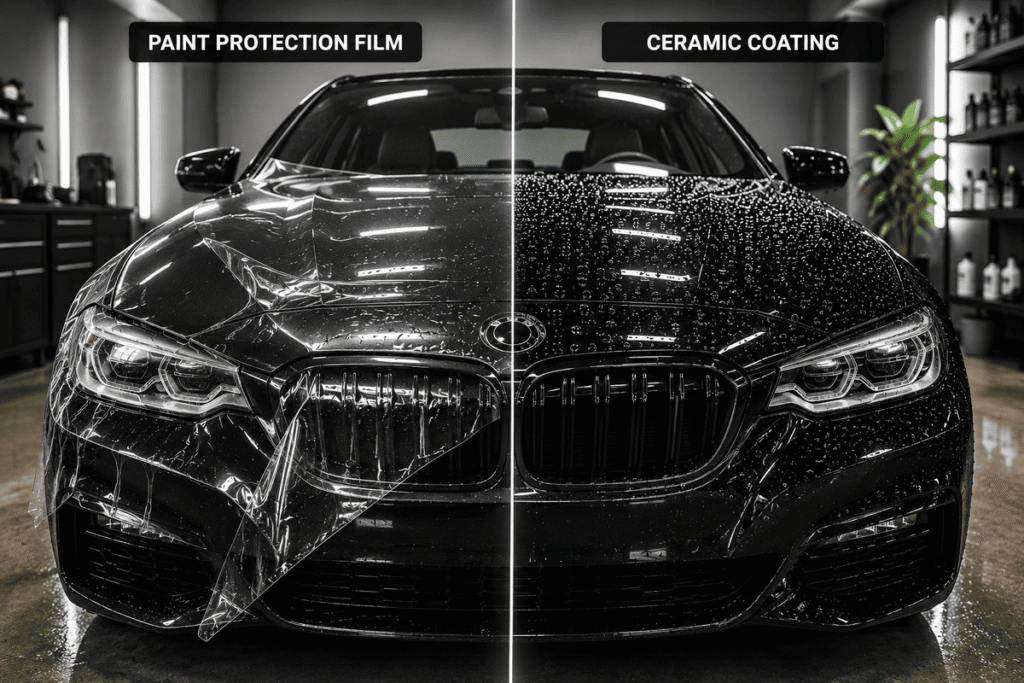
PPF offers physical impact protection, while ceramic coating adds gloss and chemical resistance — the two solve different problems rather than compete directly. For a breakdown of how ceramic stacks up against the newer graphene alternative, see our ceramic vs graphene coating comparison.
| Factor | PPF | Ceramic Coating |
| Protection | Physical (chips, scratches) | Chemical (UV, contaminants) |
| Gloss | Good, film-dependent | Excellent, deep gloss |
| Scratch Resistance | High | Moderate |
| Stone Chips | Strong protection | No protection |
| Chemical Resistance | Moderate | Excellent |
| Maintenance | Low | Low-moderate |
| Cost | Higher | Lower |
| Lifespan | 5–10 years | 2–5 years |
| Ideal Customer | High-mileage, motorway drivers | Owners prioritising gloss and ease of cleaning |
Because PPF and ceramic coating protect against different threats — impact versus chemical and UV damage — many Sydney owners run both together rather than treating them as alternatives.
Should You Combine PPF and Ceramic Coating?
Yes, applying PPF to impact-prone panels and ceramic coating over the remaining paint delivers the most complete protection available.
In practice, PPF is applied to the front end, mirrors, and rocker panels, while ceramic coating goes over the film and the rest of the vehicle for uniform gloss and easier maintenance. This layered approach adds stronger stone-chip resistance, extra hydrophobic protection, easier washing, and a consistently glossy finish across the whole car — closing the gap that either product leaves on its own. Ceramic coating is typically applied a minimum of 7 days after PPF installation, once the film has fully cured. For a full pricing breakdown, see our ceramic coating cost guide.
How Long Does Paint Protection Film Last in Sydney?
Quality PPF typically lasts 5 to 10 years in Sydney, depending on film brand, sun exposure, and driving conditions.
Sydney’s strong UV levels and, in Western Sydney, sustained summer heat can shorten film lifespan without proper maintenance and quality film selection. Frequent motorway driving increases the rate of micro-impacts the film has to absorb, while coastal areas add a corrosive salt-air element that makes film protection especially valuable near the water. Regular hand washing and avoiding abrasive cleaning products is the single biggest factor in getting a film to its full lifespan — PPF isn’t maintenance-free, but the maintenance it needs is minimal.
PPF Maintenance and Ongoing Costs
Keeping PPF performing well mainly comes down to washing technique and periodic inspection, not expensive upkeep.
- Hand washing: pH-neutral shampoo and a soft mitt preserve the film’s top coat far longer than automated brush washes.
- Ceramic coating over PPF: Adds gloss and makes contaminants easier to rinse off, extending the interval between details.
- Inspection intervals: A yearly check for lifting edges or embedded debris catches issues before they spread.
- Film replacement: High-wear panels like the front bumper may need replacing after 5–8 years even if the rest of the film is intact.
- Warranty maintenance: Some manufacturer warranties require proof of proper care (no abrasive chemicals, no automated brushes) to remain valid — keep receipts from your installer.
PPF Costs for Popular Cars
Costs vary by model, with smaller cars like the Corolla starting around $2,200 and larger utes or luxury SUVs reaching $6,000+.
- Toyota Corolla: $2,200 – $4,800 (front to full body)
- Toyota Hilux: $2,700 – $5,600
- Ford Ranger: $2,800 – $5,800
- Tesla Model Y: $2,900 – $6,000
- Tesla Model 3: $2,700 – $5,600
- BMW: $3,200 – $6,500+
- Mercedes: $3,300 – $6,800+
- Kia Sportage: $2,600 – $5,400
- Hyundai Tucson: $2,600 – $5,400
Larger or more complex body panels generally push pricing toward the higher end of each range — treat these as a starting guide, then confirm with a make-and-model-specific quote.
How Much Does PPF Cost in Blacktown?
PPF in Blacktown typically falls within standard Sydney pricing, ranging from $2,200 for front-end packages to $6,000+ for full-body coverage.
Constant M4 and Great Western Highway motorway driving, combined with heavy traffic along Richmond Road and Prospect Highway, exposes Blacktown drivers to more stone chips than the Sydney average. Ongoing construction debris across the growing region, daily commuting distances, and stronger UV exposure typical of Western Sydney summers all add up to faster paint wear than in inner-city driving.
At Seven Star Window Tinting & Car Care, our most requested package in Blacktown is the front-end or track-pack option — it covers the panels most exposed to highway conditions without the cost of full-body coverage, which suits the daily-commuter profile we see most often from this area.
Paint Protection Services in Rouse Hill
PPF pricing in Rouse Hill mirrors broader Sydney rates, typically $2,200–$6,500+ depending on coverage, though many owners opt in soon after taking delivery of a new car.
Rapid growth across Rouse Hill, Tallawong, Kellyville, and Box Hill means longer commutes along Windsor Road and constant exposure to dust from ongoing new housing developments and road construction in North West Sydney — conditions that accelerate paint wear on new vehicles faster than owners expect. Many new-car owners in Rouse Hill install PPF soon after delivery specifically to reduce early stone-chip damage.
Our most requested package in Rouse Hill is full front protection installed within the first few weeks of delivery, before the car has done enough kilometres to pick up its first chips.
Is Paint Protection Film Worth It?
PPF is worth it for most owners, particularly those keeping a car long-term, driving frequently on motorways, or wanting to preserve resale value.
- New car: Highly recommended to lock in factory paint condition
- Used car: Worth it if paint is in good condition and correction is done first
- Lease: Front-end protection helps meet lease-return condition standards
- Luxury: Strongly recommended for resale value protection
- Daily driver: Front-end or track pack offers strong value
- Collector: Full body protection preserves long-term condition and value
Viewed as a preventative cost rather than a cosmetic upgrade, PPF often pays for itself: repainting a single chipped bonnet frequently costs more than the film that would have prevented it.
Hidden Costs Buyers Should Know
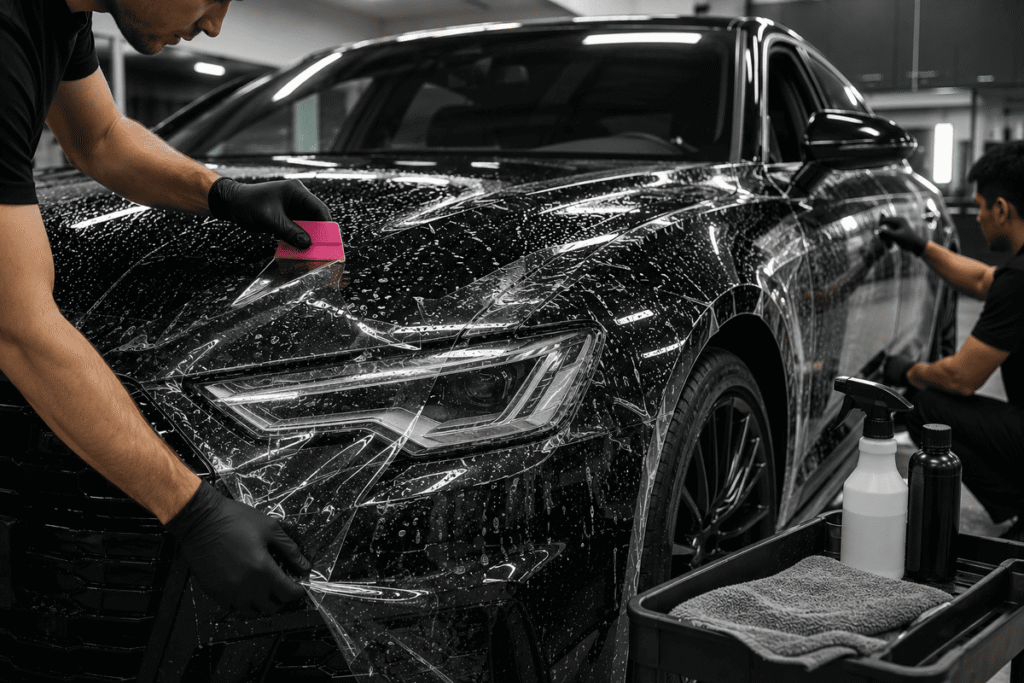
Beyond the base installation price, buyers should budget for paint correction, eventual film removal, and potential panel-specific replacement costs.
- Paint correction: Required if existing paint has swirl marks or oxidation before film application
- Film removal: Needed every 5–10 years, plus reinstallation if desired
- Panel replacement: Damaged film sections may need individual panel replacement rather than full removal
- Warranty exclusions: Some warranties exclude damage from improper washing or aftermarket chemicals
- Improper installation: Poor installation can trap dirt or cause premature lifting, leading to costly rework
A quote that looks cheap upfront can carry these costs later — ask installers directly about warranty exclusions and what happens if a panel is damaged before booking.
How to Choose the Right Installer
The right installer combines a clean workshop, computer-cut film patterns, proper certification, and a solid warranty backed by genuine reviews.
- Clean, dust-controlled workshop environment
- Computer-cut patterns for precise panel fitment
- Certified installer with brand-specific training
- Clear, documented warranty terms
- Strong Google reviews and verifiable testimonials
- Clear aftercare instructions provided post-installation
- Use of a recognised film brand (XPEL, STEK, SunTek, LLumar)
- A visible portfolio of completed installations
Installer skill is the single biggest factor in long-term PPF value — even the best film underperforms if it’s cut and fitted poorly, so this checklist matters more than brand alone.
Why Sydney Owners Choose Seven Star Window Tinting & Car Care
With years of hands-on installation experience, a dust-controlled workshop, and hundreds of vehicles protected across Sydney, Blacktown, and Rouse Hill, Seven Star Window Tinting & Car Care backs every installation with manufacturer-registered warranties, certified installers, and a strong local Google review rating. Before-and-after results and workshop photos are available on request for anyone comparing installers. Many customers also combine PPF with our window tinting services in the same visit.
Frequently Asked Questions
Can PPF be removed?
Yes, PPF can be professionally removed without damaging factory paint if it was installed and removed correctly.
Is PPF yellow?
Quality PPF from reputable brands resists yellowing for years, though cheaper films may discolour sooner under UV exposure.
Can ceramic coating go over PPF? Yes, ceramic coating can be applied over PPF to add extra gloss and easier maintenance, usually once the film has cured for about 7 days.
How long does installation take?
Front-end installation usually takes 1 day, while full-body installation can take 2–4 days depending on vehicle complexity.
Does PPF stop scratches? PPF resists light scratches and self-heals minor swirl marks with heat, though it isn’t fully scratch-proof.
Can PPF be repaired? Small sections of damaged film can usually be replaced individually rather than requiring full panel or vehicle re-wrapping.