Your window tint is usually illegal because the Visible Light Transmission (VLT) is lower than the legal limit. This commonly happens when aftermarket tint is installed over factory-tinted glass, the wrong VLT film is chosen, or the final glass is never tested with a professional VLT meter. The only way to confirm compliance is to measure the completed window, not rely on the film’s advertised rating.
What Makes Window Tint Illegal?
Window tint is illegal when it reduces the amount of visible light passing through your vehicle’s glass below the minimum legal VLT. NSW regulations apply to the combined VLT of the factory glass and the tint film, not just the film itself.
What Is VLT (Visible Light Transmission)?
Visible Light Transmission (VLT) is the percentage of visible light that passes through your vehicle window.
- 70% VLT = lighter tint
- 35% VLT = darker tint
- 20% VLT = very dark tint
The lower the percentage, the darker the window appears.
Why Governments Regulate Window Tint
Window tint laws help improve:
- Driver visibility
- Road safety
- Emergency response
- Police identification during roadside inspections
Common Reasons Your Window Tint Is Illegal
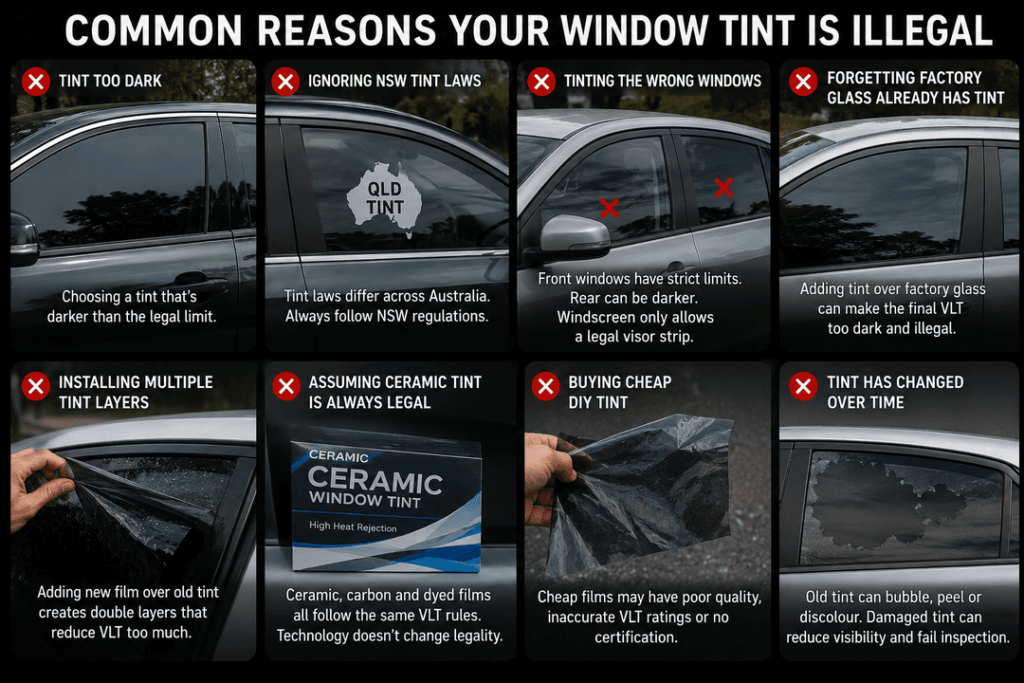
- Choosing a Tint That’s Too Dark
Many drivers choose darker tint for privacy without checking NSW legal limits. Even premium ceramic film becomes illegal if the final VLT is below the legal requirement.
- Ignoring NSW Tint Laws
Tint regulations differ across Australia. Always choose a tint that complies with NSW standards rather than relying on advice from another state.
- Tinting the Wrong Windows
Each window has different rules.
Front side windows have the strictest limits.
Rear windows can be darker on many passenger vehicles.
The windscreen can only have a legal visor strip above the wiper sweep.
- Forgetting Factory Glass Already Has Tint
Most modern vehicles already include factory-tinted glass.
- Example
A driver installs 20% tint over factory glass believing the film is legal. After installation, the combined VLT falls below the legal limit, resulting in a defect notice.
- Installing Multiple Tint Layers
Applying new film over old tint creates double layers that significantly reduce VLT. Professional installers always remove existing film before applying a replacement.
- Assuming Ceramic Tint Is Always Legal
Ceramic tint is not automatically legal.
Ceramic, carbon and dyed films all follow the same VLT rules. The technology affects heat rejection, not legality.
- Buying Cheap DIY Tint
Cheap imported films often have inaccurate VLT ratings, poor adhesive quality or no certification. This increases the risk of failing a roadside inspection.
- Tint Has Changed Over Time
Old tints can bubble, peel or discolor. Damaged film may reduce visibility and should be replaced during a roadworthy inspection.
How Police Test Window Tint
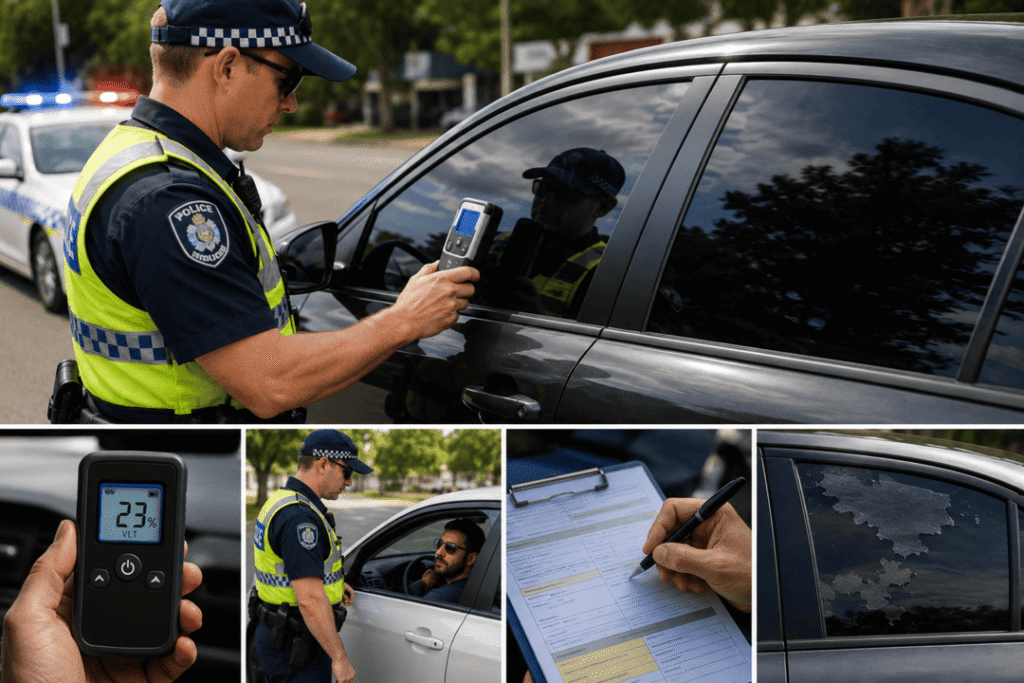
Police use a calibrated VLT meter during roadside inspections to measure your window’s Visible Light Transmission (VLT). Windows below the legal limit may fail the inspection.
What Is a VLT Meter?
A VLT meter measures the amount of light passing through the completed window, including both the factory glass and aftermarket film.
How Roadside Inspections Work
Police or authorised inspectors can measure your windows during roadside inspections if they believe the tint is too dark.
What Happens If Your Tint Fails?
Depending on the circumstances, you may receive:
- A defect notice
- A fine
- An order to remove the illegal tint
- A vehicle inspection before registration renewal
NSW Window Tint Laws Explained
Minimum Legal VLT Requirements
| Window | NSW Requirement |
| Front Side Windows | Minimum 35% VLT |
| Rear Side Windows | Minimum 20% VLT (most passenger vehicles with both side mirrors) |
| Rear Windscreen | Minimum 20% VLT |
| Front Windscreen | Tint strip only above the wiper sweep |
Always check the latest NSW regulations before installing window tint.
Factory Privacy Glass
Factory privacy glass already reduces light transmission. Professional installers measure the existing glass first, then recommend the correct film to keep the final VLT compliant.
How to Check If Your Window Tint Is Legal
- Look for Film Certification
Choose certified window films from reputable manufacturers with verified VLT specifications.
- Use a Professional VLT Meter
A professional VLT meter provides the most accurate reading and removes guesswork.
- Visit a Professional Tint Shop
Experienced installers understand NSW regulations and recommend compliant ceramic, carbon or dyed films.
- Don’t Judge by Appearance
Two cars may look equally dark but have completely different VLT readings. Appearance alone cannot determine legality.
Legal vs Illegal Window Tint
| Feature | Legal Tint | Illegal Tint |
| VLT | Meets NSW limits | Below legal limit |
| Visibility | Good day and night | Reduced visibility |
| Police Inspection | Likely to pass | May fail |
| Roadworthy | Passes | May fail |
| Insurance | Lower risk | Possible claim complications |
Risks of Driving With Illegal Tint
Driving with illegal tint can result in fines, defect notices, reduced night visibility and additional inspection costs. It may also create insurance issues if the vehicle is found to be non-compliant after an accident.
How to Fix Illegal Window Tint
If your tint is illegal:
- Remove the old film.
- Install the correct legal VLT.
- Test the finished installation.
- Keep your VLT certificate and installer invoice.
Replacing illegal tint is usually cheaper than repeated fines and inspections.
How to Choose the Right VLT
Choose a VLT based on how you use your vehicle.
- Daily commuters benefit from balanced heat reduction and visibility.
- Family vehicles should prioritise safety and legal compliance.
- Sydney drivers often choose ceramic tint because it blocks heat without requiring extremely dark film.
- Performance cars can achieve privacy while remaining road legal with premium films.
Expert Tips to Stay Road Legal
Professional installers recommend:
- Measure the factory glass before installation.
- Test the completed window after installation.
- Ask for a VLT compliance certificate.
- Keep your installation invoice.
- Choose certified premium window films.
Professional Tip: The advertised VLT of the film does not determine legality. The combined VLT of the glass and film is the value that inspectors measure during a roadside inspection.
Should You Replace Illegal Tint?
Yes. Replacing illegal tint improves visibility, avoids future penalties and ensures your vehicle complies with NSW regulations. Modern ceramic window tint also offers excellent UV protection and heat rejection without exceeding legal tint limits.
Professional vs DIY Installation
DIY tint kits often lead to bubbles, dust contamination, peeling edges and incorrect VLT selection. Professional installers use precision tools, certified films and calibrated VLT meters to ensure both appearance and legal compliance.
How Much Does Window Tint Replacement Cost?
Replacing illegal window tint typically costs $200–$600+, depending on your vehicle, the film selected and labour required. Premium ceramic films cost more but offer superior heat rejection, UV protection and longer service life.
Final Thoughts
Most illegal window tint problems are caused by selecting the wrong VLT, overlooking factory privacy glass or installing uncertified film. The safest solution is to have your windows professionally measured before and after installation. A legal window tint provides privacy, blocks harmful UV rays, reduces interior heat and keeps your vehicle compliant with NSW road rules.
If you’re unsure whether your current tint is legal, book a professional VLT inspection before your next vehicle inspection or registration check.
FAQ’s
Why is my window tint illegal?
Because the final VLT of your factory glass and tint film is below the NSW legal limit.
What is legal VLT in NSW?
Front side windows require at least 35% VLT, while rear glazing on most passenger vehicles with side mirrors may be as low as 20% VLT.
Can police measure window tint?
Yes. Police can use a calibrated VLT meter during roadside inspections.
Can factory privacy glass make aftermarket tint illegal?
Yes. Factory glass already reduces visible light, so adding film can lower the combined VLT below the legal limit.
Is ceramic window tint legal?
Yes, provided the completed window meets the required legal VLT.
Can I remove the illegal tint myself?
Yes, but professional removal helps avoid damage to the glass or adhesive residue.