Choosing the right window tint is about more than just making your car look good. The right tint can reduce heat, block harmful UV rays, improve privacy, and make daily driving more comfortable. However, with several types of window tint available, many vehicle owners aren’t sure which option offers the best performance and value.
The best window tint for your car depends on your budget, driving habits, climate, and expectations. While dyed films provide an affordable solution, carbon and ceramic window tints offer significantly better heat rejection, UV protection, and durability. In this guide, we’ll compare the main types of window tint and help you determine which one is best for your vehicle.
Why Choosing the Right Window Tint Matters
Not all window films are created equal. The type of tint you choose directly affects comfort, visibility, protection, and long-term performance.
- Heat Reduction
A quality window tint helps reduce the amount of solar heat entering your vehicle, making the cabin cooler and more comfortable during warm weather.
- UV Protection
Ultraviolet rays can fade dashboards, leather seats, and interior trim over time. High-performance window films help block harmful UV exposure and protect both your vehicle and its occupants.
- Privacy and Security
Tinted windows make it more difficult for outsiders to see inside your vehicle, adding an extra level of privacy and security.
- Reduced Glare
Window tint helps minimize glare from sunlight and headlights, improving visibility and reducing eye strain while driving.
- Long-Term Durability
Premium window films resist fading, bubbling, peeling, and discoloration, helping maintain their appearance and performance for years.
Understanding Window Tint Performance Ratings
When comparing window tint products, it’s important to understand the performance metrics used by manufacturers.
- Infrared Rejection (IR)
Infrared rejection measures how effectively a film blocks heat-producing infrared radiation. Higher IR rejection generally means a cooler vehicle interior.
- Total Solar Energy Rejected (TSER)
TSER measures the total amount of solar energy blocked by the film, including visible light, infrared radiation, and ultraviolet rays.
- UV Rejection
UV rejection indicates how much ultraviolet radiation the film blocks. Many premium films can block up to 99% of harmful UV rays.
- Glare Reduction
Glare reduction refers to a film’s ability to reduce excessive brightness from sunlight and headlights, improving driving comfort.
Main Types of Window Tint Film
Understanding the differences between tint technologies can help you make a more informed decision.
Dyed Window Tint
Dyed film uses a layer of dye to absorb sunlight and darken the glass.
Advantages
- Affordable option
- Improved privacy
- Reduced glare
- Enhanced appearance
Limitations
- Lower heat rejection
- Can fade over time
- Shorter lifespan than premium films
Metalized Window Tint
Metalized films contain microscopic metallic particles that reflect heat and sunlight.
Advantages
- Better heat reduction than dyed films
- Durable construction
- Scratch-resistant properties
Limitations
- Can interfere with GPS, mobile phone, radio, and Bluetooth signals
- More reflective appearance
Carbon Window Tint
Carbon films use carbon particles to block infrared heat without metal components.
Advantages
- Excellent heat rejection
- No signal interference
- Matte finish appearance
- Greater durability
Limitations
- Higher cost than dyed films
- Slightly less heat rejection than ceramic tint
Ceramic Window Tint
Ceramic tint is considered the most advanced window film technology available today. It uses nano-ceramic particles to block heat and UV rays while maintaining excellent visibility.
Advantages
- Outstanding heat rejection
- Blocks up to 99% of UV rays
- No electronic signal interference
- Superior optical clarity
- Long lifespan
- Enhanced driving comfort
Limitations
- Higher upfront investment
Ceramic vs Carbon Window Tint
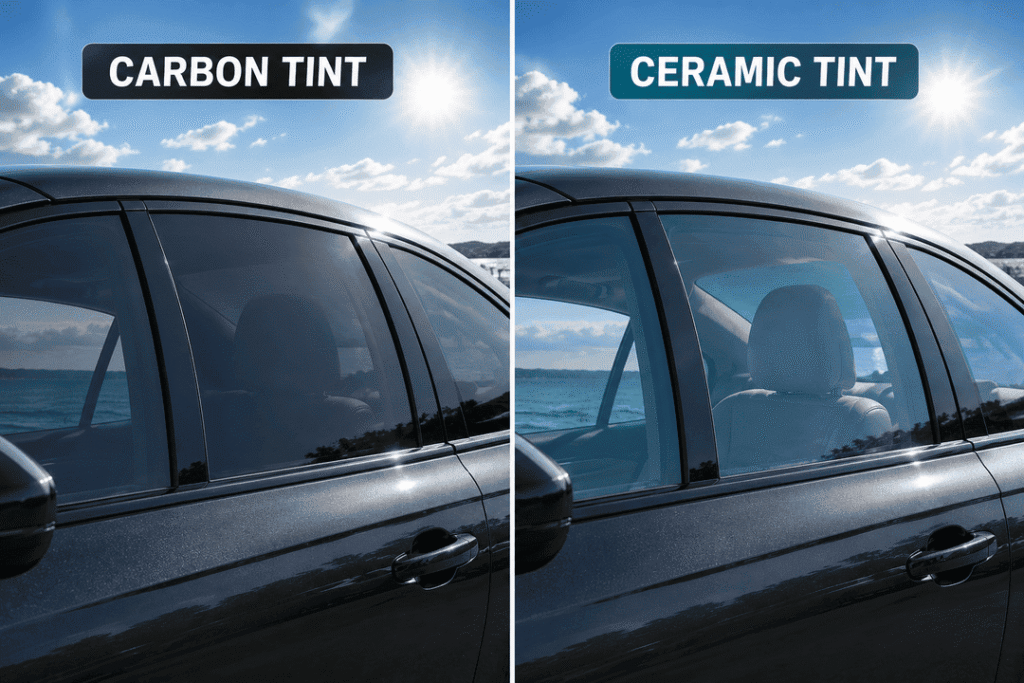
Ceramic and carbon films are among the most popular choices for modern vehicles.
| Feature | Carbon Tint | Ceramic Tint |
| Heat Rejection | Excellent | Outstanding |
| UV Protection | Excellent | Outstanding |
| Signal Interference | None | None |
| Optical Clarity | Very Good | Excellent |
| Durability | High | Very High |
| Fade Resistance | High | Very High |
| Cost | Mid-Range | Premium |
Both options provide excellent performance, but ceramic tint generally delivers the highest level of heat rejection and long-term durability.
Window Tint Lifespan Comparison
The lifespan of window tint depends on the film quality, installation standards, and ongoing maintenance. While premium films typically offer longer-lasting performance, it’s also important to understand the investment involved—see our guide on How Much Does Car Window Tinting Cost in Sydney to compare tint options, pricing, and long-term value.
| Tint Type | Typical Lifespan |
| Dyed Tint | 3–5 Years |
| Metalized Tint | 5–8 Years |
| Carbon Tint | 8–10 Years |
| Ceramic Tint | 10+ Years |
Proper installation and regular maintenance can help maximize the lifespan of any window film.
Which Window Tint Is Best for Heat Reduction?
For drivers focused on keeping their vehicle cooler, ceramic window tint is generally the best option.
Ceramic films are specifically designed to block a significant amount of infrared heat while maintaining visibility and comfort. Carbon tint is often considered the second-best choice for heat reduction and provides excellent value for money.
Which Window Tint Is Best for UV Protection?
Premium ceramic films typically offer the highest level of UV protection.
Benefits include:
- Reduced interior fading
- Protection for leather and upholstery
- Less dashboard deterioration
- Improved protection from harmful UV exposure
For vehicles regularly exposed to sunlight, UV protection should be a major consideration when selecting a tint.
Best Window Tint for Sydney Conditions
Sydney’s climate presents unique challenges for vehicle owners. Strong UV exposure, warm summers, and extended periods of sunshine can increase cabin temperatures and accelerate interior wear.
For these conditions:
- Best for Maximum Heat Rejection
Ceramic window tint is often the preferred option due to its superior ability to block infrared heat.
- Best Value for Daily Drivers
Carbon tint provides excellent performance and is a popular choice for commuters throughout Sydney.
- Best for Vehicles Parked Outdoors
Ceramic films offer the highest level of protection against UV exposure and interior fading.
- Best for Long-Term Vehicle Ownership
Premium ceramic films often deliver the best long-term value because of their durability and performance.
Our Recommended Window Tint by Vehicle Type
Different vehicles have different needs.
| Vehicle Type | Recommended Tint |
| Daily Commuter | Carbon Tint |
| Family SUV | Ceramic Tint |
| Luxury Vehicle | Ceramic Tint |
| Work Vehicle | Carbon Tint |
| Budget Vehicle | Dyed Tint |
| Long-Distance Driver | Ceramic Tint |
While every vehicle owner has different priorities, carbon and ceramic films are generally the most popular options for drivers seeking long-term performance.
Is Ceramic Window Tint Worth the Extra Cost?
Many drivers wonder whether ceramic tint justifies its higher price.
For those who prioritize comfort, heat reduction, UV protection, and long-term durability, ceramic tint is often worth the investment.
Benefits include:
- Cooler cabin temperatures
- Reduced reliance on air conditioning
- Better protection against sun damage
- No signal interference
- Longer lifespan than traditional films
Drivers who plan to keep their vehicles for several years often find ceramic tint delivers greater value over time.
Common Mistakes When Choosing Window Tint
Many car owners focus only on darkness when selecting window film. This can lead to disappointment later.
Common mistakes include:
- Choosing tint based only on appearance
- Ignoring heat rejection ratings
- Buying the cheapest available film
- Overlooking durability
- Not considering UV protection
- Comparing darkness rather than overall performance
- Failing to check local tint regulations
Understanding film performance is often more important than simply choosing the darkest tint available.
Quick Window Tint Recommendation Guide
Choose Dyed Tint If:
- Budget is your main priority
- You want basic privacy and appearance improvements
Choose Carbon Tint If:
- You want strong heat rejection
- You need excellent value for money
- You drive daily
Choose Ceramic Tint If:
- Maximum comfort is important
- You want the highest heat reduction
- Your vehicle is frequently parked outdoors
- You plan to keep your car long term
How We Help Drivers Choose the Right Window Tint
Choosing the right window film isn’t always about selecting the most expensive option. Factors such as vehicle type, daily driving conditions, parking habits, budget, and desired performance all play a role.
At Seven Star Window Tinting & Car Care, we help drivers compare different film technologies and select a solution that matches their needs, ensuring the right balance of heat rejection, UV protection, privacy, and long-term value.
Final Thoughts
The best window tint depends on your priorities, budget, and driving conditions. Dyed films offer an affordable entry-level solution, carbon tint provides an excellent balance of performance and value, and ceramic tint delivers the highest level of heat rejection, UV protection, clarity, and durability.
For most drivers seeking long-term comfort and protection, ceramic tint remains the premium choice. For those wanting strong performance at a more moderate price point, carbon tint is often the ideal solution.
FAQ’s
What is the best window tint for Australian summers?
Ceramic window tint is generally considered the best option for reducing heat and improving comfort during hot Australian summers.
Is ceramic tint better than carbon tint?
Ceramic tint typically provides greater heat rejection, improved clarity, and longer-lasting performance, although carbon tint offers excellent value.
Which window tint blocks the most heat?
Ceramic window tint is widely regarded as the most effective option for heat rejection.
Does ceramic tint affect mobile phone signals?
No. Ceramic films do not contain metal particles and generally do not interfere with electronic devices or wireless signals.
What is the longest-lasting window tint?
High-quality ceramic films are among the most durable window tint options available and can last more than a decade when professionally installed.
Does darker tint mean better heat rejection?
Not necessarily. Modern ceramic films can reject significant amounts of heat without being extremely dark. Heat rejection depends on the film technology rather than darkness alone.