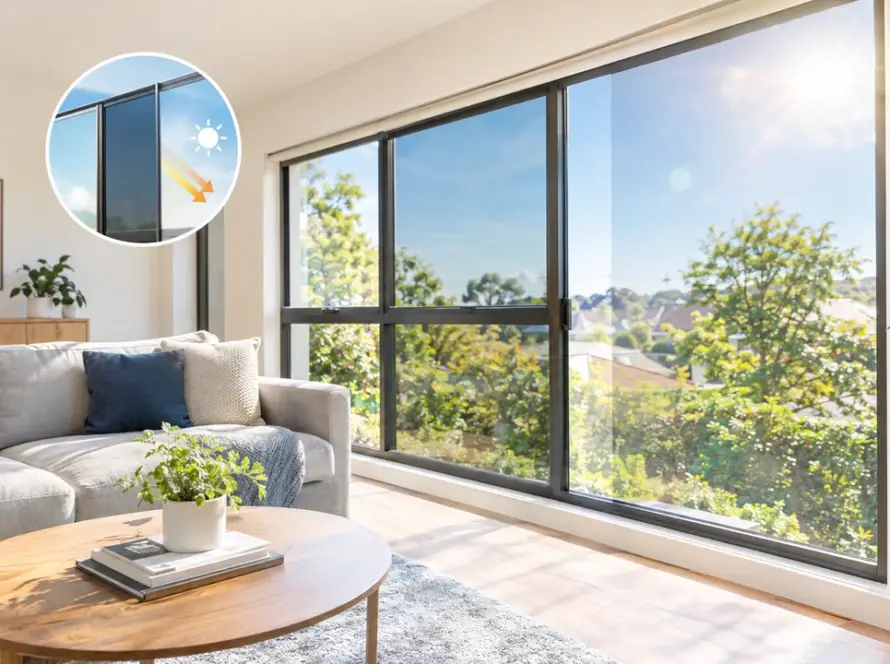
Does your living room become noticeably hotter in the afternoon, even when the air conditioning is running? West-facing windows can be a major reason. As the afternoon sun moves lower in the sky, direct sunlight can pass through these windows and increase indoor heat and glare.
Residential window tinting can help manage this solar heat by reducing the amount of energy passing through the glass. For Sydney homeowners, the right film can make sun-exposed rooms more comfortable without necessarily making them too dark. Seven Star Window provides residential and commercial window tinting options to help property owners find a suitable solution.
Why Do West-Facing Windows Get So Hot?
West-facing windows receive direct afternoon sunlight, often when outdoor temperatures are already high. Unlike some north-facing windows, which can be easier to shade with horizontal eaves, west-facing glass receives lower-angle sunlight that can pass underneath roof overhangs.
This can create several problems inside your home:
- Uncomfortable rooms: Living rooms and bedrooms may become warmer during the afternoon.
- Glare on screens: Direct sunlight can make televisions, computers and mobile screens difficult to view.
- Uneven indoor temperatures: Rooms with large west-facing windows may feel warmer than other areas.
- Furniture exposure: Repeated sunlight exposure can contribute to fading of furnishings, flooring and fabrics.
According to Australia’s YourHome guidance, west-facing glass can experience significant solar heat gain during summer afternoons because of the angle of incoming sunlight.
How Does Residential Window Tinting Reduce Afternoon Heat?
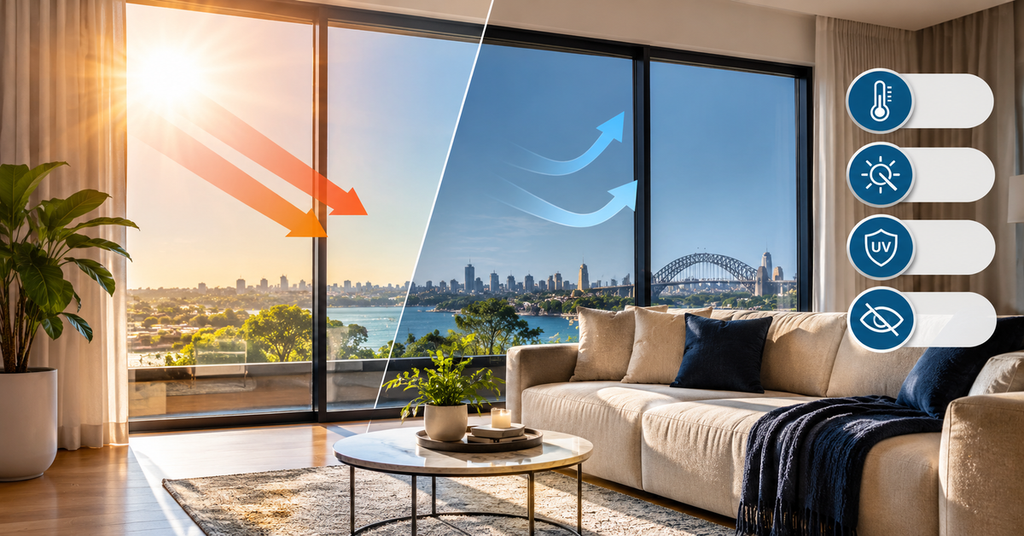
Residential window film is a thin material applied to suitable glass surfaces. Depending on its construction, it can reflect or absorb portions of incoming solar energy before that energy contributes to indoor heat.
The performance of a film depends on its solar heat rejection properties, visible light transmission and compatibility with the existing glass.
For example, a west-facing living room with large windows may benefit from solar control film that reduces incoming heat while allowing enough daylight to enter.
However, window tinting does not remove every source of indoor heat. Roof insulation, wall construction, ventilation, external shading and air leakage also influence room temperature. To understand the benefits and limitations of window film, read our guide on how residential window tint helps reduce indoor heat.
Other benefits of window film
Alongside heat control, suitable residential window film may help with:
- Glare reduction: Makes bright afternoon conditions more comfortable.
- UV protection: Helps reduce UV exposure through treated glass.
- Interior protection: Can help reduce sunlight-related fading of furniture and flooring.
- Privacy: Certain film finishes provide daytime privacy, depending on lighting conditions and film design.
Which Window Film Is Best for West-Facing Windows?
There is no single film that suits every west-facing window. The best option depends on how much heat you want to reduce, how much natural light you want to retain and what type of glass is already installed. If you are considering a suitable solution for your property, explore our residential and commercial window tinting services in Sydney to learn more about available options.
1. Reflective Window Film
Reflective window film is designed to reflect a portion of incoming solar energy. It can be useful where afternoon heat and glare are major concerns.
However, reflective finishes change the external appearance of the glass. Privacy performance can also change after dark when indoor lighting is brighter than outdoor lighting.
2. Ceramic Window Film
Ceramic window film uses specialised ceramic particles to manage solar energy while maintaining a relatively natural appearance, depending on the product.
It may suit homeowners who want heat control without choosing a highly reflective finish. Actual performance varies between products, so compare the manufacturer’s technical specifications before deciding.
3. Solar Control Window Film
Solar control film is designed specifically to manage the amount of solar energy passing through glass. Different products use different combinations of reflective, absorptive and spectrally selective technologies.
This category is worth considering when your main concern is afternoon heat rather than simply making the windows darker.
Window Film Options Compared
| Film type | Main feature | Considerations |
| Reflective film | Reflects a portion of solar energy | More noticeable exterior appearance |
| Ceramic film | Solar control with a less reflective appearance in some products | Performance varies by product |
| Solar control film | Designed to manage solar heat and light | Check heat rejection and visible light ratings |
| Decorative film | Changes the appearance of glass | Not necessarily designed for heat reduction |
Before choosing, compare the film’s total solar energy rejected (TSER), visible light transmission (VLT) and solar heat gain coefficient (SHGC), where these specifications are available.
Which Rooms Benefit Most from West-Facing Window Tinting?
Some rooms experience more noticeable afternoon heat because of their window size, orientation and daily use.
West-Facing Living Rooms
Living rooms often have larger windows or sliding glass doors. When direct sunlight enters during the afternoon, seating areas and entertainment spaces can become uncomfortable.
A suitable solar control film may help reduce heat and glare while maintaining a useful level of natural light.
Home Offices
Sunlight reflecting off computer monitors can make working difficult. Window film designed to manage glare and solar heat may help create a more comfortable workspace.
Sun-Exposed Bedrooms
Bedrooms with west-facing windows can retain unwanted warmth into the evening. Reducing direct solar heat entering through the glass may help improve comfort, although insulation and ventilation also play important roles.
What Should You Check Before Installing Residential Window Film?

Choosing a film based only on its darkness or appearance can lead to disappointing results. A professional assessment should consider the following factors.
Existing glass type: Single glazing, laminated glass, toughened glass, and double glazing can have different film compatibility requirements.
Window orientation: West-facing windows receive different sunlight exposure from north-, east- or south-facing windows.
Natural light requirements: A darker film may reduce glare but can also make a room feel dimmer.
Heat rejection specifications: Compare the manufacturer’s performance data rather than relying on general descriptions such as premium or high-performance.
Glass condition: Existing chips, cracks, edge damage and previous glass treatments should be identified before installation.
The Australian Window Film Association and YourHome guidance both highlight the importance of selecting film according to the glass type and application. Incorrect film selection can increase the risk of thermal stress in certain glazing conditions
Window Film vs Curtains and External Shading
Window tinting is not the only way to manage afternoon heat. Curtains, blinds and external shading can also help, and combining suitable solutions may provide better control.
| Solution | How it helps | Best consideration |
| Window film | Controls solar energy passing through the glass | Useful when you want to retain window access and daylight |
| Internal curtains or blinds | Blocks sunlight from entering the room directly | Can darken the room when closed |
| External awnings or shutters | Shades glass before sunlight reaches it | Particularly useful for low-angle afternoon sun |
| Combined approach | Uses film and shading together | Offers more flexibility for different conditions |
External shading can be especially useful for west-facing windows because it blocks sunlight before it reaches the glass. Australia’s YourHome guidance recommends considering adjustable shading for east- and west-facing windows.
Expert Tips for Choosing Heat-Reducing Window Film
Before arranging residential window tinting, keep these practical points in mind:
- Identify the hottest rooms: Note which windows receive direct afternoon sunlight and when the heat becomes uncomfortable.
- Decide how much daylight to retain: Choose a film based on both heat-control requirements and natural light preferences.
- Compare technical specifications: Ask about TSER, VLT and SHGC rather than relying on film colour alone.
- Check glass compatibility: Make sure the selected product is suitable for the existing glazing.
- Consider privacy requirements: Reflective films do not guarantee privacy at night.
- Discuss installation and aftercare: Understand preparation, cleaning requirements and manufacturer warranty conditions.
Common Window Tinting Mistakes to Avoid
Choosing the darkest film automatically: Darker does not always mean better heat rejection. Compare the technical performance of different products.
Ignoring existing glass specifications: Some glazing types require particular film selections to manage thermal stress risks.
Expecting window film to cool the entire house: Film can reduce solar heat entering through treated glass, but it cannot correct poor roof insulation or other building heat sources.
Overlooking natural light: A film that reduces too much visible light may make a room feel darker than expected.
Assuming reflective film provides night-time privacy: The privacy effect can reverse when interior lights are on after dark.
Conclusion
West-facing windows can make Sydney homes uncomfortable during the afternoon, particularly when large areas of glass receive direct sunlight. The right residential window tinting solution can help reduce solar heat and glare while preserving a comfortable level of natural light.
Before choosing a film, consider your window orientation, existing glass, preferred appearance and heat-control requirements. Reflective, ceramic and other solar control films offer different benefits, so comparing their technical specifications is more useful than choosing by colour alone.
Seven Star Window provides residential and commercial window tinting in Sydney, with options for different property requirements. If your living room, home office or bedroom becomes too hot in the afternoon, contact Seven Star Window to discuss suitable window film options for your property.
Frequently Asked Questions
Yes. Suitable solar control window film can reduce the amount of solar energy entering through west-facing glass. The result depends on the film specifications, window orientation, and existing glazing.
The best option depends on your priorities. Reflective films may suit homes where strong heat and glare control are important, while selected ceramic or spectrally selective films may suit homeowners who prefer a less reflective appearance.
Not necessarily. Films are available with different visible light transmission levels. You can compare these specifications to find a balance between reducing heat and maintaining natural daylight.
Some films are suitable for certain double-glazed units, but compatibility must be checked before installation. The glass construction, film properties and thermal stress risk should be assessed by a suitable professional.