
Residential window tint can reduce solar heat entering through glass, helping rooms stay more comfortable. It can also reduce glare and UV exposure without blocking all natural light.
Australian homes with large or sun-facing windows can become uncomfortable during warmer months. Residential window tint helps manage solar heat entering through glass, while also reducing glare and UV exposure. The right film can improve indoor comfort without relying entirely on closed curtains.
Does Residential Window Tint Reduce Heat?
Yes, residential window tint can help reduce indoor heat by limiting the amount of solar energy entering your home through its windows. This can make rooms near sunny windows feel more comfortable, particularly during Australia’s warmer months.
The amount of heat reduction depends on factors such as the type of window film, existing glass, window orientation, external shading, and the amount of direct sunlight the room receives.
Window film is not simply about making glass darker. Modern residential films are designed to manage solar heat, glare, and ultraviolet (UV) radiation while allowing natural light to remain in the room.
How Does Residential Window Tint Reduce Heat?
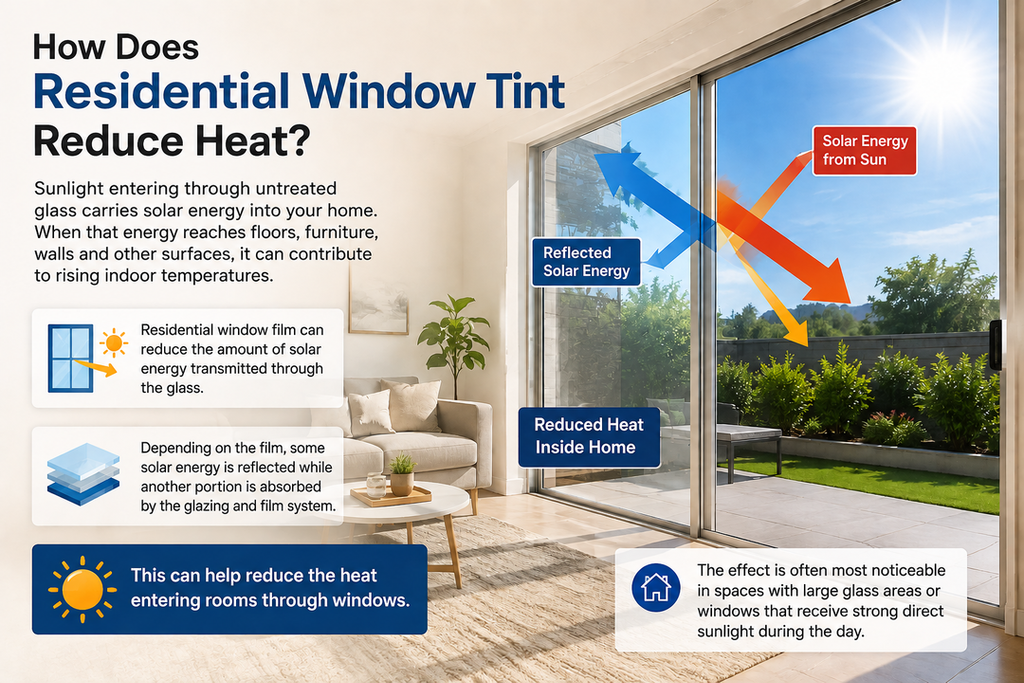
Sunlight entering through untreated glass carries solar energy into your home. When that energy reaches floors, furniture, walls and other surfaces, it can contribute to rising indoor temperatures.
Residential window film can reduce the amount of solar energy transmitted through the glass. Depending on the film, some solar energy is reflected while another portion is absorbed by the glazing and film system.
This can help reduce the heat entering rooms through windows.
The effect is often most noticeable in spaces with large glass areas or windows that receive strong direct sunlight during the day.
Does darker window film always mean more heat reduction?
Not necessarily.
The visible darkness of a film and its solar-control performance are not exactly the same thing. Some modern films can provide useful solar performance without making a room extremely dark.
When choosing a film, it is better to consider factors such as:
- Solar heat rejection
- Visible light transmission
- Glare reduction
- UV protection
- Appearance
- Compatibility with existing glass
- Manufacturer specifications
Where Can Residential Window Tint Make the Biggest Difference?
Window film can be particularly useful in rooms that regularly become uncomfortable because of direct sunlight.
North- and west-facing windows
In Australia, the direction a window faces can have a significant effect on solar exposure. West-facing windows can receive strong afternoon sun, which may make rooms noticeably warmer later in the day.
Windows exposed to intense sunlight can therefore be good candidates for solar-control film.
Large glass windows and doors
Large windows and glass doors can allow substantial amounts of sunlight into a property. Applying suitable window film can help manage solar heat without completely blocking the natural light that makes these spaces appealing.
Rooms with persistent glare
Heat is not the only problem caused by direct sunlight. Glare can make televisions, computer screens, and work areas difficult to use comfortably.
A suitable residential film can reduce glare while also helping manage solar heat.
Residential Window Tint vs Curtains and Blinds
Window film does not necessarily replace curtains or blinds. In many homes, the two can work together.
| Feature | Residential Window Tint | Curtains/Blinds |
| Solar heat control | Yes, depending on film | Yes |
| Glare reduction | Yes | Yes |
| UV protection | Can provide significant UV filtering | Depends on material |
| Natural light | Can be retained with suitable film | Often reduced when closed |
| Privacy | Available with selected films | Usually strong when closed |
| Blocks the view | Depends on film | Usually when closed |
| Appearance | Applied directly to glass | Additional interior feature |
| Works during daylight | Yes | Yes |
The right option depends on the property. A homeowner may prefer window film where they want solar control without keeping curtains closed throughout the day.
Can Window Tint Keep a House Cooler?
It can help, but it is important to have realistic expectations.
Residential window tint addresses solar heat entering through the glass. It does not remove all sources of heat from a building.
Indoor temperature can also be influenced by:
- Roof and ceiling insulation
- Wall insulation
- Roof colour and construction
- Outdoor temperature
- Air movement
- Window size and orientation
- Existing glazing
- External shading
- Doors and other openings
- Air-conditioning use
For example, if a living room has a large west-facing window receiving strong afternoon sun, solar-control film may help reduce the heat entering through that glass. However, it cannot compensate for poor insulation throughout the rest of the building.
Other Benefits of Residential Window Film
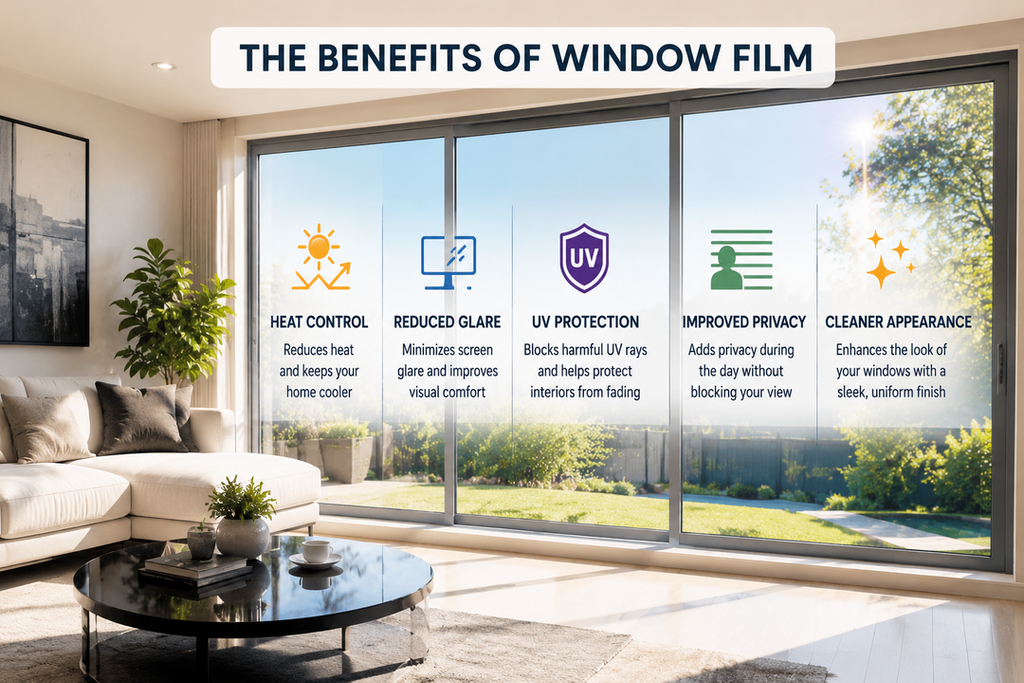
Heat control is one reason homeowners consider window film, but it is not the only benefit.
Reduced glare
Sunlight reflecting from glass surfaces can make screens uncomfortable to view. Window film can help reduce excessive glare and improve comfort in rooms used for work, entertainment or relaxation.
UV protection
Many window films are designed to filter a high proportion of ultraviolet radiation. This can help reduce UV exposure through the glazing and may also help slow fading of furnishings, flooring, artwork and other interior materials.
Improved privacy
Certain residential films can increase daytime privacy by making it harder to see into a property from outside. Privacy performance varies according to the film and lighting conditions, so it is important to understand how the selected product behaves during both day and night.
A cleaner appearance
Window film can also change the appearance of residential glass without replacing the windows themselves. Neutral or lightly tinted options can provide solar control while maintaining a relatively natural appearance.
How Effective Is Residential Window Tint in Winter?
Solar-control film is not only relevant during summer.
During cooler months, sunlight can still contribute useful warmth to a home. The ideal film therefore depends on the property’s location, window orientation, glazing, and the homeowner’s priorities.
Some homeowners primarily want summer heat and glare reduction, while others need a more balanced solution throughout the year.
A professional assessment can help determine which type of film is appropriate rather than choosing a film based solely on its shade or appearance.
Choosing the Right Window Film for an Australian Home
Not every residential window film is designed for the same purpose.
Before installation, consider:
Window orientation
Identify which windows receive the strongest sunlight and at what time of day.
Glass type
Existing glazing can affect which films are suitable. Some glass and film combinations require careful consideration because of thermal stress.
Desired appearance
Films are available in different shades and finishes. A darker appearance is not automatically the best choice.
Heat and glare priorities
If the main problem is afternoon heat, solar-control performance should be a key consideration.
Privacy requirements
Privacy films and solar films can provide different levels of daytime visibility.
Professional installation
Correct preparation, film selection, and application can affect the final appearance and performance of the installation.
Is Residential Window Tint Worth Considering?
For Australian homeowners dealing with hot rooms, strong sunlight or excessive glare, Seven Star Window provides professional solutions designed to improve residential comfort and manage solar exposure.
It is particularly worth considering when large windows receive direct sunlight, and the homeowner wants to improve comfort without permanently closing curtains or blinds.
The best result comes from choosing a film according to the property’s actual conditions rather than simply selecting the darkest available option.
A professional window tinting provider can assess the glazing, sunlight exposure and desired outcome before recommending a suitable film.
Conclusion
Residential window tint can reduce the amount of solar heat entering a home through its windows, helping improve comfort in rooms affected by strong sunlight. Its effectiveness depends on the film selected, the existing glass, window orientation and the property’s overall design.
For Australian homes, solar-control window film can also provide benefits such as glare reduction, UV filtering and improved daytime privacy. However, it should be viewed as one part of a home’s overall heat-management strategy rather than a replacement for insulation or other energy-efficiency measures.
If certain rooms become noticeably hotter because of direct sunlight, professional residential window tinting may be worth exploring. The right film can provide solar control while maintaining the level of natural light and appearance you want.
Frequently Asked Questions
Yes. Suitable solar-control window film can reduce solar energy passing through glass, helping limit heat entering rooms exposed to direct sunlight.
Yes. It can be useful for homes exposed to strong sunlight, particularly where heat, glare and UV exposure are common concerns.
No. Window film mainly addresses solar heat entering through glass. Indoor temperature is also affected by insulation, ventilation, building design and outdoor conditions.
It may help reduce the cooling load caused by solar heat entering through windows. Actual energy savings depend on the property, climate, glazing and how the air-conditioning system is used.