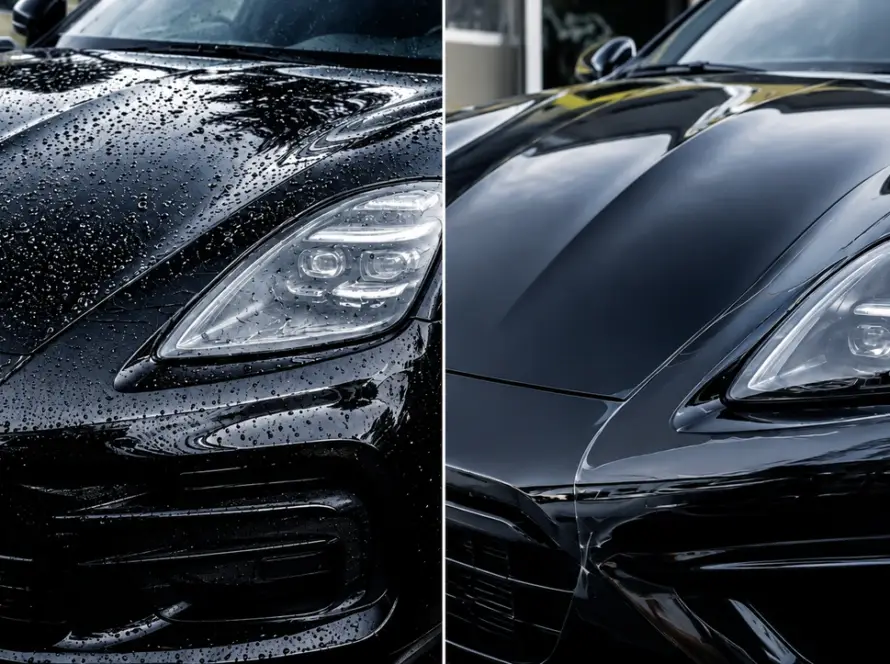
If you’ve been quoted a few hundred dollars more for graphene coating over standard ceramic, you’re probably wondering whether the upgrade actually pays off. It’s a fair question — the detailing industry throws around a lot of marketing language, and not all of it holds up on a daily driver parked outdoors in Australian sun and road grime.
What Is Graphene Coating, Exactly?
Graphene coating is a paint protection product that uses graphene oxide — a form of carbon — blended into a silica-based (SiO2) formula. It’s applied by hand in thin layers and cures into a semi-permanent bond with your car’s clear coat.
In plain terms: it’s ceramic coating’s more advanced cousin. The base chemistry is similar, but graphene molecules are added to improve how the coating handles heat, UV exposure, and water.
Once cured, it creates a hard, glossy, hydrophobic layer that sits on top of your paint — not a film, not a wax, and not something that washes off after a few car washes.
How Does Graphene Coating Work?
The graphene particles in the coating help it:
- Disperse heat more evenly, reducing the chance of the coating breaking down under direct sun
- Bond more tightly at a molecular level, which is part of why it’s marketed as more durable than standard ceramic
- Repel water and contaminants more aggressively, so dirt, bird droppings, and road grime have less to stick to
The result is paint that beads water dramatically, resists staining, and stays glossier for longer between washes.
Benefits of Graphene Coating
1. Stronger UV and Oxidation Resistance
Australian summers are brutal on car paint. Graphene’s thermal properties help the coating resist breaking down under prolonged UV exposure better than many standard ceramic products, which matters if your car sits outside most of the day.
2. Better Hydrophobic Performance
Water sheets off almost instantly on a well-applied graphene coating. Less water sitting on the paint means fewer water spots and less mineral buildup, especially in hard-water areas.
3. Reduced Swirl Marks and Light Scratches
The added hardness makes the surface more scratch-resistant than bare paint or wax alone — though it won’t stop a shopping trolley or a determined branch.
4. Easier, Faster Washing
Because dirt struggles to bond to the surface, a quick rinse and light wash often does the job. Owners typically spend less time scrubbing bugs and grime off the bonnet.
5. Long-Term Gloss Retention
Unlike wax, which fades within weeks, a graphene coating tends to hold its depth of gloss for years rather than months — provided it’s maintained properly.
How Much Does Graphene Coating Cost in Australia?
Pricing depends on your car’s size, paint condition, and the package tier (warranty length, number of coating layers, and whether paint correction is included beforehand).
| Package Tier | Typical Inclusions | Approx. Price (AUD) |
|---|---|---|
| Entry-level | Single-layer coating, basic wash prep | $600 – $900 |
| Mid-tier | Multi-layer coating, light paint correction, 2–3 year warranty | $1,000 – $1,600 |
| Premium | Full paint correction, multi-layer graphene, 5+ year warranty, wheels/glass included | $1,700 – $2,800+ |
Larger vehicles (SUVs, utes, vans) usually sit at the higher end of each bracket, and heavily swirled paint that needs correction first will push the graphene coating price up too.
How Long Does Graphene Coating Actually Last?
Manufacturers often advertise lifespans of 3 to 7 years, and premium multi-layer applications are sometimes rated up to 7 years. In practice, real-world longevity depends heavily on:
- How often the car is garaged vs parked outdoors
- Climate exposure (coastal salt air and intense sun both accelerate wear)
- Wash frequency and technique (automatic car washes with brushes shorten lifespan)
- Whether it was applied correctly on properly prepped, decontaminated paint
A coating that’s marketed as “5-year” but installed over unprepped paint, or maintained with harsh detergents, will likely underperform that number. Treat manufacturer claims as a best-case ceiling, not a guarantee.
Graphene Coating vs Ceramic Coating vs Wax
| Feature | Wax | Ceramic Coating | Graphene Coating |
|---|---|---|---|
| Typical Lifespan | 1–3 months | 3–7 years | 3–7+ years |
| Heat Resistance | Low | Moderate | High |
| Water Beading | Good, short-term | Very good | Excellent |
| Gloss Depth | High but fades fast | High, stable | High, very stable |
| Scratch Resistance | Minimal | Moderate | Moderate–High |
| Cost | Low ($) | Medium ($$) | Medium–High ($$–$$$) |
| Best For | Quick, cheap shine | Owners wanting solid mid-term protection | Owners wanting longer-term, lower-maintenance protection |
Is Graphene Coating Worth It? Our Honest Take
For most daily drivers parked outdoors, garaged occasionally, and washed regularly — yes, graphene coating tends to earn its cost back in reduced maintenance time, better resale presentation, and paint that genuinely looks newer for longer.
It’s less worth it if:
- You’re planning to sell the car within 12 months
- The paint already has significant clear coat damage that needs more than correction
- You’re not willing to maintain it with pH-neutral washes and proper drying technique
Think of graphene coating less as a “miracle shield” and more as a long-term investment in reducing upkeep — it doesn’t make paint indestructible, but it does make it noticeably easier to keep looking sharp.
Common Mistakes Owners Make With Graphene Coating
| Mistake | Why It Hurts the Coating | Better Approach |
|---|---|---|
| Washing within 7 days of application | Coating hasn’t fully cured yet | Wait the full cure period the installer recommends |
| Using automatic tunnel washes | Brushes cause micro-scratches on the coated surface | Use touchless or hand washes only |
| Assuming coating means “scratch-proof” | Graphene resists light scratches, not deep ones | Still use proper wash mitts and two-bucket method |
| Skipping annual top-ups or inspections | Coating can thin unevenly over time without you noticing | Book a yearly check-up, especially before the warranty period ends |
| Choosing the cheapest quote without checking prep work | Poor paint prep drastically shortens coating lifespan | Confirm decontamination and correction steps are included |
Final Thoughts
Graphene coating isn’t a gimmick, but it’s also not magic. For owners who want less time washing, better long-term gloss, and stronger protection against Australia’s harsh UV and heat, it’s generally a sound investment — provided it’s applied correctly and maintained the way it’s meant to be.
If you’re in Parramatta, Castle Hill, Blacktown, Penrith, or Liverpool and want a straight answer on whether graphene coating suits your car and budget, get in touch with a seven star window for a free, no-pressure quote. You can also check out our graphene coating service page for package details, or browse our detailing blog for more paint care guides.
Frequently Asked Questions
Is graphene coating better than ceramic coating?
Generally yes for heat resistance and longevity, though it usually costs more upfront. For most Australian conditions, the extra durability justifies the price difference over a 3–5 year ownership period.
Can I apply graphene coating myself?
DIY graphene kits exist, but professional application involves paint decontamination, correction, and controlled curing conditions that are hard to replicate at home — which affects how long the coating actually lasts.
Does graphene coating stop rock chips and deep scratches?
No. It improves resistance to light scratching and swirl marks but won’t prevent chips from stones or deep scratches from branches or trolleys.
How soon can I wash my car after graphene coating is applied?
Most professional applications recommend waiting at least 7 days before the first wash, and 2–3 weeks before it’s considered fully cured.
Is graphene coating worth it for an older car?
It can be, if the paint is in decent condition after correction. On heavily oxidised or damaged paint, the money may be better spent on paint correction or repainting first.
Does graphene coating void my car’s factory warranty?
No, it’s a cosmetic paint protection product applied to the clear coat and doesn’t affect mechanical or manufacturer warranties.