
Understanding the ceramic coating car cost is important before booking a professional service. Prices can vary considerably depending on your vehicle, coating quality, paint condition, preparation work, and the level of protection you choose. A low quote may look attractive, but it does not always include the same preparation or coating as a premium package.
At Seven Star Window, understanding what goes into a professional automotive protection service can help car owners make a more informed decision. This guide explains the cost of ceramic coating, what influences the final price, and what to look for when comparing professional ceramic coating services in Australia.
What Is Ceramic Coating for a Car?
Ceramic coating is a liquid protective product applied to a vehicle’s painted surfaces. Once properly cured, it forms a bonded protective layer over the paint.
Unlike traditional wax, professional ceramic coating is designed to provide longer-lasting surface protection and make your vehicle easier to maintain. Learn more about the benefits of a professional ceramic coating service from Seven Star Window.
Depending on the product and application, ceramic coatings can provide benefits such as:
- Improved resistance to environmental contaminants
- Easier cleaning and maintenance
- Water-repellent behaviour
- Enhanced gloss and paint appearance
- Protection against some chemical contaminants
- Reduced surface contamination
Ceramic coating is not a substitute for paint protection film (PPF). It can help protect the paint surface, but it will not provide the same physical impact protection as a properly installed PPF system.
Ceramic Coating Car Cost in Australia: What Affects the Price?
There is no single price that applies to every vehicle. The final ceramic coating cost depends on several factors, which is why two cars can receive very different quotes.
Vehicle Size
A small hatchback generally requires less product and labour than a large four-wheel drive, SUV or people mover.
Larger vehicles also have more surface area to wash, decontaminate, polish and coat. This can increase the amount of preparation and installation time required.
Paint Condition
The condition of the paint can have a major effect on the overall cost.
If the vehicle has relatively clean and well-maintained paint, preparation may be straightforward. Older vehicles may require additional decontamination or paint correction before the coating can be applied.
Paint correction is particularly important because ceramic coating does not hide scratches, swirl marks, or oxidation. Those issues may need to be addressed before coating.
Paint Correction
Paint correction involves machine polishing the paint to improve its finish and remove or reduce certain defects.
The amount of correction required depends on the vehicle’s condition. A new vehicle with excellent paint may need less preparation than an older daily driver with visible swirls and scratches.
This is one reason you should ask whether paint correction is included in a ceramic coating quote.
Coating Type and Brand
Not every ceramic coating is the same.
Different products can vary in formulation, application requirements, expected durability, and manufacturer specifications. Professional-grade coatings may also require controlled preparation and application techniques.
Rather than choosing a service purely because it has the lowest cost of ceramic coating, compare what product and preparation are included.
Number of Coats and Areas Covered
Some packages focus mainly on painted exterior panels, while others may include additional surfaces.
Depending on the service, optional areas may include:
- Wheels
- Glass
- Exterior plastics
- Trim
- Interior surfaces
More coverage generally means more preparation, product, and labour.
Cost of Ceramic Coating: What Should a Quote Include?

When comparing the cost of ceramic coating, look beyond the headline price.
A professional package may include several preparation stages before the coating is applied.
A typical process can involve:
- Thorough exterior wash
- Chemical and mechanical decontamination
- Paint inspection
- Clay treatment where required
- Paint correction or polishing
- Panel preparation
- Ceramic coating application
- Curing according to the product’s requirements
- Final inspection
The exact process varies between providers and coating systems.
If one quote includes extensive paint preparation while another only includes a basic wash and coating application, comparing the two prices directly can be misleading.
Ceramic Coating Cost Comparison
| Factor | Lower-cost service | More comprehensive service |
| Vehicle preparation | Basic preparation | Detailed decontamination |
| Paint correction | May be limited or excluded | Included where required |
| Coating | Entry-level option | Professional coating system |
| Coverage | Limited | Broader coverage may be available |
| Labour | Shorter preparation | More preparation time |
| Paint condition | Best suited to good paint | Can accommodate correction needs |
| Maintenance guidance | Best suited to good paint | Can accommodate correction needs |
The cheapest option is not automatically the best value. The more useful question is: what are you actually getting for the quoted price?
Is Ceramic Coating Worth the Cost?
For many Australian car owners, ceramic coating can be worthwhile when the goal is easier maintenance and long-term paint care.
However, the value depends on how you use and maintain your vehicle.
A ceramic coating may make sense if you:
- Want to keep a newer vehicle looking its best
- Regularly drive in strong sunlight
- Want easier washing and maintenance
- Prefer a glossy, well-maintained finish
- Plan to keep your vehicle for several years
It may be less suitable if you expect the coating to prevent stone chips, deep scratches, or physical impact damage.
For those concerns, PPF may be worth considering for vulnerable areas.
Ceramic Coating vs Wax: Which Makes More Sense?
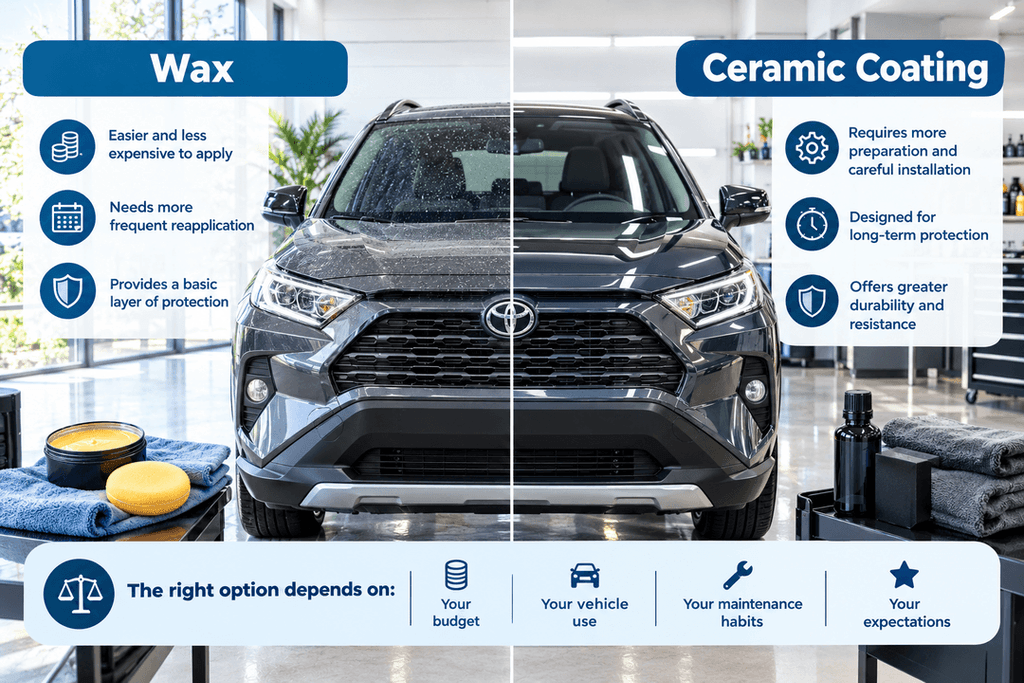
Wax and ceramic coating serve different purposes.
Wax is generally easier and less expensive to apply, but it typically requires more frequent reapplication. Ceramic coating requires significantly more preparation and careful installation, but it is designed as a longer-term surface protection solution.
The right option depends on your budget, vehicle use, maintenance habits, and expectations.
Expert Tips for Choosing a Ceramic Coating Service
Ask What Preparation Is Included
Paint preparation can have a major influence on the final result. Ask whether washing, decontamination, and paint correction are included.
Ask Which Coating Is Being Applied
Do not be afraid to ask for the product name and manufacturer information. A reputable provider should be able to explain what they are applying and how it should be maintained.
Check What Surfaces Are Covered
A quote for painted panels is different from a package that also covers wheels, glass, or trim.
Make sure you understand exactly what is included.
Consider Paint Condition Before Comparing Prices
If your car needs substantial correction, expect preparation to affect the overall quote.
A professional assessment can provide a more realistic idea of the work required.
Follow the Maintenance Instructions
Ceramic coating does not mean the car becomes maintenance-free.
Regular washing using suitable products and techniques helps preserve the coating and keep the vehicle looking its best.
Common Mistakes When Comparing Ceramic Coating Cost
Choosing the Cheapest Quote
Price should not be the only deciding factor. Extremely low quotes may reflect differences in preparation, product quality, coverage, or labour.
Assuming Ceramic Coating Prevents Scratches
Ceramic coating can help protect your vehicle’s paint, but it will not prevent every type of damage. Understanding common ceramic coating problems and mistakes can help you set realistic expectations and maintain your vehicle’s finish.
Ignoring Paint Correction
Applying a coating over heavily contaminated or defective paint may not produce the finish you expect.
Not Asking About Coverage
Always check whether the quoted price covers the entire exterior or only selected painted panels.
Expecting a Maintenance-Free Car
Even a professionally coated vehicle still needs proper washing and care.
Final Thoughts
The ceramic coating car cost should be judged by more than the number on a quote. Vehicle size, paint condition, preparation, coating quality, coverage, and application time can all influence the final price. A cheaper package may not provide the same preparation or protection as a more comprehensive professional service.
Before booking, ask what coating is being used, what preparation is included, which surfaces will be covered, and how the coating should be maintained. This makes it much easier to compare services on value rather than price alone.
For Australian drivers who want a cleaner-looking, easier-to-maintain vehicle, professional ceramic coating can be a useful part of a broader paint-care strategy. The key is choosing a service that matches your vehicle, expectations, and long-term maintenance goals.
Frequently Asked Questions
The cost varies according to vehicle size, paint condition, coating system, preparation, and coverage. A professional assessment is the best way to determine the appropriate service and quote for your vehicle.
The main factors include vehicle size, paint condition, paint correction requirements, coating type, number of coats, areas covered, and labour involved in preparation and application.
It can be worthwhile for owners who want easier maintenance, water-repellent behaviour, and long-term surface protection. Its value depends on the vehicle, how it is used, and the owner’s expectations.
Ceramic coating can provide some surface protection, but it isn’t designed to prevent stone chips or serious physical damage. Paint protection film is generally more appropriate when impact protection is the priority.

