
Ceramic coating problems usually happen because of poor surface preparation, incorrect application, unrealistic expectations, or lack of maintenance. Most issues such as water spots, streaks, reduced hydrophobic performance, or uneven gloss can be prevented with proper installation, regular washing, and timely maintenance.
Ceramic coating offers excellent paint protection, but improper application, poor maintenance, and common misconceptions can reduce its performance. Understanding these problems helps you prevent damage and maximize durability.
Ceramic Coating Problems: Causes, Mistakes, and Easy Solutions
Ceramic coating is one of the most effective ways to protect a vehicle’s paint, but it is not completely maintenance-free. Many car owners expect a perfect finish that lasts for years without any care. When problems appear, they often assume the coating has failed.
In reality, most ceramic coating problems are caused by installation mistakes, environmental factors, or improper maintenance rather than the coating itself. Understanding these issues helps you avoid expensive corrections and keeps your vehicle looking its best for much longer.
This guide explains the most common ceramic coating problems, why they happen, and the easiest ways to fix or prevent them.
Why Do Ceramic Coating Problems Happen?
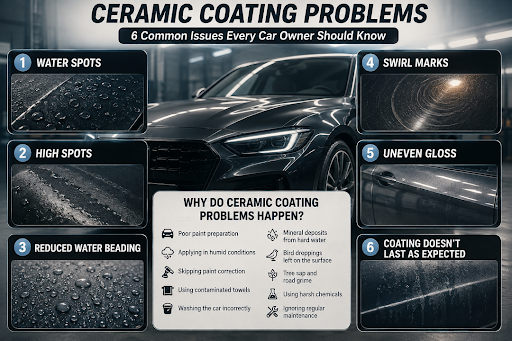
The coating itself is rarely the problem. Most issues begin before or after the installation process, which is why choosing a professional paint protection service can make a significant difference in long-term performance.
Several factors can reduce its performance, including:
- Poor paint preparation
- Applying the coating in humid conditions
- Skipping paint correction
- Using contaminated microfiber towels
- Washing the car incorrectly
- Mineral deposits from hard water
- Bird droppings left on the surface
- Tree sap and road grime
- Using harsh chemicals
- Ignoring regular maintenance
The coating itself is rarely the problem. Most issues begin before or after the installation process.
1. Water Spots
Water spots are one of the most common ceramic coating problems drivers notice. Many people expect a ceramic coating to stop them completely, but that’s not how it works. The coating helps water bead and roll off, yet it cannot prevent minerals from being left behind when water evaporates. Rain, hard water, and lawn sprinklers are usually the biggest culprits.
Causes
- Hard water minerals
- Rain drying naturally
- Parking under sprinklers
- Washing in direct sunlight
Easy Solutions
- Dry the vehicle immediately after washing.
- Use filtered or deionized water whenever possible.
- Remove water spots early with a quality mineral remover.
- Apply a ceramic maintenance spray to keep the surface performing well.
2. High Spots
High spots are dark patches, streaks, or uneven areas that appear after a ceramic coating cures. They usually happen because too much product was applied or the excess coating wasn’t leveled in time. The good news is that this problem is completely avoidable with careful application and good lighting.
Causes
- Applying too much coating
- Poor lighting during installation
- Waiting too long before buffing
- Uneven leveling
Easy Solutions
- Wipe away fresh high spots immediately.
- Polish cured high spots before recoating.
- Apply the coating in smaller sections.
- Inspect each panel from different angles while working.
3. Reduced Water Beading
If your ceramic coating isn’t beading water like it used to, don’t assume it has failed. In many cases, the coating is still there. Dirt, road film, mineral deposits, and other contaminants can cover the surface and reduce its hydrophobic performance until it’s properly cleaned.
Causes
- Road grime buildup
- Iron contamination
- Soap residue
- Hard water deposits
Easy Solutions
- Perform a thorough decontamination wash.
- Use an iron remover every few months.
- Avoid waxes that can clog the coating.
- Finish with a ceramic maintenance topper.
4. Swirl Marks
A ceramic coating improves scratch resistance, but it does not make your paint scratch-proof. Swirl marks can still appear if the car is washed incorrectly or cleaned with dirty tools. This is one of the biggest misconceptions people have about ceramic coatings.
Causes
- Automatic car washes
- Dirty wash mitts
- Using one bucket
- Wiping dry dust
Easy Solutions
- Follow the two-bucket washing method.
- Wash with clean microfiber mitts.
- Dry using soft microfiber towels.
- Never wipe dust off a dry vehicle without lubrication.
5. Uneven Gloss
Sometimes one section of the vehicle looks deeper and shinier than another. That doesn’t always mean the ceramic coating is defective. Uneven gloss is often caused by differences in paint condition or inconsistent preparation before the coating was applied.
Causes
- Uneven paint correction
- Inconsistent coating application
- Different paint conditions
- Poor surface preparation
Easy Solutions
- Correct the paint before applying the coating.
- Apply the coating evenly across every panel.
- Check the finish under different lighting.
- Maintain consistent application techniques throughout.
6. Coating Doesn’t Last as Expected
Many ceramic coatings are advertised to last for years, but real-world durability depends on how the vehicle is driven and maintained. Daily exposure to harsh weather, chemicals, and improper washing can shorten the coating’s lifespan much sooner than expected.
Causes
- Frequent use of harsh chemicals
- Constant outdoor parking
- Improper washing techniques
- Lack of routine maintenance
Easy Solutions
- Wash regularly with a pH-neutral car shampoo.
- Remove contaminants before they build up.
- Schedule annual coating inspections.
- Reapply a maintenance product when recommended.
Common Ceramic Coating Mistakes
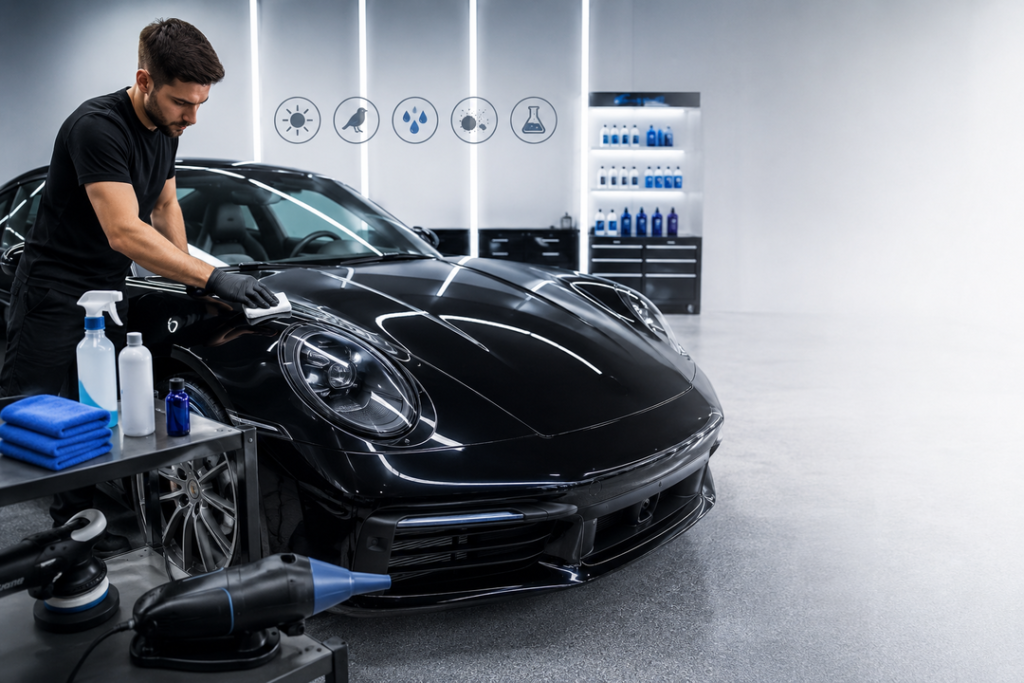
Many coating problems begin before the product even touches the paint.
Avoid these common mistakes:
- Applying coating without paint correction
- Skipping surface decontamination
- Washing with dish soap
- Applying too much coating
- Working under direct sunlight
- Using old microfiber towels
- Touching the paint during curing
- Washing too soon after installation
- Parking under trees immediately afterward
- Believing the coating eliminates maintenance
Even premium coatings cannot overcome poor preparation.
Ceramic Coating Problems and Solutions
| Problem | Common Cause | Easy Solution |
| Water spots | Hard water minerals | Dry immediately and remove deposits |
| High spots | Excess coating | Polish and reapply if needed |
| Poor water beading | Surface contamination | Decontamination wash |
| Swirl marks | Incorrect washing | Two-bucket wash method |
| Uneven gloss | Poor preparation | Paint correction before coating |
| Streaks | Improper buffing | Level coating correctly |
| Reduced durability | Lack of maintenance | Regular washing and inspections |
| Contamination buildup | Road grime and iron particles | Clay bar and iron remover |
How to Prevent Ceramic Coating Problems
Preventing issues is much easier than correcting them later.
Follow these simple practices:
Before Installation
- Wash the vehicle thoroughly.
- Remove iron particles and tar.
- Clay bar the paint.
- Perform paint correction if needed.
- Wipe panels with an appropriate panel prep solution.
During Application
- Work indoors.
- Maintain recommended temperature and humidity.
- Apply thin, even layers.
- Buff thoroughly before curing.
- Inspect every panel carefully.
After Installation
- Allow proper curing time.
- Avoid rain if possible during the initial cure.
- Do not wash immediately unless recommended.
- Keep the surface clean.
- Follow the maintenance schedule.
Does Ceramic Coating Require Maintenance?
Yes.
One of the biggest myths is that ceramic coating requires no maintenance.
It actually requires less maintenance than unprotected paint—not zero maintenance.
A simple maintenance routine includes:
- Weekly or bi-weekly washing
- Using pH-neutral car shampoo
- Removing bird droppings quickly
- Cleaning bug splatter promptly
- Periodic decontamination washes
- Inspecting for water spots
- Applying maintenance products when necessary
Regular care helps maintain gloss, hydrophobic performance, and long-term durability.
Signs Your Ceramic Coating Needs Attention
Watch for these warning signs:
- Water no longer beads consistently.
- The surface feels rough.
- Gloss has noticeably faded.
- Water spots remain after washing.
- Dirt sticks more easily.
- Contamination builds up faster than before.
These symptoms often indicate contamination rather than complete coating failure.
Professional Installation vs DIY
Many ceramic coating issues come from DIY installation rather than the coating itself. If you’re comparing different paint protection options, it’s also helpful to understand the car paint protection film cost in Sydney.
| Professional Installation | DIY Installation |
| Proper paint inspection | Often skipped |
| Professional polishing | May be limited |
| Controlled environment | Weather dependent |
| Even application | Higher risk of streaks |
| Better durability | Depends on experience |
| Lower chance of high spots | Higher chance of mistakes |
DIY installation can be successful, but it requires patience, preparation, and attention to detail.
Final Thoughts
Ceramic coating is an excellent way to protect your vehicle’s paint and maintain a glossy, clean appearance, but it performs best with proper preparation and regular care. At Seven Star Window, we understand that long-lasting paint protection is about more than just applying a coating—it’s about using the right techniques and maintenance approach.
Most ceramic coating problems, including water spots, reduced hydrophobic performance, streaks, and swirl marks, can be prevented with proper application and consistent maintenance. By understanding the common causes and avoiding common mistakes, you can help your coating perform as intended for years.
If you’re looking for reliable ceramic coating and vehicle protection solutions, explore Seven Star Window to learn more about protecting your vehicle’s finish and keeping it looking its best.
Frequently Asked Questions
Yes, but true coating failure is less common than contamination or poor maintenance. Most performance issues can be restored through proper cleaning and decontamination.
The surface may be covered with mineral deposits, road film, or other contaminants. A thorough decontamination wash often restores water-beading performance.
Yes. Ceramic coating resists contamination but does not prevent minerals from drying on the surface. Prompt drying and regular maintenance help minimize water spotting.
No. It provides some resistance to light marring but cannot stop scratches from improper washing, sharp objects, or accidents.