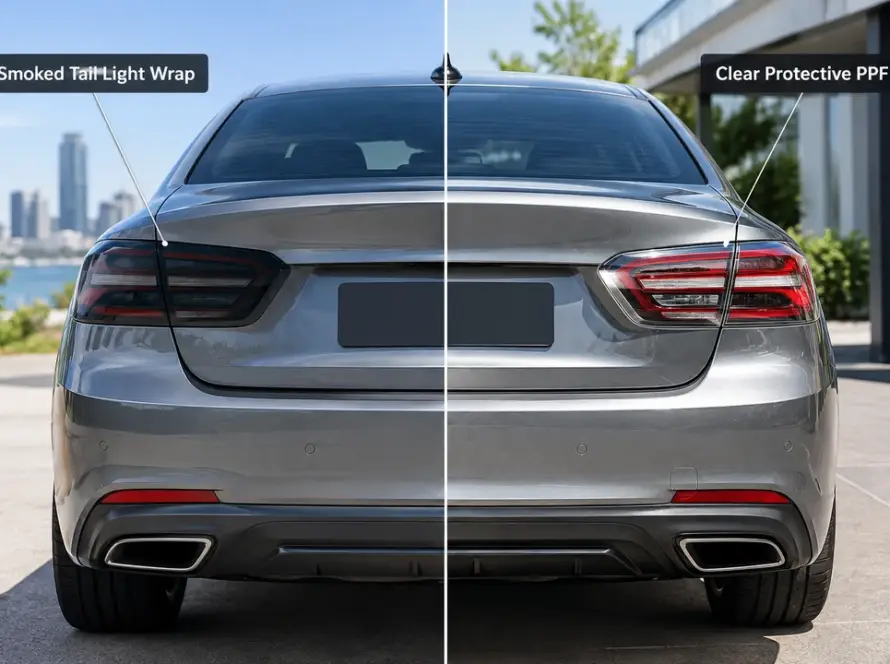
Car tail light wrapping is a simple way to change the appearance of your vehicle while adding a layer of protection to the tail-light lenses. A professionally installed vinyl film can create a subtle smoked appearance, a darker custom look, or another finish without permanently modifying the original lights.
For Australian drivers, the biggest questions are usually straightforward: How much does tail light wrapping cost? Is it legal? Which style should you choose? How long does installation take? And is vinyl wrap better than tint or PPF?
This guide answers those questions and explains what to expect before booking a professional tail light wrapping service.
What Is Car Tail Light Wrapping?
Car tail light wrapping is the process of applying a specialised vinyl or light-tint film over the exterior surface of a vehicle’s tail-light lens.
Unlike painting or spraying the lens, a quality wrap can be removed later, allowing the original light to be restored if your preferences change or you sell the vehicle.
A professionally installed tail light wrap can provide:
- A customised appearance
- Light smoke or darker styling
- Protection against minor scratches and road debris
- UV and weather protection
- A reversible modification
- A cleaner appearance for customised vehicles
- An alternative to permanently tinting or painting the lens
The final result depends on the vehicle, tail-light design, film quality, colour and installation technique.
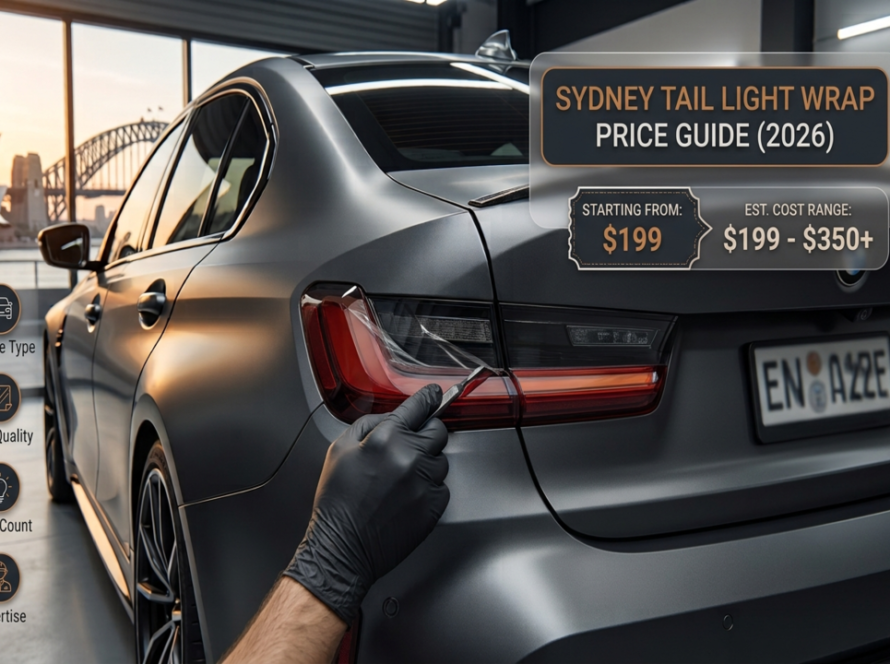
How Much Does Tail Light Wrapping Cost in Australia?
The price depends on the size and shape of the lights, the type of film, the number of lights being wrapped and the complexity of installation.
Based on current advertised Australian service pricing, professional tail-light tinting commonly falls around $150–$250+ for a standard set, although larger or more complicated jobs can cost more.
| Service | Seven Star Window | Typical Australian Market Rate |
| Tail Light Wrapping | From $199 | $150–$250+ |
| Standard Tail Light Set | From $199 | $150–$250+ |
| Larger / Complex Tail Lights | Custom quote | $200–$300+ |
| Premium Film Options | Available | $200–$300+ |
| Professional Installation | Included | Usually included |
| Custom Finish | Available | Depends on provider |
| DIY Film Only | Not applicable | $10–$75+ |
Tail Light Wrapping Price Comparison Seven Star Window’s tail light wrapping starts from $199, which sits comfortably within the typical Australian professional market range of around $150–$250+. The final price can vary depending on the vehicle, tail-light size, shape, film selected and installation complexity.
Tail Light Wrapping Styles: Which One Should You Choose?
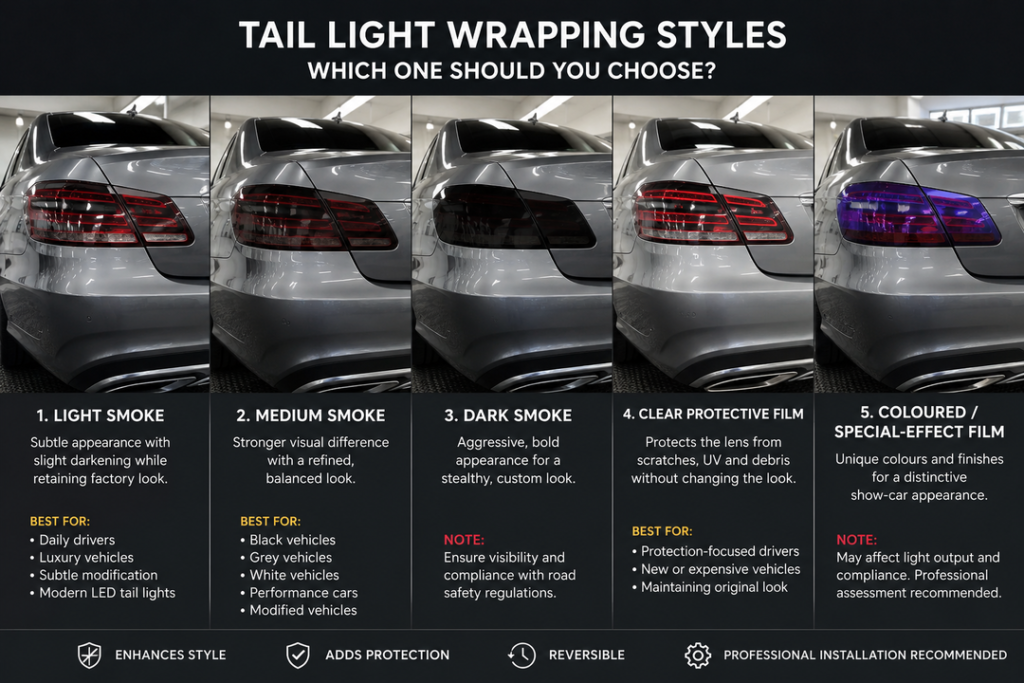
Not every tail light wrap has to look completely black. Choosing the right shade is important because the finish should complement the vehicle rather than overwhelm it.
1. Light Smoke
Light smoke is one of the safest choices for a subtle appearance.
It slightly darkens the original lens while retaining much of its factory character.
Best for:
- Daily drivers
- Luxury vehicles
- Drivers wanting a subtle modification
- Cars with modern LED tail lights
2. Medium Smoke
Medium smoke creates a stronger visual difference while still maintaining a relatively refined appearance.
It works particularly well with:
- Black vehicles
- Grey vehicles
- White vehicles
- Performance cars
- Modified vehicles
3. Dark Smoke
Dark smoke gives the vehicle a more aggressive appearance.
However, darker does not automatically mean better. Tail-light visibility is an important safety and compliance consideration, so the film should be selected and installed with road requirements in mind.
4. Clear Protective Film
If appearance is not your main objective, clear film can provide protection without significantly changing the original colour of the light.
This is worth considering if your priority is protecting expensive or difficult-to-replace tail-light lenses.
5. Coloured or Special-Effect Film
Some films are available in colours or special finishes.
These can create a distinctive show-car appearance, but they require extra care because changing the apparent colour or reducing required light output can create compliance problems.
For a road-going vehicle, a professional should assess the intended film before installation.
Tail Light Wrap vs Tail Light Tint vs PPF
These terms are sometimes used interchangeably, but the materials and purpose can differ.
| Feature | Vinyl Tail Light Wrap | Tint Film | Smoked PPF |
| Main purpose | Styling + protection | Styling | Protection + styling |
| Appearance options | High | High | Moderate–High |
| Scratch resistance | Good | Moderate | Excellent |
| Impact protection | Limited | Limited | Better |
| Removable | Yes | Usually | Yes |
| Customisation | High | High | Moderate |
| Typical cost | $$ | $$ | $$ |
| Best for | Styling-focused owners | Affordable appearance change | Premium protection |
If your main objective is changing the appearance, vinyl light-wrap film can be a practical choice.
If your priority is impact protection, premium light PPF may be worth considering.
What Are the Benefits of Tail Light Wrapping?
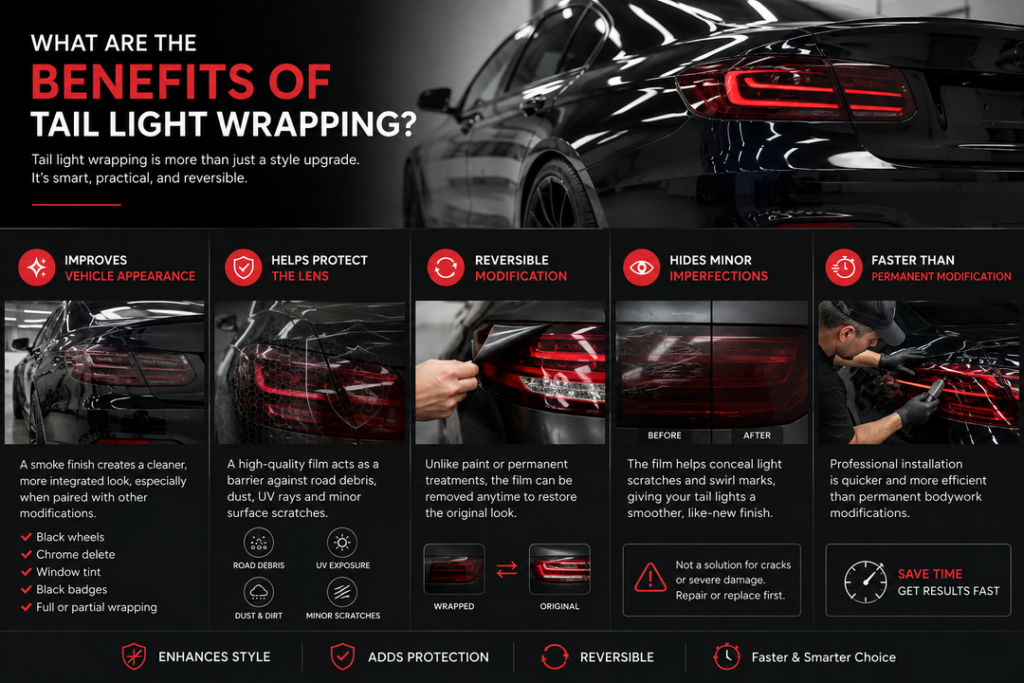
Improves Vehicle Appearance
The biggest reason people choose tail-light wrapping is styling.
A smoke finish can make the rear of a vehicle look cleaner and more integrated, particularly when paired with other modifications such as:
- Black wheels
- Chrome delete
- Window tint
- Black badges
- Full or partial vehicle wrapping
Helps Protect the Lens
Tail lights are exposed to road debris, dust, UV exposure and minor surface scratches.
A film creates an additional layer over the lens that can help reduce everyday surface damage.
Reversible Modification
One major advantage of film is reversibility.
Instead of permanently painting or modifying the tail light, the film can generally be removed when you want to return the vehicle to its original appearance.
Hides Minor Surface Imperfections
A suitable film can make minor scratches and surface imperfections less noticeable.
However, it should not be used to cover serious cracks or damaged lights. Damaged lenses should be repaired or replaced before wrapping.
Faster Than Permanent Modification
A professional installer can generally complete a tail-light wrapping job much faster than a permanent bodywork modification.
The exact installation time depends on the number, shape and complexity of the lights.
How Is Tail Light Wrapping Installed?
Professional installation is more than simply sticking film over the light.
Step 1: Inspect the Tail Lights
The installer checks the condition of the lens and identifies scratches, cracks, oxidation or other damage.
Step 2: Thorough Cleaning
The light must be completely clean and free from dust, grease, wax and contamination.
Poor preparation is one of the biggest causes of bubbles, lifting and premature failure.
Step 3: Measure and Cut the Film
The installer selects the appropriate film and cuts it to suit the shape of the tail light.
Vehicle-specific pre-cut film can simplify the process, while complex lights may require custom trimming.
Step 4: Apply the Film
The film is positioned carefully over the lens.
The installer uses appropriate pressure and heat where necessary to help the material conform to curves and contours.
Step 5: Remove Air and Smooth the Surface
Squeegeeing removes trapped air and helps create an even finish.
Step 6: Wrap and Finish the Edges
The edges are carefully finished to minimise lifting and provide a clean appearance.
Step 7: Final Inspection
The installer checks for:
- Bubbles
- Wrinkles
- Edge lifting
- Uneven tint
- Contamination
- Poor alignment
The completed lights should look smooth and consistent from normal viewing distance.
Is Tail Light Wrapping Legal in Australia?
This is one of the most important questions to consider before installing a dark film.
There is no single simple “legal darkness percentage” that should be used for every Australian vehicle and every state.
For example, NSW vehicle regulations require a tail light, when operating, to show a red light visible from 200 metres behind the vehicle.
That means an excessively dark wrap that reduces required light output can create a compliance and safety issue.
Before choosing a dark, blackout or coloured film:
- Check your state’s current vehicle regulations.
- Keep the required red light output visible.
- Avoid covering required reflectors or light functions.
- Ask a professional installer about road-use suitability.
- Do not assume a film is legal simply because it is sold commercially.
For a daily road vehicle, a conservative light-smoke or suitable protective film is generally a more sensible starting point than an extreme blackout finish.
How Long Does Tail Light Wrap Last?
The lifespan depends on:
- Film quality
- UV exposure
- Weather
- Washing methods
- Installation quality
- Tail-light shape
- Vehicle storage
Premium automotive films can last considerably longer than cheap generic films.
To extend the life of your wrap:
- Use automotive-safe cleaning products.
- Avoid aggressive pressure washing directly at the edges.
- Do not use harsh solvents.
- Avoid abrasive polishing on the film.
- Inspect edges periodically.
- Remove contamination promptly.
If the film begins to peel, crack, fade or develop significant bubbles, professional replacement is usually preferable to repeatedly trying to repair the damaged section.
DIY Tail Light Wrap vs Professional Installation
DIY kits are inexpensive and widely available, but the low purchase price does not represent the complete cost of achieving a professional result.
DIY Advantages
- Lower initial cost
- Convenient
- Large selection of films
- Suitable for experienced installers
- Can be removed later
DIY Disadvantages
- Difficult curves can be challenging
- Greater risk of bubbles
- Incorrect stretching can distort the film
- Cutting directly on the lens can cause damage
- Edges may lift
- Uneven application can affect appearance
Professional installation is particularly valuable for complex LED tail lights, multi-section lamps and wrap-around designs.
Seven Star Window vs Market Competitor
| Factor | Seven Star Window | Typical Market Competitor |
| Tail-light wrapping | Yes | Yes |
| Starting price | From $199 | From $199 |
| Professional installation | Yes | Usually available |
| Film options | Custom finishes | Light, medium & dark options |
| Protection | Scratch, UV & moisture protection | Varies by film |
| Custom fitting | Vehicle-specific installation | Depends on provider |
| Finish options | Available | Depends on provider |
| Quote | Available | Usually available |
Seven Star Window is particularly competitive for customers looking for a professional tail-light wrap starting from $199, while Tint Haus positions its service around premium light-wrap and tinted-PPF options.
The better choice ultimately depends on your vehicle, preferred finish, protection requirements and exact quote.
How to Choose the Right Tail Light Wrap
Before booking, ask these questions:
- What film will be used?
- Is the film designed specifically for automotive lights?
- What shade is suitable for road use?
- Will the installer check the light output and visibility?
- How will the edges be finished?
- What happens if the film starts lifting?
- Can the film be removed without damaging the original lens?
- Does the quoted price include all tail lights?
A professional installer should be able to explain the material, finish, preparation process and expected result before starting.
Final Verdict: Is Car Tail Light Wrapping Worth It?
Yes, car tail light wrapping can be worthwhile if you want a reversible styling upgrade with some additional lens protection.
It is especially attractive for drivers who want a smoked or customised appearance without permanently changing their original tail lights.
The key is choosing the right film and avoiding excessive darkness that could compromise required visibility or compliance.
or Australian vehicle owners, professional vehicle styling and protection services are often worth the additional cost because tail lights have complex curves and edges that are difficult to wrap cleanly.
If you’re comparing options, Seven Star Window’s advertised tail-light wrap price starts from $199, making it a competitive professional option for Sydney-area vehicle owners. The final price should be confirmed based on your vehicle’s make, model, tail-light design and chosen finish.
Quick Takeaways
- Tail light wrapping: Styling + additional surface protection
- Typical professional price: Around $150–$250+ depending on the vehicle and service
- Seven Star Window: Tail-light wraps advertised from $199
- Popular styles: Light smoke, medium smoke, dark smoke and clear protective film
- Best for: Reversible cosmetic customisation
- Premium protection option: Smoked or clear PPF
- DIY: Cheaper but more difficult on complex lights
- Legal priority: Maintain required light colour, visibility and output
- Best approach: Choose a professional installer familiar with automotive light films and local requirements
Frequently Asked Questions
Professional tail light wrapping typically costs $150–$250+, while Seven Star Window offers wrapping from $199.
It can be legal if required visibility, colour, and light output remain compliant with applicable Australian road regulations.
Quality tail light wrap can last several years, depending on film quality, installation, weather exposure, washing, and vehicle maintenance.
Yes, professional tail light wrap can generally be removed safely, restoring the original appearance without permanently modifying the lens.