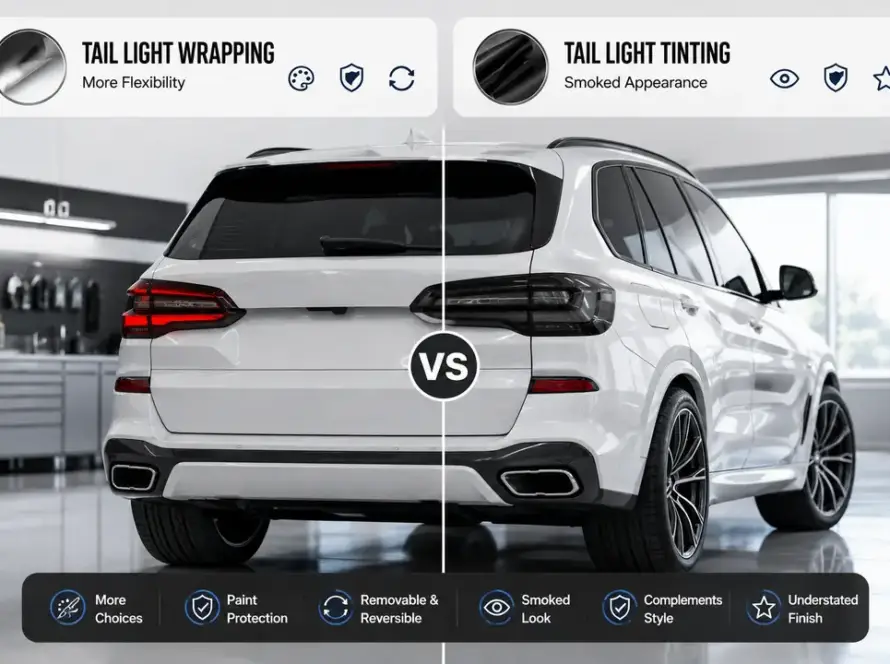
When protecting your car’s lights, tail light wrap vs PPF is a common comparison for Australian vehicle owners looking for professional car protection services from Seven Star Window. Both options can change or protect the appearance of tail lights, but they are designed with different priorities in mind.
A tail light wrap can give your vehicle a smoked or customised appearance while adding a layer between the lens and everyday exposure. PPF, or paint protection film, is primarily designed for protection and can also be used on suitable exterior surfaces, including some tail light applications.
So, which one is better? The answer depends on whether your priority is styling, protection, or a combination of both.
What Is Tail Light Wrap?
Tail light wrap usually refers to applying a specialised vinyl or tint film over the exterior surface of a tail light.
It is commonly chosen by drivers who want to change the appearance of their vehicle without permanently modifying the original light assembly.
Depending on the film and finish, a tail light wrap can create:
- Light smoke or dark smoke appearances
- A more consistent exterior finish
- A customised look
- A removable alternative to permanent modifications
The film also creates a surface layer that can help shield the original lens from some everyday environmental exposure. However, the level of protection depends heavily on the specific film, installation, and condition of the light.
For Australian vehicles, it is also important to consider whether the finished appearance remains compliant with applicable road rules.
What Is Tail Light PPF?
Tail light PPF is a form of paint protection film used specifically to protect an exterior surface from everyday damage. For vehicle owners considering professional protection options, Seven Star Window can help determine whether PPF is suitable for the tail light and the level of protection required.
Unlike a conventional styling wrap, PPF is generally selected because protection is the main objective. Depending on the product, PPF can provide resistance against minor surface scratches, road debris, and environmental contamination.
A transparent PPF is often preferred when the owner wants to preserve the original appearance of the tail light rather than create a smoked effect.
Tail Light Wrap vs PPF: What’s the Difference?
A tail light wrap is commonly chosen for appearance and styling, while PPF is primarily focused on surface protection.
| Feature | Tail Light Wrap | Tail Light PPF |
| Main purpose | Styling and surface coverage | Protection |
| Smoked appearance | Available with suitable film | Usually transparent, depending on product |
| Scratch resistance | Depends on film | Generally stronger focus on protection |
| UV exposure | Varies by product | Varies by product |
| Appearance change | Yes | Usually minimal |
| Customisation | High | More limited |
| Best for | Styling-focused owners | Protection-focused owners |
| Installation quality | Very important | Very important |
| Removable | Generally yes | Generally removable |
There is no universal winner. The right choice depends on what you want the film to accomplish.
Which Offers Better Protection?
If protection is the main priority, tail light PPF is generally the more suitable choice.
PPF is specifically engineered for protective applications, whereas many tail light wraps are selected primarily for their visual effect.
A quality protection film can help reduce the impact of everyday surface hazards such as:
- Small stones and road debris
- Light surface scratches
- Environmental contamination
- General wear from regular driving
However, no film should be treated as a guarantee against cracking, impact damage, or serious accidents.
The condition of the tail light before installation also matters. Applying protection film over an already damaged, heavily scratched, or deteriorated lens will not restore the underlying material.
When Should You Choose Tail Light Protection Film?
Choose a tail light protection film when preserving the original appearance and reducing everyday surface wear are more important than changing the colour.
This can be particularly useful for vehicles that spend considerable time on the road or are regularly exposed to dust, grit, sunlight and other environmental conditions.
A transparent protective film can protect without dramatically changing the appearance of the tail light.
For a new or well-maintained vehicle, this approach can also make sense when the owner wants to keep the factory look intact.
When Is Tail Light Wrap the Better Choice?
A tail light wrap may make more sense when appearance is your main concern.
For example, imagine a black vehicle with clear factory tail lights. The owner may want a darker, sportier appearance without replacing the original light assemblies.
A suitable tail light wrap in Sydney can achieve that visual change while remaining removable.
Tail light wrap may be a good option if you want:
- A darker or customised appearance
- A reversible styling modification
- Consistent styling across the vehicle
- A relatively straightforward way to change the look of the lights
However, darker does not automatically mean better. The finished film must not interfere with the required visibility or compliance of the lighting system. NSW guidance requires vehicle lighting to meet applicable standards for visibility, colour, operation and location.
Tail Light Wrap vs PPF for Australian Conditions
Australian vehicles can face strong sunlight, road dust, heat, and changing weather conditions. These factors make film quality particularly important.
When comparing products, don’t focus only on how the film looks when first installed.
Consider:
- UV resistance
- Optical clarity
- Adhesive quality
- Film thickness
- Flexibility
- Ease of maintenance
- Expected service life
- Manufacturer specifications
Professional installation is equally important. Poorly fitted film can develop visible edges, wrinkles, bubbles, or lifting, regardless of how good the product is.
For Sydney drivers, professional fitting can also help ensure the film follows the contours of the light properly and leaves a clean finished appearance.
Can PPF Make Tail Lights Darker?
Standard clear PPF is primarily intended to protect the surface rather than significantly change its colour.
If you want a smoked appearance, a dedicated tail light tint or wrap product is generally more appropriate. Seven Star Window can help you choose a suitable tail light protection or styling option based on the finish you want to achieve.
Some protective films may have specialised finishes, but you should check the actual product specifications rather than assuming all PPF produces the same appearance.
This distinction is important when comparing tail light protection options. If you’re also considering tinting, read our guide to tail light wrapping vs tinting to understand the differences.
Common Mistakes to Avoid
Choosing the darkest film available
A very dark finish may look attractive in photographs but can create visibility and compliance concerns. Choose the appearance with the vehicle’s legal requirements in mind.
Assuming all films offer the same protection
Vinyl wrap, tint film, and PPF are not interchangeable products. Their construction and intended purposes can differ considerably.
Applying film over a damaged lens
Film does not repair structural damage. Cracks, severe scratches, or degraded plastic should be assessed first.
Ignoring installation quality
Even premium film can look poor when incorrectly installed. Bubbles, creases, trapped contamination, and lifting edges can affect both appearance and durability.
Choosing based only on price
The cheapest film is not necessarily the best long-term option. Product quality, installation, and suitability for the application all matter.
Conclusion
The choice between tail light wrap vs PPF ultimately comes down to what you want from your vehicle. If your main goal is creating a smoked, darker, or customised appearance, a dedicated tail light wrap can be the more suitable option. If your priority is protecting the original lens while keeping its factory appearance, tail light PPF is generally the stronger choice.
Neither option should be selected without considering film quality, installation, and Australian road requirements. A professionally installed tail light protection film can provide a cleaner result and better fit than a poorly applied product.
Before making a decision, think about your vehicle’s current condition, the level of protection you need, and whether you want to change the appearance. Choosing the right film for the job will help you achieve a finish that looks good while serving its intended purpose.
Frequently Asked Questions
Yes, PPF is generally the better choice when surface protection is the main objective because it is specifically designed for protective applications.
A suitable wrap can provide a layer between the lens and some everyday surface exposure, but its protective performance depends on the film and installation.
Clear tail light PPF is generally designed to preserve the original appearance. Specialised films may offer different finishes, so check the product specifications.
Legality depends on the vehicle, film, finished light output, and applicable state or territory requirements. NSW drivers should check current road rules before installation.