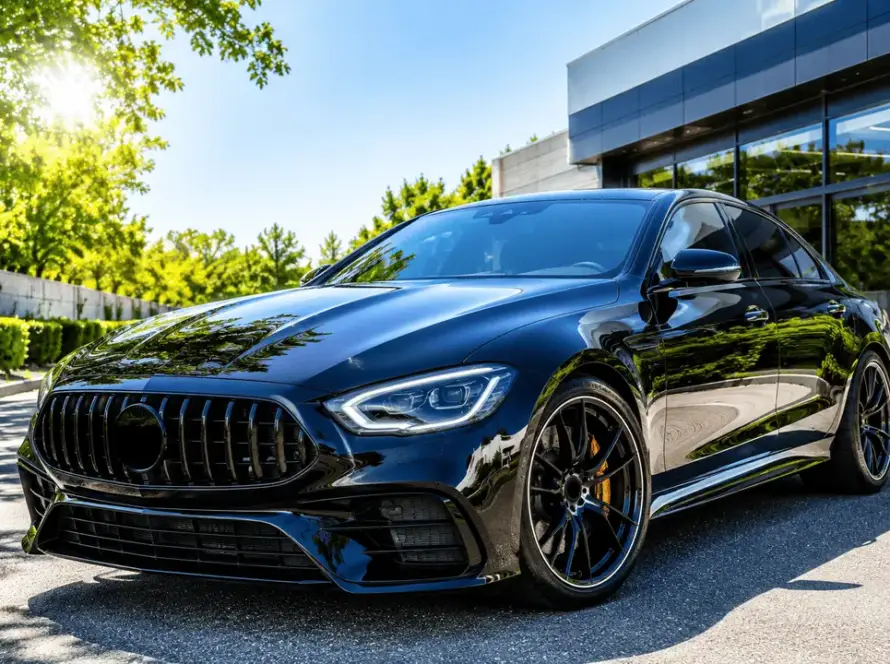
If you want a quick shine before a sale, wax will do the job for a few weeks, and If you want your paint looking glossy and easy to clean for years, ceramic or graphene coating is the better bet, and If stone chips are your real concern, only paint protection film (PPF) actually stops them — coatings and wax can’t. And if it’s cabin heat, glare, or UV damage to your seats and dash that worries you, that’s window tint’s job, not your paint’s.
Most Sydney owners we work with don’t end up choosing just one. A common setup is PPF across the front end where stone chips hit hardest, graphene or ceramic coating over the rest of the car for gloss and easy washing, and tint on the glass for comfort. Each product is solving a different problem, so layering them usually makes more sense than picking a “winner.”
What Does Each Protection Option Do?
Here’s where a lot of the confusion starts: people assume these four products are competing for the same job. They’re not. Wax and ceramic coating sit on your automotive clear coat and protect it chemically — sealing out UV-A and UV-B rays, oxidation, and everyday contaminants. PPF is a polyurethane film that acts as a physical barrier, absorbing impact before it ever reaches your factory paint. The window tint doesn’t touch your paint at all — it’s a film on the glass that manages infrared heat and light entering the cabin.
So before comparing prices or durability, it helps to ask a simpler question first: what are you actually trying to protect — the paint’s surface, the paint’s finish, or the inside of the car?
What Can Damage Your Car Paint?
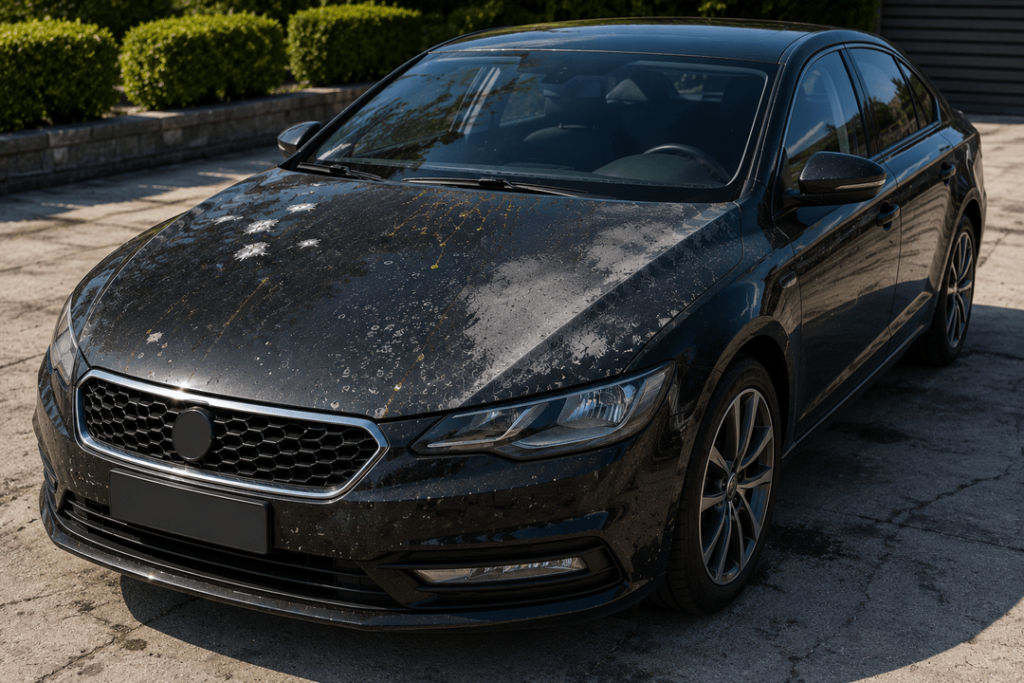
It’s worth knowing what you’re actually up against, because it explains why each protection type exists in the first place. Sydney paintwork takes a beating from more directions than most owners realize:
- UV exposure – constant sun breaks down clear coat over time, causing fading and oxidation
Australia’s high UV levels can also accelerate damage to vehicle interiors and exterior surfaces over time. Learn more about UV radiation from Cancer Council Australia.
- Bird droppings and tree sap – both are acidic and can etch into unprotected paint within hours if left in the sun
- Acid rain and industrial fallout – airborne pollutants that settle on the surface and slowly eat into the clear coat
- Brake dust and road tar – embed into the paint and are notoriously difficult to remove once bonded
- Hard water spots – mineral deposits left behind after water evaporates unevenly on the surface
- Salt and road grime – particularly relevant if you’re driving coastal routes around Sydney
- Stone chips and road debris – the one threat on this list that no coating, wax, or sealant can stop; only a physical film can
A proper decontamination wash and paint correction before any protective product goes on is what gives coatings and film the clean surface they need to bond properly skip this step and even a premium product won’t perform the way it’s meant to.
What Is Car Wax and How Does It Protect Paint?
Wax is the simplest of the four, and honestly, the one most people already understand. It’s a thin layer — carnauba or synthetic — that sits on top of the clear coat rather than bonding to it. That’s both its strength and its weakness: it’s dead easy to apply yourself, and it gives an instant gloss boost, but because it isn’t chemically bonded, washing, rain, and sun exposure strip it away fast. Most owners are reapplying every four to twelve weeks just to keep the effect going.
There’s nothing wrong with wax for what it is — a low-cost, DIY-friendly way to add shine before an event or a sale. Just don’t expect it to do much against swirl marks, oxidation, or anything more serious than light water resistance.
What Is Ceramic Coating and How Does It Protect Paint?
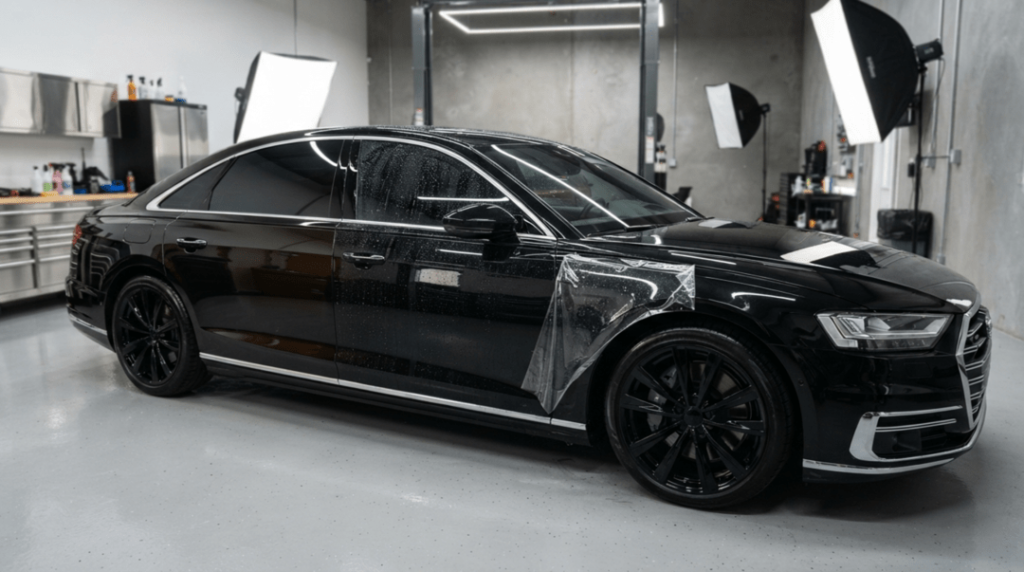
Ceramic coating works differently. It’s a liquid polymer, usually silicon dioxide (SiO2) — that chemically bonds to the clear coat rather than sitting on it, filling in microscopic surface irregularities as it cures into a hard, glass-like layer. That bond is why it can’t be washed off, and How & why a professionally applied coating can realistically last two to five years or more, compared to wax’s few weeks.
The other thing coating does well is create a strongly hydrophobic surface — water beads up and rolls off instead of drying into hard water spots, which also means less dirt and brake dust have anything to grip onto in the first place. Washing becomes noticeably quicker and less frequent.
At Seven Star Window, our graphene coating service takes this a step further, layering graphene molecules over the ceramic base for better heat dissipation and added scratch resistance, a genuine advantage during Sydney’s harsher summer months. What coating still won’t do, though, is stop a stone chip. That’s a physical protection problem, and physical protection is PPF’s job.
What Is Paint Protection Film (PPF) and How Does It Protect Paint?
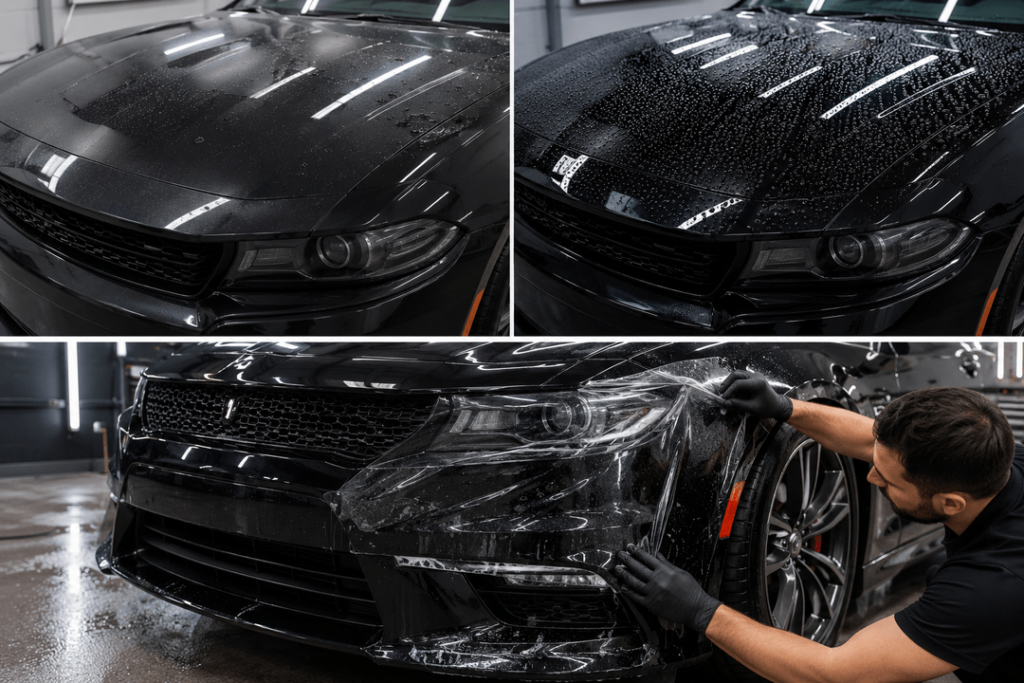
PPF is the only product on this list built to absorb an actual impact. It’s a thick, optically clear polyurethane film — typically 150 to 200 microns — applied over the panels most exposed to road debris: the bonnet, front bumper, mirrors, and door edges. When a stone hits, the film takes the hit instead of your factory paint. Many modern films also self-heal, meaning light scratches and swirl marks can disappear with a bit of heat from the sun or warm water.
Professionally installed PPF typically holds up for five to ten years, which puts it well ahead of both wax and coating on raw durability — though it comes at a noticeably higher upfront cost, which we’ll get into shortly.
What Is Window Tint and How Does It Protect Your Car?
Tint is the odd one out here, because it’s not protecting your paint at all it’s protecting everything inside the car. A film applied to the glass blocks the majority of UV-A and UV-B rays and rejects a meaningful chunk of infrared heat, which keeps your cabin cooler and stops your dash, seats, and trim from fading and cracking under constant sun.
We’ll be blunt about a misconception we hear constantly: tint does nothing for your exterior paint. If chips or fading on the bodywork are your concern, that’s ceramic coating or PPF’s job tint is about comfort, glare, privacy, and protecting what’s inside, not what’s on the outside. Every window tint job we install across Sydney is fitted to comply with NSW visible light transmission (VLT) limits, so you get the heat and UV benefits without any legal headaches. If you’re unsure what VLT actually means for your car, our VLT guide breaks it down.
Ceramic Coating vs Wax vs PPF vs Window Tint: Comparison Table
| Factor | Wax | Ceramic Coating | PPF | Window Tint |
| What it protects | Paint (surface) | Paint (chemical) | Paint (physical) | Interior/cabin |
| Typical lifespan | 4–12 weeks | 2–5+ years | 5–10 years | 10+ years |
| Stops stone chips | No | No | Yes | No |
| UV protection | Minimal | Strong | Strong | Strong (interior) |
| Hydrophobic surface | Light | Strong | Moderate | N/A |
| Reduces cabin heat | No | No | No | Yes |
| Typical cost | Low | Mid | High | Low–Mid |
| Maintenance effort | High (frequent reapply) | Low | Low | Very low |
| DIY-friendly | Yes | Not recommended | No | No |
Which Paint Protection Option Is Right for Your Car?
There’s no single “best” here — it genuinely depends on how you drive, where you park, and what’s actually bothering you about your current paint.
Daily driver: Ceramic or graphene coating covers most of what a daily driver needs — contaminant resistance, UV protection, and far less time spent washing. Pair it with a tint if cabin comfort on the commute matters to you too.
New or high-value car: PPF should be the priority if you want to stop stone chips before they ever touch factory paint, especially across the bonnet, bumper, and mirrors — the panels that cop the worst of it on motorways like the M2 and M7.
Hot, high-UV conditions (which, let’s be honest, is most of the year in Sydney): Graphene coating paired with quality ceramic tint covers both angles — paint protection from oxidation, and cabin protection from heat.
Tight budget: Wax still earns its place if you just want a shine boost before an event or private sale just don’t treat it as a long-term strategy.
Frequent highway or gravel driving: PPF is the only option that actually stops a chip. Coating and wax won’t.
Can You Combine Wax, Ceramic Coating, PPF, and Window Tint?
Yes, and honestly, this is how most well-protected cars we see are set up — not because one product failed, but because each one is solving a different problem. PPF on the impact zones, ceramic or graphene coating over the full vehicle, and tint on the glass gives you physical protection, chemical protection, and cabin protection all at once, without any of them getting in each other’s way.
One combination we’d steer you away from: waxing over a fully cured ceramic or graphene coating. The coating’s already doing the sealing and hydrophobic job — wax on top usually adds nothing and can sit unevenly rather than bonding the way it would on bare paint. A ceramic-safe maintenance spray is the better follow-up if you want extra gloss between washes.
How Much Does Each Option Cost Per Year of Protection?
Sticker price alone doesn’t tell the full story, since each product lasts such a different length of time. Once you divide cost by lifespan, the picture shifts a bit:
- Wax – cheapest upfront, but reapplying every few weeks (plus your own time, if you’re doing it yourself) means the yearly cost climbs faster than people expect.
- Ceramic or graphene coating – a mid-range spend that, stretched across 2–5+ years, usually comes out as one of the better value options once you factor in less frequent washing.
- PPF – the highest upfront cost, but weighed against 5–10 years of protection and the cost of a single stone-chip respray (which can easily outprice the film itself), it holds up well long-term.
- Window tint – a relatively modest cost against a 10+ year lifespan makes it one of the strongest value plays on this whole list.
Is Ceramic Coating Worth It
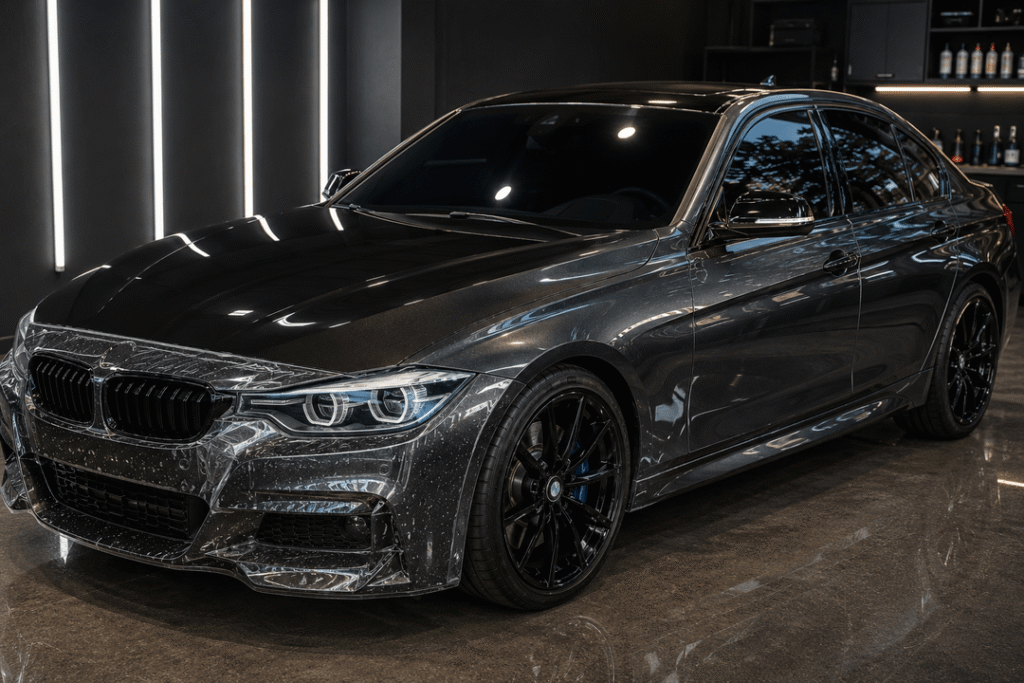
For most daily-driven cars, yes. The math is fairly simple: you’re trading a mid-range upfront cost for two to five-plus years of gloss, UV resistance, and a paint surface that’s genuinely faster to wash. If you’re the kind of owner who’s tired of waxing every month, or you just want your car looking freshly detailed without the weekly effort, coating pays for itself in saved time alone, before you even factor in the paint protection.
Where it’s less of a slam dunk: if you’re planning to sell the car within the year, or you’re chasing physical chip protection specifically — in that case, your money is better spent on PPF, or you may not need either yet.
Is PPF Worth the Cost?
If stone chips are genuinely your concern, yes — nothing else on this list does what PPF does. It’s the highest upfront investment of the four, but it’s also the only one solving a physical problem rather than a chemical or cosmetic one. For new cars, EVs, or anything you plan to keep for years, the cost of PPF on the front end is usually a lot easier to swallow than the cost of a bumper respray after a few thousand kilometers of highway driving.
If your car’s older, already has some stone chip history, or you’re not fussed about minor wear, PPF is a harder case to justify — ceramic coating alone may cover what you actually need.
Common Mistakes and Misconceptions
Ceramic coating stops stone chips. It doesn’t. Coating is a chemical layer, not a physical one — only PPF absorbs actual impact.
Window tint protects the paint or cools the engine. Tint’s job is the cabin and interior, full stop. It has zero effect on your exterior paintwork.
Waxing over ceramic coating adds extra protection. Usually not — the coating’s already sealing the surface, and wax tends to sit awkwardly rather than bond properly on top of it.
You only need one of these four products. Each one is solving a different problem, which is exactly why most professional installers including us end up recommending a combination rather than a single product.
Conclusion
If your priority is easy maintenance and long-term gloss, ceramic or graphene coating is usually the right call. If stone chips are what keeps you up at night, PPF is the only option that actually stops them. Window tint complements either one by protecting your cabin from heat and UV rather than competing with them. Which combination makes sense for you really comes down to your budget, how you drive, and how long you’re planning to keep the car.
At Seven Star Window, we’ve worked on everything from daily-driven hatchbacks to enthusiast builds across Sydney and Rouse Hill. Before we recommend anything, we look at your paint’s current condition, how the car’s actually used, and where it’s parked day to day — because a car that lives in a garage and a car that street-parks near the coast don’t need the same protection plan.
Curious what your car actually needs? Have a look at our ceramic coating, graphene coating, window tinting, and car wrapping & other car services, or get in touch and we’ll walk you through it properly.
FAQ’s
For anything beyond a short-term shine, yes. Ceramic coating chemically bonds to the paint and lasts years, not weeks, while wax needs constant reapplication and offers far lighter protection.
No. PPF handles physical impact; ceramic coating handles gloss, hydrophobic performance, and chemical/UV resistance. Most Sydney installers, us included, apply ceramic coating over PPF to get both benefits together.
A quality ceramic tint film typically lasts 10 years or more when installed properly, holding up against the bubbling and fading that cheaper films struggle with under strong Australian sun.
DIY kits exist, but proper application depends on a thorough decontamination wash and paint correction beforehand, plus controlled curing conditions — hard to fully replicate in a home garage, which is why most multi-year durability claims come from professional installs.
Not necessarily. It comes down to your car, budget, and how you actually drive it — something best worked out with a proper inspection rather than applying every product by default.
It helps significantly by blocking UV-A and UV-B exposure and slowing oxidation, though no coating can stop fading entirely on a car left in direct sun for years on end.
Yes, and it’s one of the most common combinations we install — the coating adds gloss and hydrophobic performance on top of the film’s physical protection, and it also makes the film itself easier to keep clean.
Older films sometimes did, but modern, quality PPF is engineered to resist UV yellowing for its full lifespan — it’s mainly a problem with cheaper or aging film that hasn’t been maintained.
Yes, though it takes machine polishing or compounding to cut through the bonded layer, it won’t come off with washing or clay bars alone, which is exactly what makes it durable in the first place.
Yes, by blocking UV-A and UV-B rays and reducing infrared heat, tint slows the drying, cracking, and fading that leather and other interior trim experience under constant sun exposure.
Graphene coating generally edges out standard ceramic on longevity and heat dissipation, thanks to the added carbon layer, though both depend heavily on prep work and maintenance to reach their full lifespan.