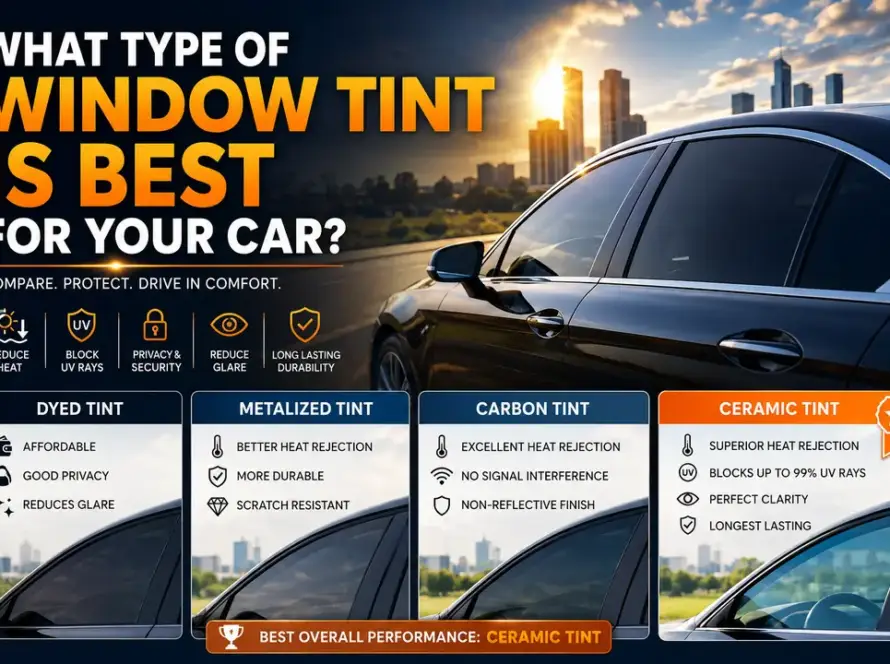
If you have been comparing car window tinting prices in Sydney, you have probably noticed that quotes can vary quite a lot. One installer may offer cheap window tinting for a few hundred dollars, while another may charge considerably more for a premium film. So, what are you actually paying for?
The difference is not only the price of the film. Film quality, heat rejection, UV protection, durability, installation quality, vehicle size, and warranty can all affect the final cost.
At Seven Star Window, car window tinting options include standard tint, carbon window tint, and ceramic window tint, with packages designed for different budgets and levels of performance. The right choice depends on what you want from your tint and how much you use your vehicle.
What Is the Difference Between Cheap and Premium Car Window Tinting?
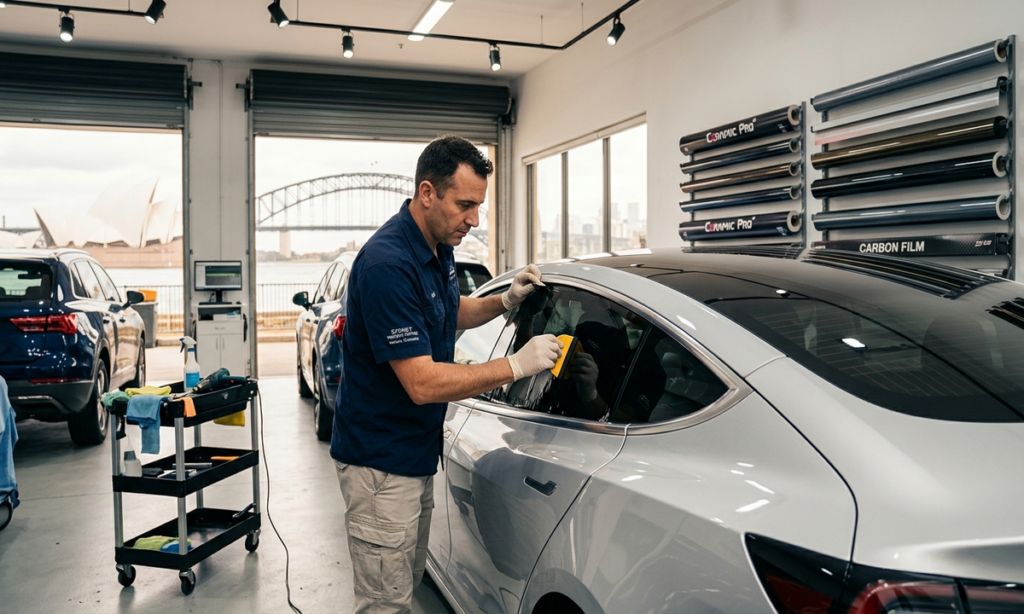
The biggest difference between cheap and premium car window tinting is usually the quality and performance of the window film.
A cheaper tint may be suitable if your main goals are improving privacy and giving your car a darker appearance. However, low-cost films can vary significantly in their ability to reduce heat, block UV rays, and maintain their appearance over time.
Premium car window tinting focuses more on long-term performance. Higher-quality films can provide better heat rejection, UV protection, glare reduction, and durability. Professional installation is also important because even a good film can look poor if it is installed badly.
Your budget matters, but it is worth looking beyond the initial price when comparing window tinting Sydney services.
How Much Does Car Window Tinting Cost in Sydney?
The cost of car window tinting in Sydney depends on the vehicle, number of windows, film type, and installation requirements.
Seven Star Window currently lists front two-window tinting from $140, all-window tinting from $220, carbon tint from $280, and ceramic tint from $330. Ceramic tint starts at $330 for hatchbacks, $380 for sedans, and $420 for SUVs and UTEs. Front windscreen tinting starts from $350. Removing old tint is an additional cost.
These prices give you a useful starting point, but they should not be treated as a universal Sydney price because different vehicles and tinting requirements can change the final quote.
For example, a small hatchback with straightforward installation will generally require less material and labour than a larger SUV or UTE. Existing tint can also increase the cost if it needs to be removed before the new film is installed.
Why Is Cheap Car Window Tinting Less Expensive?
Cheap car window tinting is usually focused on keeping the initial cost low. For some drivers, this can make sense.
If you mainly want darker windows, better privacy, and a cleaner appearance, a standard film may provide what you need without paying for premium technology.
However, it is important to ask what is included in a cheap quote. A low price does not automatically mean poor quality, but you should check the film type, warranty, installation process, and expected lifespan before making a decision.
Very low-quality tint can potentially develop problems such as bubbling, peeling, fading, or discolouration over time. Replacing the film later can make an initially cheap installation more expensive overall.
This is why comparing the cheapest quote with the actual value you receive is more useful than simply choosing the lowest number.
What Do You Get With Premium Car Window Tinting?
Premium car window tinting is designed for drivers who want more than appearance and privacy.
One of the main advantages is improved heat rejection. Sydney summers can make a parked vehicle extremely uncomfortable, especially when the interior has been sitting in direct sunlight. A quality window film can reduce the amount of solar energy entering the cabin and make the car more comfortable.
Premium films can also provide strong UV protection. Your window tinting service page states that your professional tint solutions can block up to 99% of harmful UV rays. UV protection can also help reduce exposure to your vehicle’s interior materials.
Another benefit is glare reduction. Less glare from sunlight can make driving more comfortable, particularly during bright mornings and afternoons.
Premium tint can therefore be a better choice if you spend a lot of time driving, regularly park outdoors, or want greater cabin comfort throughout the year.
Carbon Window Tint vs Ceramic Window Tint
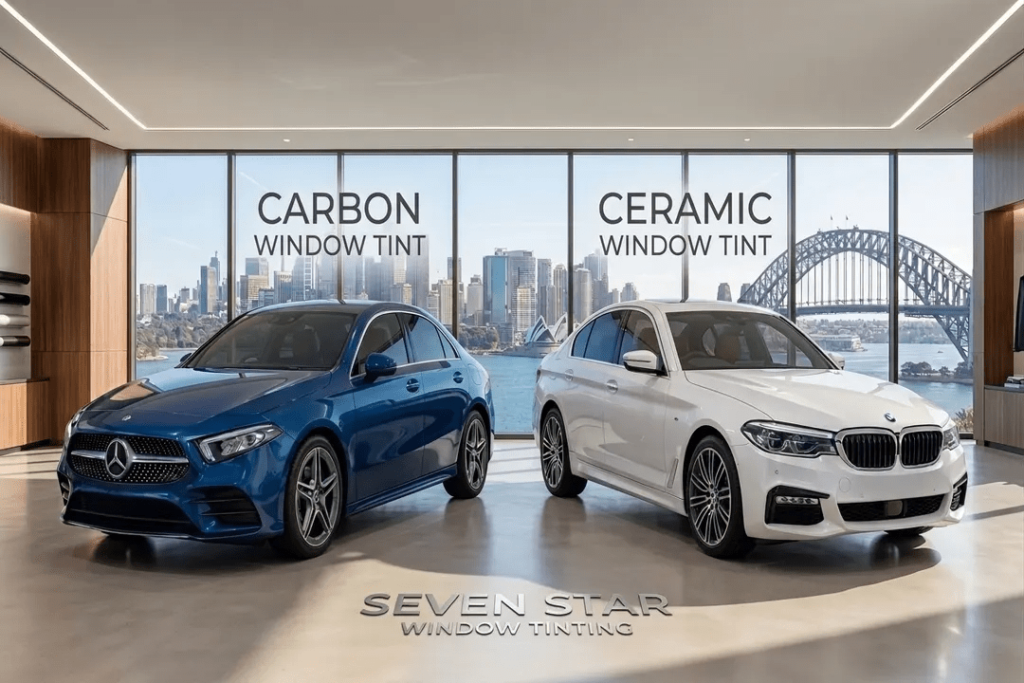
If you want something between basic tint and the highest-priced option, carbon window tint can be a practical choice.
Carbon tint offers a darker, modern appearance while providing heat reduction and privacy. It can be a good middle-ground option for drivers who want improved performance without moving straight to ceramic film.
Your current pricing lists carbon tint from $280, with pricing starting at $280 for hatchbacks, $320 for sedans, and $380 for SUVs and UTEs.
Ceramic window tint sits at the premium end of your current tint options. It starts at $330, with hatchbacks from $330, sedans from $380, and SUVs and UTEs from $420. The service page describes ceramic tint as providing superior heat rejection, UV protection, and long-term performance.
For someone who spends a lot of time in the car, the extra cost of ceramic tint can make more sense because comfort and heat rejection may be more important than simply getting darker windows.
Is Premium Window Tint Worth the Extra Cost?
For many drivers, yes, but it depends on how you use your car.
If you rarely drive, mostly keep your vehicle in a garage, and simply want additional privacy, cheap or standard car window tinting may be enough.
On the other hand, premium window tint can be worth considering if you drive every day, regularly park outside, travel long distances, or want stronger heat and UV protection.
The best approach is to compare the performance you need with the price you are comfortable paying.
You should also consider the lifespan. Seven Star Window states that high-quality window tint can last 10 years or more with proper care, while its premium tint options include a lifetime warranty.
A cheaper film that needs replacing much sooner may not provide better value simply because it costs less on day one.
Professional Installation Matters as Much as the Film
When comparing car window tinting costs in Sydney, don’t look only at the film.
Installation quality can have a major effect on the final result. A professional installer should apply the film carefully to create a clean, smooth, and bubble-free finish.
Poor installation can leave visible edges, bubbles, creases, or uneven areas. It can also affect the appearance and durability of the tint.
Seven Star Window says most car window tinting jobs take around two to four hours, depending on the vehicle and film selected, with larger or more complex vehicles potentially taking longer.
That time is part of what you are paying for when choosing professional window tint installation.
Don’t Forget About Legal Tint Levels in NSW
Price should never be the only consideration when choosing a tint shade.
NSW uses Visible Light Transmittance, or VLT, to measure how much visible light passes through vehicle glass. A lower VLT percentage means darker glass. The legal requirements depend on the vehicle and window, so your installer should make sure the selected film and existing glass comply with NSW requirements.
Seven Star Window lists several LVR options for its window tinting packages, including 35%, 30%, 20%, 18%, 15%, and 5%, while its front windscreen options range from 40% to 80%.
Before choosing a very dark tint because it is cheaper or looks better, make sure the final installation is legal for your vehicle and the specific window.
Which Car Window Tint Should You Choose?
If your main priority is keeping the cost down, standard tint may be the sensible starting point.
If you want a balance between price, appearance, and performance, carbon window tint can be a good option.
If your priority is maximum comfort, heat rejection, UV protection, and long-term performance, ceramic window tint is the premium option worth considering.
The important thing is not to choose based only on the cheapest quote. Ask what type of film is being used, what warranty is included, whether old tint removal costs extra, and whether professional installation is included.
Cheap vs Premium Car Window Tinting: Which Offers Better Value?
Cheap tinting wins when your priority is the lowest upfront price.
Premium tinting wins when you care more about long-term performance and comfort.
For example, paying less for a basic tint may make sense for a vehicle that is not driven often. But if you spend several hours in your car every week, better heat rejection and UV protection can make a noticeable difference to your everyday driving experience.
That is why the cheapest option is not always the best-value option.
At Seven Star Window, you can choose from various window tinting solutions based on your vehicle and budget, including standard, carbon, and ceramic tint. Professional installation and a lifetime warranty are included with the listed premium tint packages.
Frequently Asked Questions
It can be if your main priorities are affordability, privacy, and appearance. However, compare the film quality, warranty, and installation before choosing a very low-cost option.
Ceramic window tint can be worth the extra cost if you want stronger heat rejection, UV protection, glare reduction, and long-term performance.
Prices vary according to the film, vehicle, and number of windows. Seven Star Window currently lists options starting from $140 for two front windows, $220 for all-window tinting, $280 for carbon tint, and $330 for ceramic tint.
Seven Star Window states that high-quality window tint can last 10 years or more with proper care, while its premium tint packages include a lifetime warranty.
Yes. Quality window tint can reduce heat entering the cabin and can also reduce glare and UV exposure. Ceramic window tint is positioned as the premium option for heat rejection on Seven Star Window’s service page.
Yes, but the tint must comply with NSW requirements. VLT rules determine how much visible light must pass through the glass, and the requirements vary by window and vehicle. Always confirm the legal VLT before installation.
Final Thoughts
Cheap and premium car window tinting both have their place. The right choice depends on your budget, vehicle, driving habits, and expected level of performance.
If you mainly want privacy and a darker appearance, a standard tint may be enough. If you want a balance of price and performance, carbon window tint is worth considering. If heat rejection, UV protection, and long-term comfort are your main priorities, ceramic window tint can justify the higher price.
Before booking, compare more than just the quote. Look at the film type, installation quality, warranty, tint shade, vehicle size, and any additional costs such as old tint removal.
If you’re looking for professional car window tinting in Rouse Hill, Box Hill, Kellyville, Blacktown, or the surrounding Hills District, Seven Star Window offers several tinting options to suit different vehicles and budgets. Request a free quote to find the right option for your car.