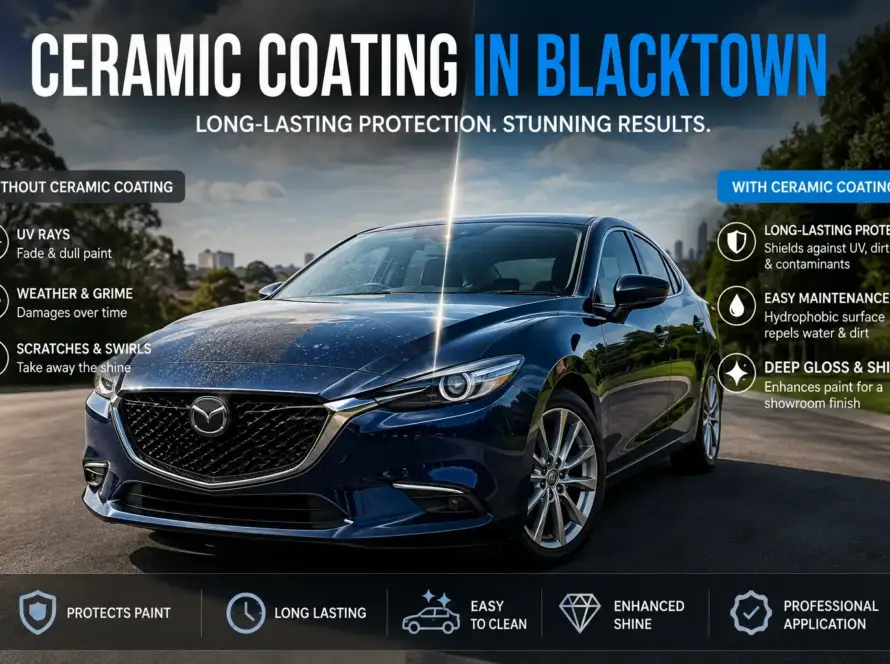
Ceramic coating is applied through an eight-step professional process that includes inspection, washing, decontamination, paint correction, panel preparation, coating application, leveling, curing, and a final inspection. Each step helps the coating bond correctly to the vehicle’s clear coat, providing long-lasting protection, enhanced gloss, and easier maintenance.
What Is Ceramic Coating?
Ceramic coating is a liquid polymer, typically made with silicon dioxide (SiO₂), that chemically bonds to your vehicle’s clear coat. Unlike wax, which sits on the surface and wears away quickly, ceramic coating forms a durable protective layer that helps resist UV rays, oxidation, bird droppings, tree sap, water spots, and road grime.
It also creates a hydrophobic surface, causing water and dirt to slide off more easily and making routine washing much simpler.
Why Is Professional Application Important?
A ceramic coating performs only as well as the surface beneath it. Dirt, polishing oils, swirl marks, and other contaminants can prevent proper bonding and reduce durability.
Professional installation focuses on preparing the paint before the coating is applied, ensuring a smoother finish, better gloss, and longer-lasting protection.
How Is Ceramic Coating Applied?
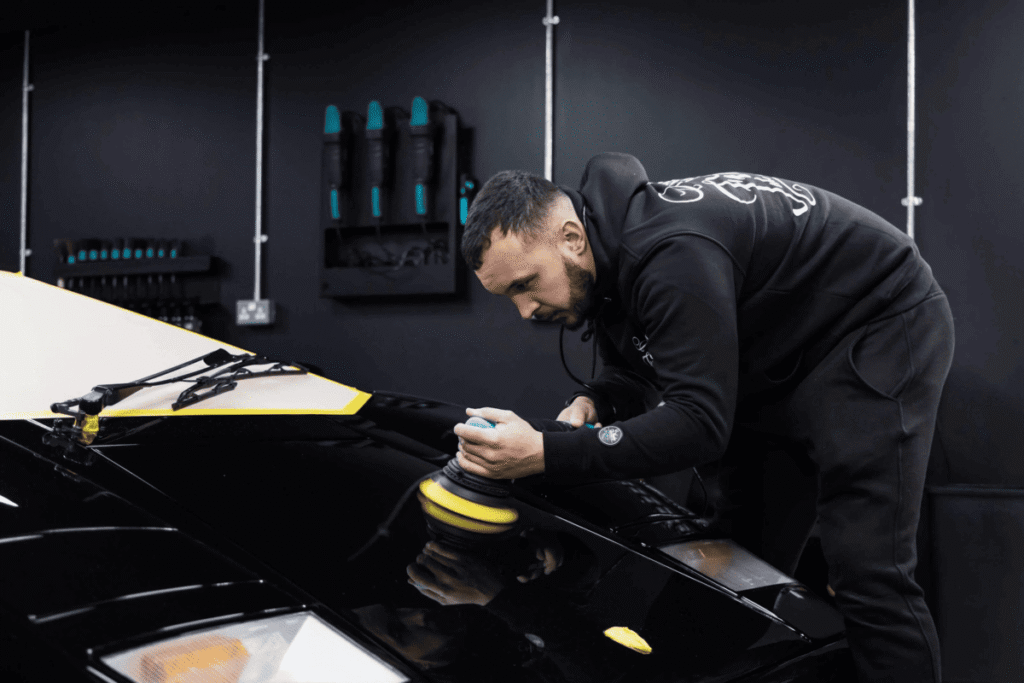
Professional installers follow a proven eight-step process to achieve the best possible results.
Step 1: Vehicle Inspection
The first step is a detailed inspection of the vehicle’s paint.
The installer checks for swirl marks, scratches, oxidation, stone chips, previous repairs, and paint condition. This assessment determines how much paint correction is needed before applying the coating.
Because ceramic coating doesn’t hide defects, any imperfections left untreated will remain visible after installation.
Step 2: Thorough Exterior Wash
Next, the vehicle is thoroughly washed using pH-neutral products to remove loose dirt, road grime, and dust.
Professional detailers often use a snow foam pre-wash followed by a careful hand wash to minimise the risk of creating additional swirl marks.
A clean vehicle provides the ideal starting point for the preparation process.
Step 3: Paint Decontamination
Even after washing, many contaminants remain bonded to the paint.
Professional decontamination removes iron fallout, tar, tree sap, industrial fallout, and other embedded particles using specialised chemical removers and a clay bar treatment.
This creates a perfectly smooth surface that allows the ceramic coating to bond correctly.
Step 4: Paint Correction
Paint correction is one of the most important stages of the entire process.
Using machine polishing, technicians remove swirl marks, light scratches, oxidation, water spot etching, and paint haze to restore clarity and gloss.
Here’s the thing many DIY kits don’t tell you: ceramic coating locks in the condition of your paint. If scratches are present before application, they’ll still be there afterwards. That’s why professional paint correction is such an important investment.
Step 5: Surface Preparation
After polishing, the paint is wiped down with a panel preparation solution to remove polishing oils and residue.
This step leaves the surface completely clean so the ceramic coating can chemically bond with the clear coat without interference.
Skipping this stage can reduce both coating performance and lifespan.
Step 6: Ceramic Coating Application
The ceramic coating is carefully applied panel by panel using a specialized applicator.
Professionals work in controlled lighting and temperature conditions to ensure even coverage across every painted surface.
The coating begins bonding almost immediately, so careful application is essential to achieve a uniform finish.
Step 7: Leveling and High Spot Removal
As the coating starts to flash, technicians inspect each panel and gently level the surface using premium microfibre towels.
This removes excess product before it cures and prevents visible high spots or streaks.
Proper leveling produces the deep, glossy finish ceramic coating is known for.
Step 8: Curing and Final Inspection
Once the coating has been applied, the vehicle is left to cure.
Most professional coatings become touch-dry within 24 to 48 hours, while complete curing usually takes up to seven days.
Before the vehicle is returned to the owner, technicians carry out a final inspection to ensure every panel has been coated evenly and no areas have been missed.
How Long Does Ceramic Coating Last?
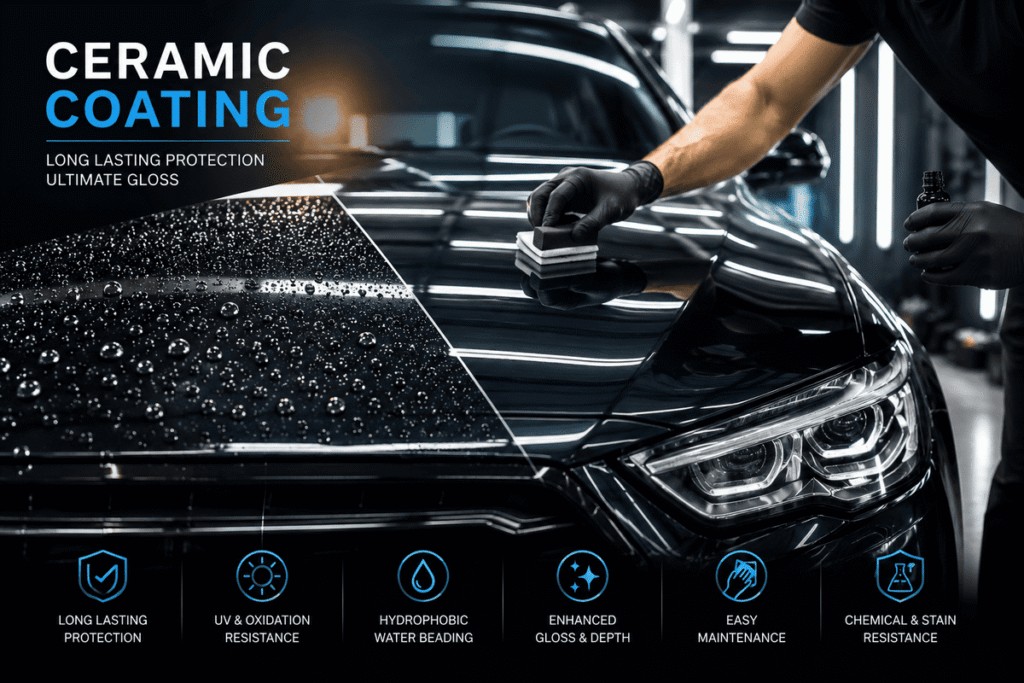
A professionally installed ceramic coating generally lasts 2 to 5 years, depending on the coating used, driving conditions, and maintenance routine.
Regular washing with pH-neutral shampoo and avoiding abrasive cleaning products will help maximise its lifespan.
Can Ceramic Coating Remove Scratches?
No.
Ceramic coating protects your paint but does not remove scratches, swirl marks, or stone chips.
If your vehicle has paint defects, they should be corrected before the coating is applied to achieve the best possible finish.
Is Ceramic Coating Worth It?
For most vehicle owners, yes.
Although the upfront cost is higher than wax, ceramic coating provides years of protection, reduces maintenance, improves gloss, and helps preserve your vehicle’s appearance.
If you’re comparing different paint protection options, you may also want to explore Graphene Coating, which offers similar long-term protection with additional heat dissipation and slickness for some vehicle owners.
If you’re planning to keep your car for several years, it often offers better long-term value than repeatedly applying traditional waxes.
Final Thoughts
Applying ceramic coating involves much more than simply wiping a product onto your vehicle. Proper inspection, preparation, paint correction, application, and curing all contribute to the final result.
When installed correctly, ceramic coating provides years of protection against UV rays, oxidation, water spots, and environmental contaminants while keeping your vehicle looking cleaner and glossier for longer.
If you’re considering professional ceramic coating in Sydney, choose an experienced installer with a proven track record. At Seven Star Window Tinting & Car Care, every vehicle receives a tailored preparation process to help achieve long-lasting results.
Frequently Asked Questions
How long does ceramic coating installation take?
Most professional installations take one to two days, depending on the vehicle’s size and the amount of paint correction required.
Does ceramic coating prevent paint fading?
Yes. Ceramic coating helps reduce UV-related oxidation and slows paint fading, although no coating can completely prevent wear caused by years of outdoor exposure.
Can ceramic coating be applied to a new car?
Yes. New vehicles usually require less paint correction, making them excellent candidates for ceramic coating.
Can ceramic coating be applied over PPF?
Yes. Many owners choose to apply ceramic coating over Paint Protection Film to improve gloss, make cleaning easier, and add chemical resistance.
Can I apply ceramic coating myself?
DIY kits are available, but professional application provides significantly better results because of the preparation, paint correction, and controlled installation process.