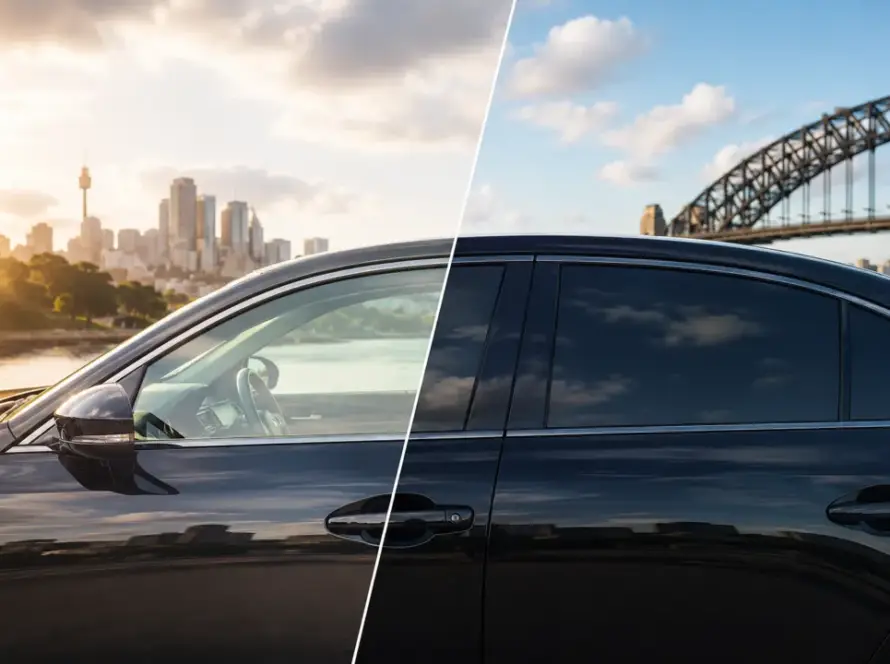
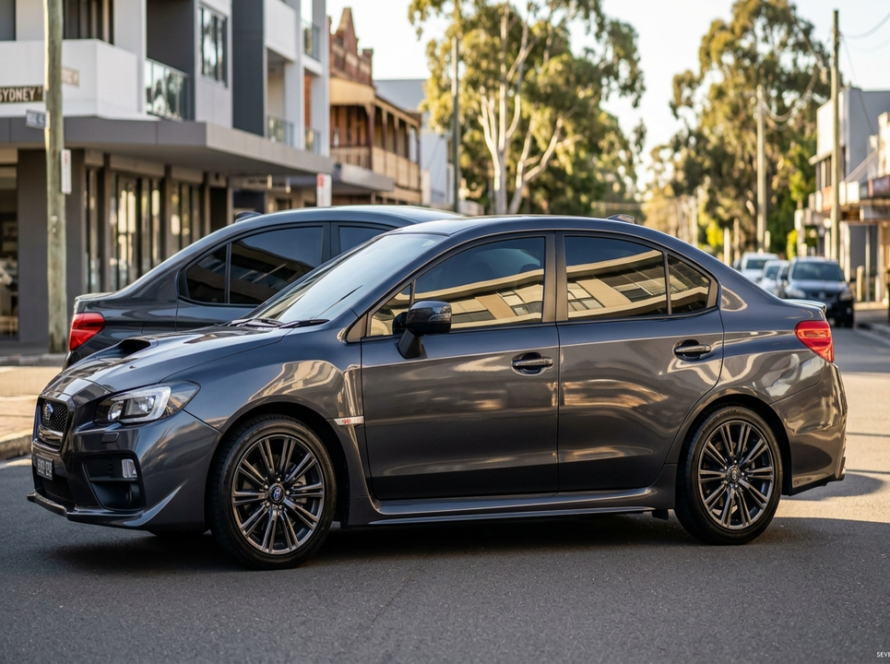
VLT (Visible Light Transmission) is the percentage of visible light that passes through your car windows after tint film is installed. A higher VLT percentage allows more light into the vehicle, while a lower VLT percentage creates a darker tint appearance.
Understanding VLT is essential when choosing a window tint. It affects tint darkness, privacy, visibility, and whether your vehicle complies with Australian tint laws. Before comparing tint percentages, it’s helpful to understand how car window tinting works and what each VLT level means.
In this guide, you’ll learn what VLT means, how it affects tint darkness, common legal window tint limits in Australia, and how to choose the right percentage for daily driving.
What Does VLT Mean?
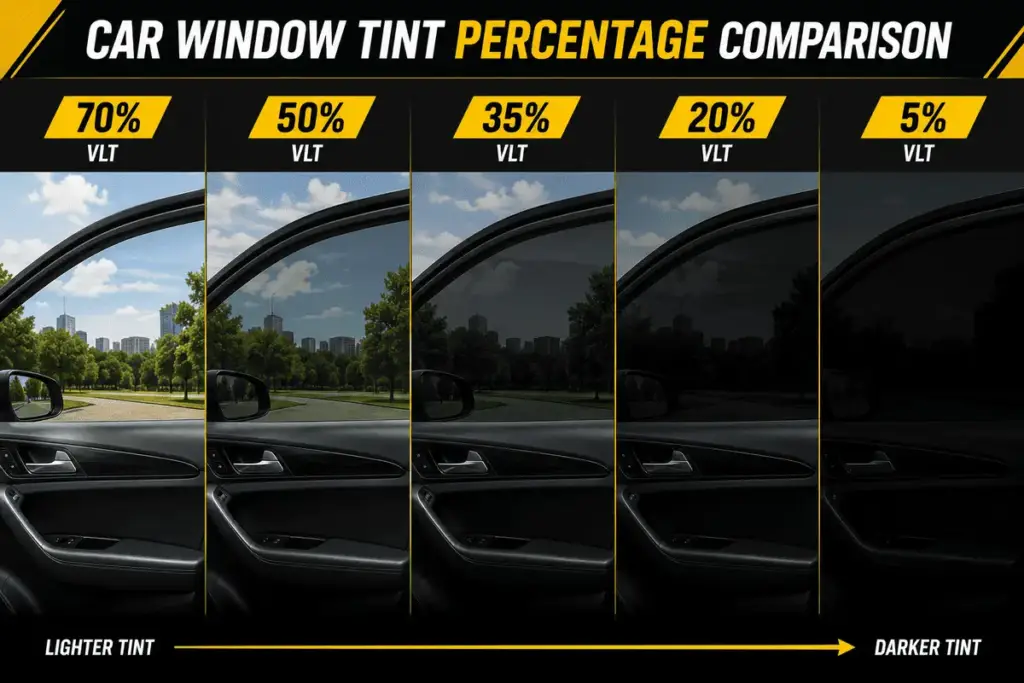
Visible Light Transmission (VLT) measures the amount of visible light that passes through your vehicle’s glass and film of car window tinting.
The percentage is simple:
- Higher VLT = More light enters the vehicle
- Lower VLT = Less light enters the vehicle
- Lower VLT = Darker tint appearance
For example:
- 70% VLT allows 70% of visible light through the window.
- 35% VLT allows 35% of visible light through the window.
- 20% VLT allows only 20% of visible light through the window.
The lower the percentage, the darker the tint appears from both inside and outside the vehicle.
Many people assume VLT refers to tint darkness itself, but it actually measures how much light is transmitted through the glass.
VLT Percentage Comparison
| Tint Percentage | Appearance | Privacy Level | Visibility |
| 70% VLT | Very light tint | Low | Excellent |
| 50% VLT | Light tint | Low-Medium | Excellent |
| 35% VLT | Medium tint | Balanced | Very Good |
| 20% VLT | Dark tint | High | Good |
| 5% VLT | Very dark limo tint | Very High | Limited |
This is why Visible Light Transmission is one of the most important factors when selecting a window tinting film.
How VLT Affects Tint Darkness
VLT directly affects how dark your vehicle windows appear.
Lower VLT = Darker Tint
A lower VLT percentage blocks more visible light and creates a darker appearance.
Benefits may include:
- Increased privacy
- Reduced glare
- More concealment for valuables
- Sportier vehicle appearance
However, a darker window tinting does not automatically mean better performance.
Higher VLT = Lighter Tint
A higher VLT percentage allows more natural light into the cabin.
Benefits include:
- Better visibility
- Easier night driving
- Improved safety in low-light conditions
- Reduced risk of exceeding legal tint limits
Day and Night Visibility
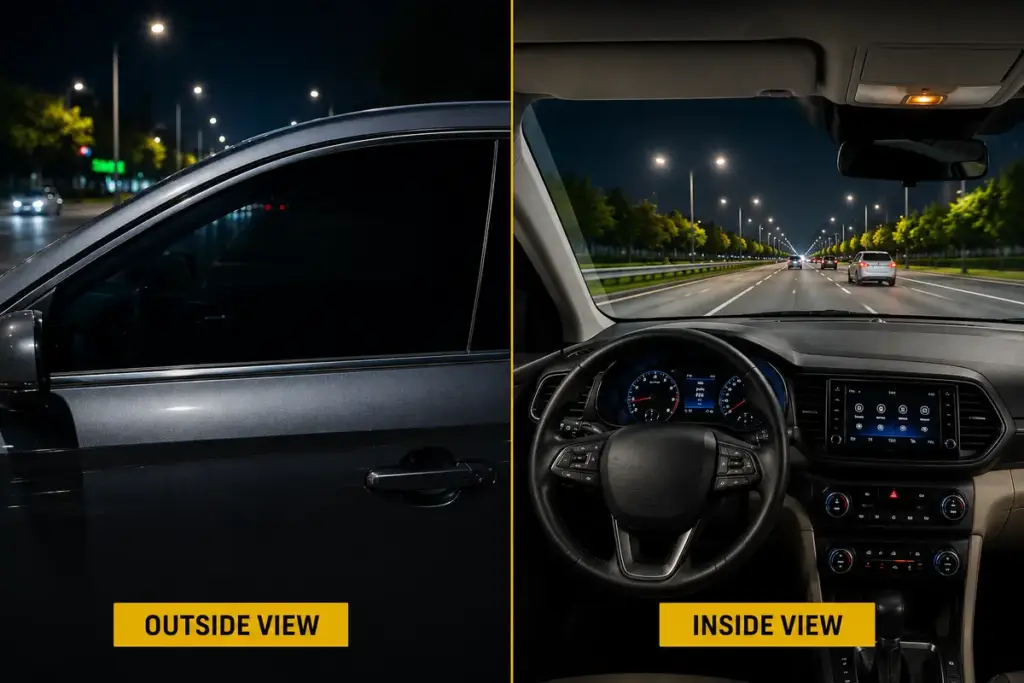
During the day, darker films can improve comfort by reducing glare and sunlight entering the cabin.
At night, very dark tint may make it more difficult to:
- Reverse safely
- Park accurately
- See pedestrians
- Drive on poorly lit roads
For this reason, many drivers choose a balanced window tinting percentage rather than the darkest available option.
Comparisons: 35% Tint vs 20% Tint
One of the most common comparisons is 35% tint vs 20% tint.
| Feature | 35% Tint | 20% Tint |
| Appearance | Medium-dark | Dark |
| Privacy | Good | High |
| Day Visibility | Very Good | Good |
| Night Visibility | Good | Reduced |
| Daily Driving | Excellent | Depends on conditions |
| Popularity | Very Popular | Popular |
For most daily-driven vehicles, 35% tint provides a balance between privacy, visibility, and legal compliance. Drivers who prioritize privacy often prefer 20% tint where permitted by law. You can explore our specific shades and pricing on our car window tinting packages page.
50% vs 35% vs 20% Tint Comparison
| Percentage | Privacy | Day Visibility | Night Visibility | Legal Front Windows (NSW) |
| 50% | Low | Excellent | Excellent | Yes |
| 35% | Medium | Very Good | Good | Yes |
| 20% | High | Good | Reduced | ❌ No (rear only) |
VLT and Legal Tint Limits
VLT is the measurement used by regulators to determine whether a vehicle’s tint is legal.
Why VLT Matters Legally
Australian tint regulations use Visible Light Transmission percentages to help maintain driver visibility and road safety.
This is why legal window tinting requirements are written using VLT percentages rather than descriptions of tint darkness.
Front Windows vs Rear Windows
Under NSW regulations, there is a clear distinction between front and rear cabin windows to ensure driver visibility remains safe:
Front Side Windows: Must maintain a minimum of 35% VLT. This is the legal limit for driver and front passenger safety.
Rear Side & Rear Windscreen: NSW laws allow a darker limit of 20% VLT for passenger vehicles (and up to 0% or commercial-grade darkness for commercial vehicles), provided the vehicle has functional side mirrors on both sides.
Using a professional installer ensures your vehicle is measured accurately to stay fully compliant with these specific limits.
Common Australian VLT Requirements
| State | Front Side Windows | Rear Windows |
| NSW | Minimum 35% VLT | Minimum 20% VLT |
| QLD | Minimum 35% VLT | Minimum 20% VLT |
| VIC | Minimum 35% VLT | Minimum 20% VLT |
| WA | Minimum 35% VLT | Minimum 20% VLT |
While most Australian states now align on the 35% front and 20% rear VLT standards for standard passenger cars, subtle rule variations can still apply depending on vehicle classification (such as SUVs vs. commercial vans).
At Seven Star Window, we use professional, calibrated VLT digital meters to measure the exact combination of your factory glass and film, guaranteeing your car drives away 100% road-legal in NSW.
Factory Glass and Tint Film
A common mistake is assuming the film percentage alone determines legality.
Factory glass already reduces some visible light transmission. When tint film is applied, the combined VLT becomes lower.
For example:
- Factory glass = 75% VLT
- Window film = 35% VLT
The final reading will be darker than 35%.
This is why professional measurements are important before installation.
How to Choose the Right VLT
The best VLT depends on your driving habits, privacy requirements, and local regulations.
Privacy Needs
If privacy is your main goal, lower VLT percentages generally provide better results.
Popular choices include:
- 35% tint for balanced privacy
- 20% tint for greater privacy
- Darker rear-window tint where legally permitted
Heat Reduction Goals
Many drivers assume darker tint automatically provides better heat rejection.
This isn’t always true.
Modern ceramic window films can reject significant solar heat while maintaining relatively high VLT levels.
Heat rejection depends on:
- Film technology
- Infrared (IR) rejection
- Total Solar Energy Rejected (TSER)
- Film construction
Not simply tint darkness.
Night Driving Comfort
Drivers who spend a lot of time on the road after dark often prefer moderate tint percentages.
A balanced VLT can provide:
- Better visibility
- Easier parking
- Improved safety
- More comfortable night driving
Recommended VLT by Driving Needs
| Goal | Recommended VLT |
| Maximum visibility | 70%-50% |
| Daily driving balance | 35% |
| More privacy | 20% |
| Rear windows only | 20%-5% where legal |
In North West Sydney, most drivers choose 35% tint for front windows because it’s legal and provides good privacy without reducing night visibility.
Before choosing a film, consider your local regulations, privacy needs, and driving conditions.
Does Lower VLT Mean Better Heat Rejection?
No.
This is one of the biggest misconceptions about window tinting.
Many people assume darker tints automatically blocks more heat. In reality, heat rejection depends more on film technology than tint darkness.
For example:
- A ceramic film with 50% VLT may reject more infrared heat than a dyed film with 20% VLT.
- A lighter premium film can outperform a darker entry-level film.
When comparing window films, look beyond tint percentage and consider:
- Infrared rejection
- UV protection
- TSER ratings
- Film quality
- Manufacturer warranty
These factors provide a better indication of overall performance.
Common VLT Mistakes
Assuming the Darkest Tint Is Best
Darker tint may increase privacy, but it can also reduce visibility and increase the risk of non-compliance.
Ignoring Factory Glass
The final VLT includes both the vehicle’s factory glass and the installed film.
Ignoring factory glass can result in a darker-than-expected outcome.
Choosing Based on Appearance Alone
The best tint percentage should suit your driving habits, climate, and visibility requirements.
Ignoring Local Tint Laws
Tint regulations vary between Australian states. Always confirm local requirements before installation.
Confusing VLT With Heat Rejection
Visible Light Transmission measures light passing through the glass, while heat rejection depends on film technology and infrared-blocking performance.
Get Professional Window Tinting in North West Sydney
If you’re ready to upgrade your vehicle with professional window tinting, get a free quote from Seven Star Window today. We serve Box Hill, Kellyville, Rouse Hill, Blacktown, and North West Sydney with mobile installation and lifetime warranties.
View our tinting prices and packages for carbon tint, ceramic tint, and standard options.
Conclusion
Understanding what is VLT in window tinting helps you choose a tint that balances privacy, visibility, appearance, and legal compliance. Visible Light Transmission determines how much light passes through your windows, making it one of the most important factors when selecting a window film.
Before choosing a tint percentage, consider your driving habits, privacy goals, night-time visibility requirements, and local regulations. The right option is not always the darkest tint—it’s the one that best suits your vehicle and everyday use.
FAQ’s
No. Lower VLT creates a darker tint and more privacy, but it can reduce visibility, especially during night driving. The best VLT depends on your needs, driving conditions, and local regulations.
Not directly. Heat rejection depends largely on the film’s technology. Ceramic films often provide excellent heat rejection even at higher VLT percentages.
For many drivers, 35% tint offers a practical balance between privacy, visibility, appearance, and legal compliance.
In most situations, yes. NSW regulations generally require front side windows to maintain at least 35% Visible Light Transmission.
Some drivers find 20% tint comfortable, while others prefer lighter films for improved visibility on poorly lit roads.
Yes. Factory glass already reduces visible light transmission. The final VLT is determined by measuring both the factory glass and the aftermarket tint film together.