Car window tinting is the process of applying a thin film to vehicle glass to reduce heat, block UV rays, minimize glare, and improve privacy. Quality window tint also helps protect your vehicle’s interior from sun damage while creating a more comfortable driving environment.
Many drivers choose automotive window tint in north west Sydney to improve cabin comfort during hot weather, reduce eye strain from sunlight, and protect upholstery, dashboards, and trim from fading over time.
In this guide, you’ll learn how window tint works, the different types of tint available, VLT requirements, Australian tint laws, and how to choose the right tint for your vehicle.
How Does Car Window Tint Work?
Window tint works by controlling the amount of visible light, UV radiation, and infrared heat that passes through automotive glass. This helps reduce cabin temperatures, minimize glare, and protect occupants from harmful UV exposure.
The result is:
- Lower cabin temperatures
- Reduced glare
- Better driving comfort
- Improved interior protection
- Increased privacy
Sunlight contains three main components:
- Visible light
- Ultraviolet (UV) radiation
- Infrared (IR) heat
Window films are engineered to absorb, reflect, or reject portions of these components depending on the film technology used.
What Are the Benefits of Car Window Tinting?
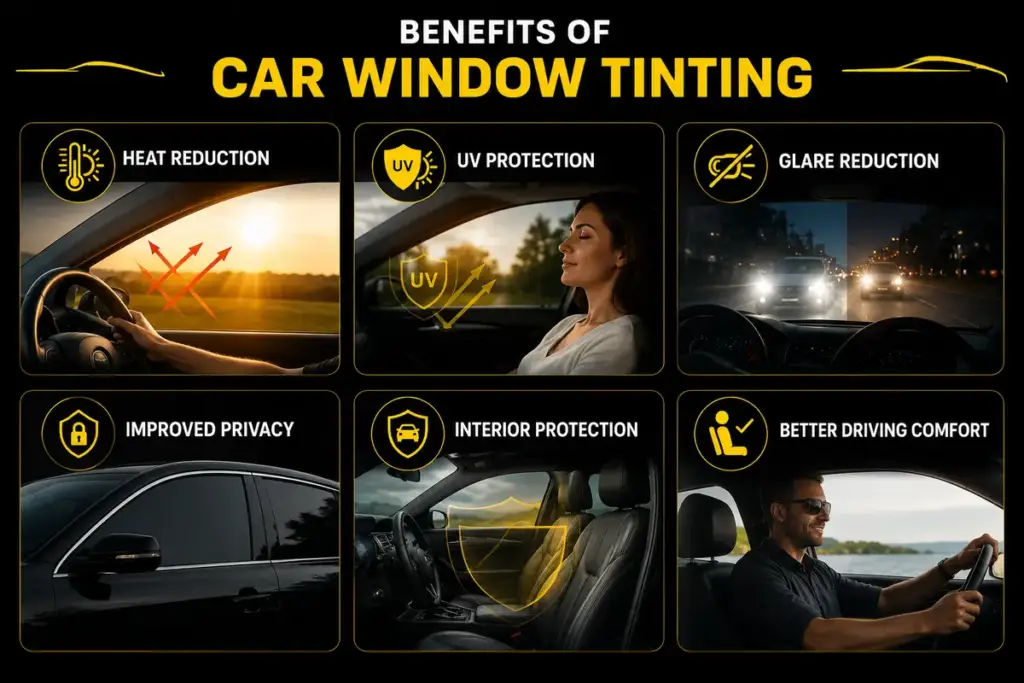
Heat Reduction
Window tint helps reduce solar heat entering the vehicle. Heat-rejecting films can improve cabin comfort and reduce reliance on air conditioning during warmer months.
UV Protection
Many premium window films block up to 99% of harmful UV rays, helping protect both occupants and vehicle interiors from sun damage.
Glare Reduction
Tinted windows reduce glare from sunlight, roads, and reflective surfaces, making driving more comfortable during bright conditions.
Improved Privacy
Window tint limits visibility into the vehicle while maintaining outward visibility for the driver.
Interior Protection
UV radiation and heat contribute to fading, cracking, and deterioration of interior materials. Window tint helps preserve:
- Leather seats
- Upholstery
- Dashboards
- Plastic trim
- Electronic displays
Better Driving Comfort
By reducing heat and glare, window tint creates a more comfortable environment for both drivers and passengers.
What Types of Car Window Tint Are Available?
Several window film technologies are available, each offering different levels of performance.
Dyed Window Tint
Dyed tint uses layers of dye to absorb sunlight and reduce brightness.
Best for:
- Privacy
- Appearance
- Basic glare reduction
Carbon Window Tint
Carbon tint contains carbon particles that improve heat rejection without using metal.
Best for:
- Heat control
- UV protection
- Non-reflective appearance
Ceramic Window Tint
Ceramic window tint is widely considered the highest-performing automotive tint because it provides excellent heat rejection, strong UV protection, clear visibility, and no signal interference.
Benefits include:
- Excellent heat rejection
- High UV protection
- Optical clarity
- No interference with GPS, mobile, or radio signals
For the ultimate vehicle protection combo, many owners pair this with our elite ceramic coating services in Sydney to shield both the glass and the paintwork.
Metallized Window Tint
Metallized tint contains microscopic metallic particles that reflect solar energy.
Benefits include:
- Increased durability
- Strong heat rejection
- Effective glare reduction
Some metallic films may affect electronic signals.
Ceramic vs Carbon vs Dyed Tint
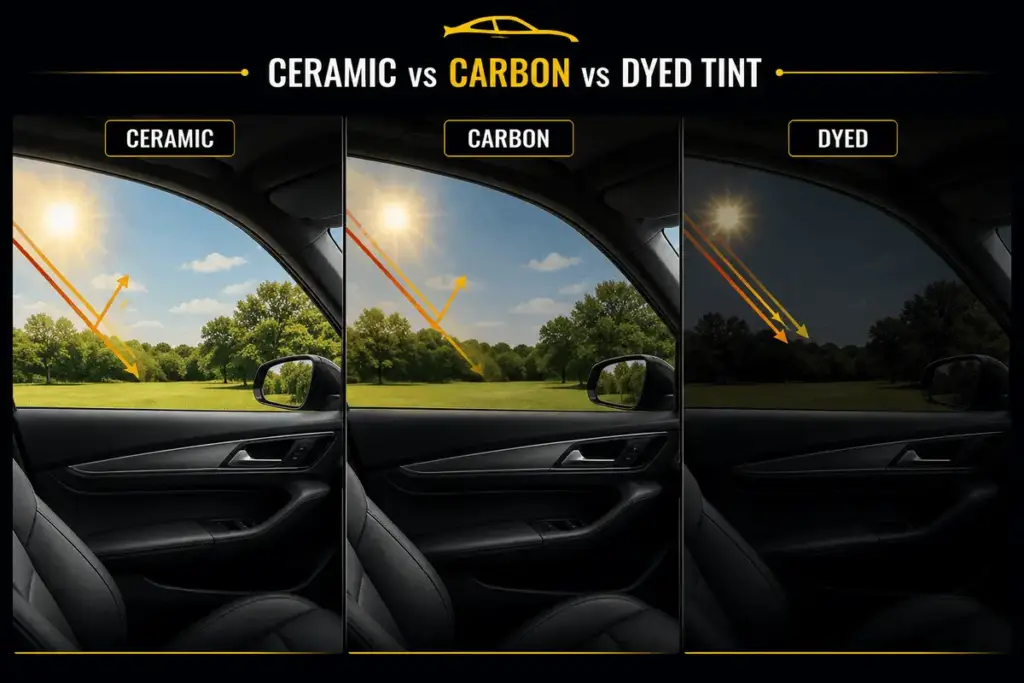
| Feature | Ceramic | Carbon | Dyed |
| Heat Rejection | Excellent | Very Good | Basic |
| UV Protection | Excellent | Very Good | Moderate |
| Infrared Rejection | Excellent | Good | Low |
| Signal Interference | None | None | None |
| Visibility | Excellent | Good | Good |
| Lifespan | Long | Long | Shorter |
For drivers seeking maximum performance, ceramic tint typically provides the best overall balance of heat rejection, UV protection, and visibility.
What Is VLT in Window Tinting?
VLT (Visible Light Transmission) measures the percentage of visible light that passes through a window.
Examples:
- 70% VLT = 70% of light passes through
- 35% VLT = 35% of light passes through
- 20% VLT = 20% of light passes through
Lower VLT percentages create darker windows because less light enters the vehicle.
Higher VLT percentages create lighter windows while maintaining visibility.
VLT affects:
- Privacy
- Visibility
- Appearance
- Legal compliance
How Do You Choose the Right Tint Percentage?
The ideal tint percentage depends on your driving habits, visibility needs, and privacy preferences.
For Daily Driving
Many drivers choose a tint that balances:
- Heat rejection
- UV protection
- Visibility
- Legal compliance
For Increased Privacy
Darker tint percentages generally provide greater privacy but reduce the amount of visible light entering the vehicle according to NSW vehicle regulations.
For Better Night Visibility
Lighter tint percentages help maintain visibility in low-light conditions while still providing UV and heat protection.
Before choosing a tint level, consider both your visibility requirements and local regulations.
Is Car Window Tinting Legal in Australia?
Yes, car window tinting is legal in Australia, but tint laws vary between states and territories.
Australian regulations generally specify minimum VLT requirements for:
- Front side windows: 35% VLT
- Rear side windows: 20% VLT
- Rear windshields: 20% VLT
- Front windshields: 70% VLT
The front windshield is usually subject to stricter visibility requirements because it directly affects driver safety.
Drivers should always verify the tint regulations that apply in their state before installation. Community discussions also frequently highlight the importance of complying with VLT requirements to avoid penalties.
How Much Does Car Window Tinting Cost?
The cost of car window tinting depends on the vehicle size, film technology, installation complexity, and warranty coverage.
Common factors affecting price include:
- Vehicle size
- Number of windows
- Tint type
- Installation quality
- Warranty coverage
- Removal of existing tint
Premium ceramic films typically cost more than dyed films because they offer superior heat rejection and UV protection.
For pricing and package options, visit seven star window tinting and pricing pages.
Why Is Professional Window Tint Installation Important?
Professional installation directly affects the performance and lifespan of window tint.
Benefits of professional installation include:
- Bubble-free application
- Proper film alignment
- Better adhesion
- Cleaner finish
- Warranty protection
- Longer lifespan
Improper installation can lead to:
- Peeling
- Bubbling
- Contamination
- Reduced visibility
Professional installers use specialized techniques and tools to ensure consistent results.
How Long Does a Car Window Tint Last?
High-quality window tint can last 7 to 10 years or longer when professionally installed and properly maintained.
Factors affecting lifespan include:
- Film quality
- UV exposure
- Climate conditions
- Installation quality
- Cleaning methods
Using suitable cleaning products and avoiding abrasive materials helps preserve the film’s appearance and performance.
Can Car Window Tint Be Removed?
Yes. Window tint can be safely removed when it becomes damaged, outdated, or no longer meets your requirements.
Common reasons for removal include:
- Bubbling
- Fading
- Peeling
- Upgrading to ceramic tint
- Compliance requirements
Professional removal helps minimise the risk of adhesive residue, scratches, and damage to rear window defroster lines.
Conclusion
Car window tinting improves driving comfort by reducing heat, blocking UV rays, controlling glare, and increasing privacy. Understanding how window film works, the differences between tint types, VLT ratings, and Australian tint regulations helps drivers choose the right solution for their vehicle.
Whether you choose dyed, carbon, ceramic, or metallized tint, professional installation and quality materials play a major role in long-term performance and durability.
FAQ’s
Yes. Many premium automotive window films block up to 99% of harmful UV radiation.
Yes. Window tint helps reduce solar heat and infrared energy entering the cabin, improving comfort during hot weather.
Yes. Ceramic tint provides excellent heat rejection, UV protection, visibility, and long-term performance without affecting electronic signals.
High-quality ceramic and carbon window films generally provide the longest lifespan when professionally installed.
Very dark tint levels can reduce visibility in low-light conditions. Choosing an appropriate VLT helps balance privacy and visibility.