Electric vehicles are changing the way Australians drive, but one thing has not changed: the Sydney sun is still harsh on cars and the people inside them. That is why window tinting for electric vehicles has become one of the most asked-about upgrades for new EV owners. At Seven Star Window, we tint everything from compact city EVs to large family SUVs, and we have seen first-hand that EVs have a few needs that petrol cars do not.
In this guide, we explain what makes EV window tinting different, which film types work best, how tint can help your driving range, and what you should check before booking.
Why Window Tinting Matters More for Electric Vehicles
In a petrol car, running the air conditioner uses some fuel, and most drivers never notice. In an EV, the air conditioner draws power straight from the same battery that moves the car. On a hot summer day, a cabin that has been parked in the sun needs a lot of cooling, and that energy comes out of your available range.
Good quality tint reduces the amount of solar heat that enters the cabin. A cooler cabin means the climate system works less, which helps you keep more charge for driving. It is not a magic range booster, but on long summer trips and in daily stop-start traffic, every bit of saved energy counts.
Many modern EVs also have very large glass areas, including panoramic glass roofs and big rear windows. More glass means more sunlight, more heat and more glare, which makes tint even more useful.
Choosing the Right Film: Ceramic vs Carbon vs Dyed
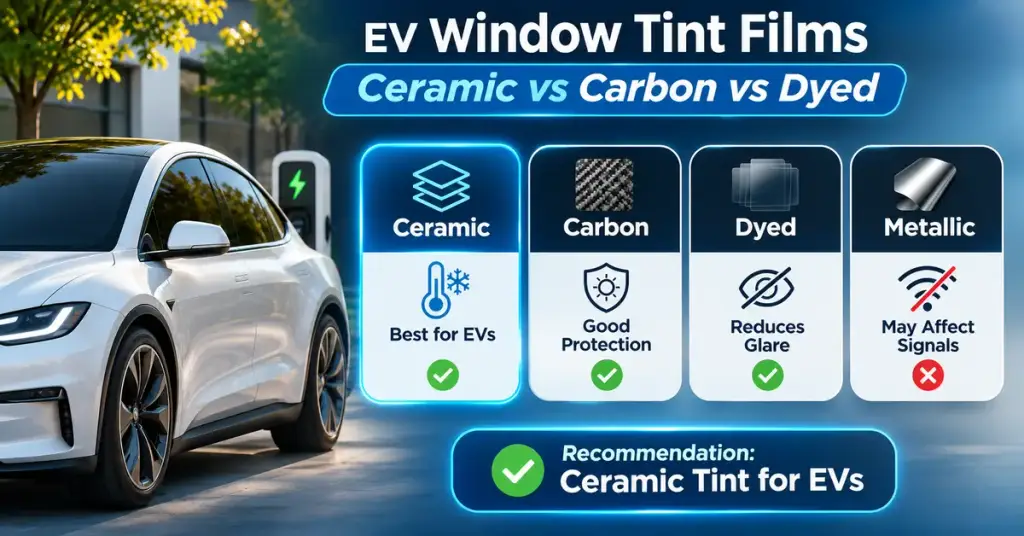
Not every tint film suits an electric vehicle. Here is a simple comparison:
- Ceramic tint: The top choice for most EV owners. Ceramic film blocks a high level of infrared heat without needing to be very dark, so you get strong heat rejection while keeping a clear view. It is non-metallic, so it will not interfere with phone signals, GPS or keyless entry.
- Carbon tint: A solid mid-range option. It gives good heat and UV protection, a matte finish and does not fade quickly. It is also non-metallic and signal-friendly.
- Dyed tint: The most budget-friendly film. It reduces glare and adds privacy, but its heat rejection is lower and it can fade over time. For an EV where heat control is the main goal, dyed film is usually not the best value.
- Metallic tint: Metallised films reject heat well, but the metal layer can affect radio, mobile and GPS signals. Since EVs rely heavily on connectivity, apps and over-the-air updates, most installers avoid metallic films on EVs.
For most drivers, ceramic tint for EVs gives the best balance of comfort, clarity and long-term performance.
Protecting Your EV’s Sensors, Cameras and Technology
Electric vehicles are packed with technology. Cameras, rain sensors, lane-keeping systems and driver-assist features often sit near the windscreen and windows. A professional installer knows where these components are and will make sure the film does not block or distort them.
This is also why non-metallic films matter. Your EV may use its mobile connection for navigation, charging station searches, remote climate control and software updates. A ceramic or carbon film keeps these features working as they should.
If you want this done properly the first time, our team offers professional car window tinting services using quality, signal-safe films that suit modern electric vehicles.
Glass Roof Tinting: What You Should Know
Panoramic glass roofs look amazing, but they can turn the cabin into a greenhouse in summer. Many EV owners in Sydney complain about heat on their head and shoulders on sunny days, even with the air conditioner running.
A clear or light ceramic film on the glass roof can make a noticeable difference. Because ceramic film targets infrared heat rather than visible light, you can keep the open, bright feel of the roof while reducing the heat that comes through it. Glass roofs are large, curved surfaces, so this job needs an experienced installer to get a clean, bubble-free finish.
UV Protection for You and Your Interior
EV interiors often use premium vegan leather, fabric and large touchscreens. Long hours in direct sun can fade materials and make surfaces uncomfortably hot. Quality window films block up to 99% of UV rays, which helps protect:
- Seats and dashboard materials from fading and cracking
- Large screens from glare and heat build-up
- Your skin and your passengers’ skin on long drives
This is especially valuable for families with young children in the back seat.
Understanding Tint Laws in NSW
Before choosing a shade, make sure your tint is legal. In NSW, front side windows must let at least 35% of visible light through, and rear side and back windows must let at least 20% through. The windscreen can only have a tinted band across the top portion of the glass. Rules can change and other states have their own limits, so always check with Transport for NSW or ask your installer.
The good news is that you do not need very dark tint to get great heat rejection. A legal 35% ceramic film can outperform a much darker dyed film when it comes to keeping your EV cool.
How Much Does EV Window Tinting Cost?
The price depends on your vehicle size, the number of windows, whether you include the glass roof and the film you choose. Ceramic film costs more than dyed or carbon, but for an EV the extra heat rejection usually pays off in comfort and energy savings. For a detailed breakdown of film types and pricing, read our guide on car tint cost in Sydney.
What to Look for in an EV Tinting Installer
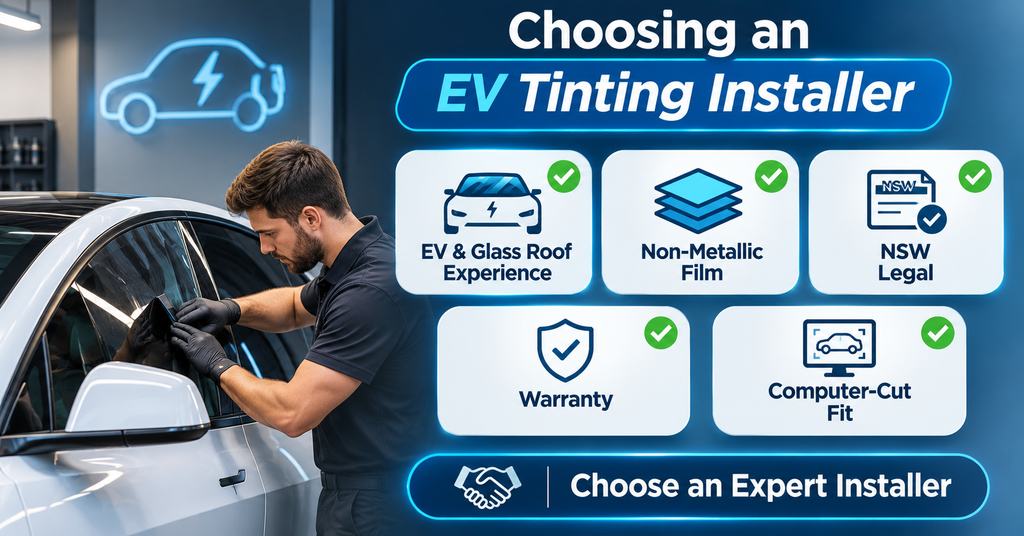
Before you book, ask these questions:
- Do you have experience with electric vehicles and glass roofs?
- Which films do you recommend, and are they non-metallic?
- Is the tint legal for NSW?
- Do you offer a warranty on the film and the installation?
- Will the film be computer-cut or hand-cut to fit my model?
A good installer will answer clearly and recommend a film based on how you use your car, not just on price.
Conclusion
Window tinting for electric vehicles is about more than looks. The right film keeps your cabin cooler, protects your interior, reduces glare and helps you get the most out of every charge. Choose a quality ceramic or carbon film, stay within NSW tint laws and work with an installer who understands EV technology.
Ready to keep your EV cool and protected? Contact Seven Star Window today for a free quote on professional EV window tinting in Sydney.
Frequently Asked Questions
Tint will not directly increase battery capacity, but it reduces cabin heat. A cooler cabin needs less air conditioning, which uses less battery power. Over a hot Sydney summer, that can help you keep more range for driving.
Ceramic tint is generally the best choice for electric vehicles. It offers high heat rejection, strong UV protection and great clarity, and it does not interfere with GPS, mobile signals or keyless entry.
Yes. Many EV owners tint their panoramic glass roof with a clear or light ceramic film. This keeps the roof bright while cutting the heat that comes through. Because the glass is large and curved, it should be done by an experienced installer.
Not when it is installed correctly. A professional installer keeps film clear of cameras and sensors and uses non-metallic films, so your driver-assist features and connectivity keep working normally.