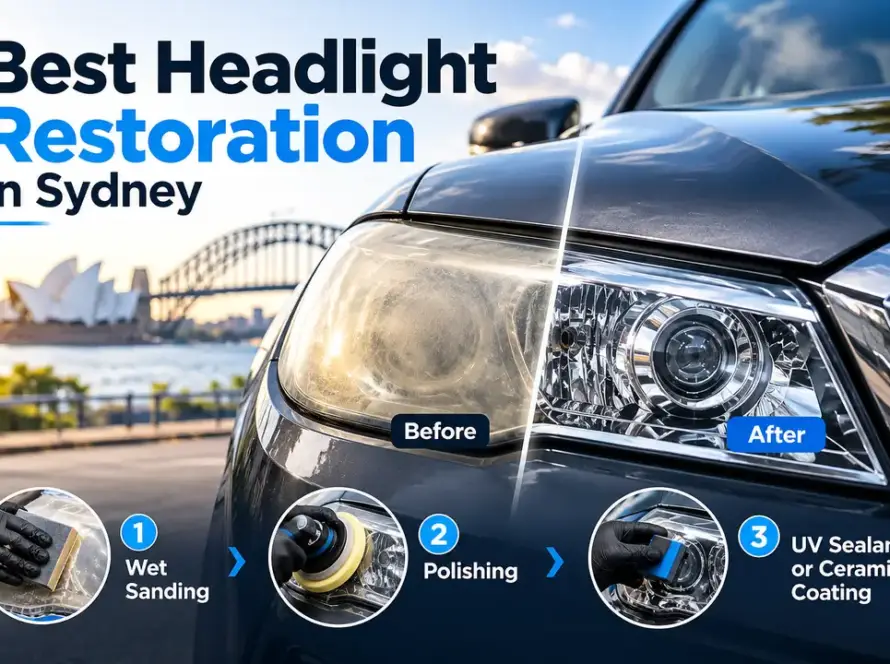
Driving at night becomes more difficult when your headlights no longer provide clear, consistent illumination. If the lenses look yellow, cloudy, or faded, the problem may be more than cosmetic. Reduced lens clarity can affect how effectively light reaches the road.
Headlight restoration for night driving can help address surface oxidation and haze that affect older headlight lenses. At Seven Star Window, we help drivers in Sydney, including Rouse Hill and Blacktown, understand when their headlights may need attention. Here are seven signs to look out for and what you can do about them.
How Do Cloudy Headlights Affect Night Driving?
Most modern vehicle headlights use clear plastic lenses designed to protect the lighting components while allowing light to pass through.
Over time, exposure to sunlight, weather and everyday road conditions can cause the outer surface to become cloudy or yellow. This reduces lens clarity and can affect the appearance and distribution of the light.
You may notice:
- Less clear illumination of the road ahead.
- Difficulty seeing objects in darker areas.
- Headlights that appear dull despite working bulbs.
- Reduced confidence when driving on poorly lit roads.
Cloudy lenses are not the only possible cause of poor visibility, but they are worth checking if your headlights have become noticeably hazy.
7 Signs Your Headlights Need Attention
If you regularly drive at night, pay attention to changes in your headlights’ appearance and performance.
1. Yellow or Cloudy Headlight Lenses
One of the most recognisable signs is a yellow or cloudy appearance. Clear lenses can gradually develop a faded, discoloured surface due to UV exposure and environmental wear.
If the discolouration is on the outside of the lens, restoration may help improve its clarity.
2. Reduced Light Output
Do your headlights seem less effective than they used to be?
Cloudy lenses can interfere with light transmission, making illumination appear weaker. However, reduced brightness can also result from ageing bulbs, electrical faults or other lighting problems.
Check the bulbs and lighting system before assuming restoration is the solution.
3. Uneven or Hazy Beam Appearance
Headlights should provide a clear and properly directed beam.
If the light looks scattered, uneven, or unusually hazy, inspect the lenses and have the beam alignment checked. Damaged lenses, incorrect alignment, or internal reflector problems may contribute to the issue.
4. Difficulty Seeing Road Signs
If road signs and roadside objects seem harder to see at night, your lighting performance may need attention.
Cloudy headlight lenses can contribute to reduced visibility, particularly on roads with limited street lighting. However, always consider other factors, including eyesight, weather and bulb condition.
5. Poor Visibility in Rain
Rain can make night driving more challenging because water on the road reflects light and reduces contrast.
If your headlights already have cloudy or oxidised lenses, visibility may feel even worse. Inspect the lenses and check that both headlights are working correctly.
6. One Headlight Appears Dimmer Than the Other
If one headlight looks noticeably weaker, compare both lenses for differences in colour, clarity, and condition.
A worn bulb, damaged lens, wiring issue or electrical fault could also be responsible. A professional inspection can help identify the actual cause.
7. Visible Oxidation or Surface Damage
Look closely at the headlight lens in daylight. You may notice:
- A yellow or brown surface tint.
- A cloudy or milky appearance.
- Faded or rough-looking areas.
- Fine surface marks or deterioration.
These signs may indicate oxidation or UV-related damage. If the problem is limited to the outer surface, professional restoration may improve the appearance.
What Causes Headlights to Become Cloudy?
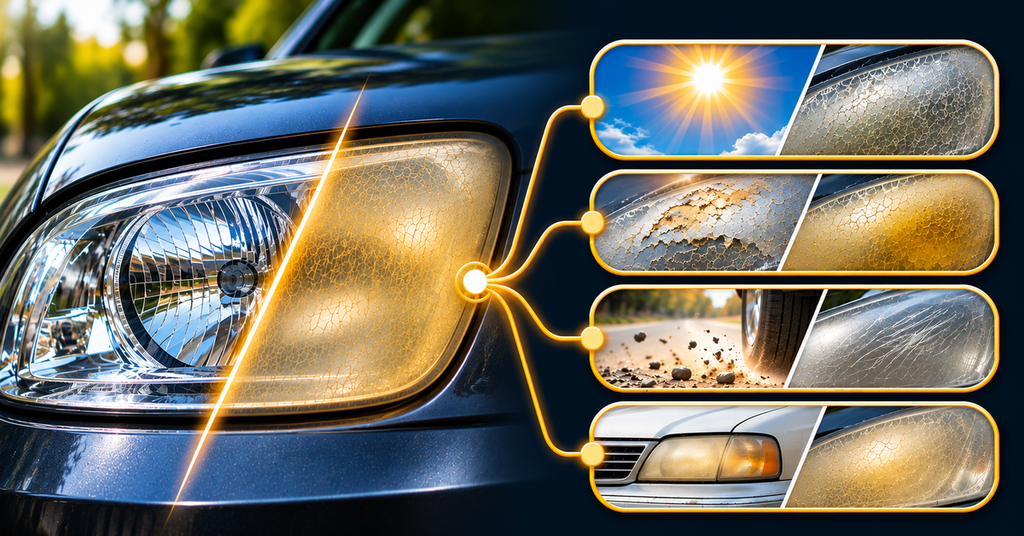
Headlight lenses are exposed to sunlight, changing temperatures, moisture, and road contaminants throughout the year.
Several factors can contribute to deterioration.
UV damage
Ultraviolet radiation from sunlight gradually affects the protective coating on many plastic headlight lenses. Once that coating deteriorates, the surface can become yellow, faded or cloudy.
Oxidation
Oxidation occurs as the exposed lens surface deteriorates over time due to environmental exposure. It can create a dull, hazy appearance that affects the lens’s clarity.
Road debris and environmental exposure
Dust, dirt, small road particles, and other contaminants can gradually affect the surface. Improper cleaning and abrasive materials can also cause scratches or damage.
Age and general wear
Older vehicles often have headlights that have experienced years of exposure. Even with regular washing, the original lens surface can deteriorate over time.
Can Headlight Restoration Improve Night Visibility?
Yes, our professional headlight restoration service can help when cloudy or oxidised outer lenses are contributing to the problem. Proper restoration can improve their clarity and help light pass through more effectively.
A professional restoration process may involve:
- Cleaning the headlight to remove dirt and surface contaminants.
- Assessing the condition of the lens.
- Removing deteriorated surface material where appropriate.
- Refining and polishing the surface.
- Applying a suitable UV-resistant protective coating.
The exact process depends on the lens condition and restoration system used.
Restoration does not increase the power of the bulbs. Its purpose is to improve the condition of the lens, not repair every possible headlight fault.
Headlight Restoration vs Replacement
| Feature | Headlight restoration | Headlight replacement |
| Best suited for | External haze and oxidation | Cracked or severely damaged units |
| Main purpose | Improve lens clarity | Replace the complete headlight unit |
| Existing unit | Usually retained | Replaced |
| Suitable for | Restorable outer lens damage | Internal or structural damage |
| Consideration | Results depend on lens condition | Compatibility and replacement cost |
Restoration may be suitable for cloudy outer lenses, but replacement could be necessary if the housing is cracked, moisture has entered the unit or internal components are damaged.
When Is Headlight Restoration Not Enough?
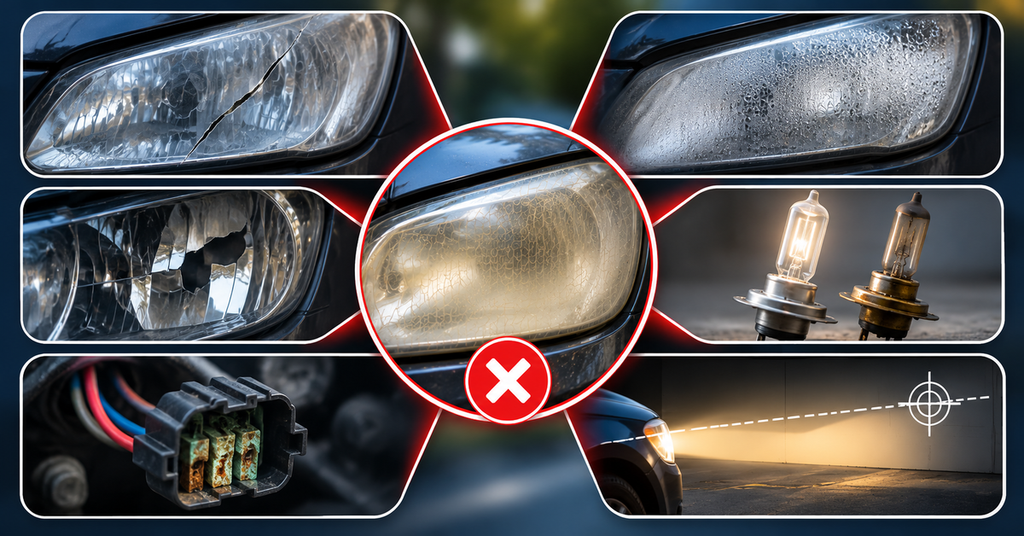
Not every headlight problem can be fixed through polishing or restoration.
You may need further inspection or replacement if:
- The headlight housing is cracked.
- Water or condensation is collecting inside.
- Internal reflectors are damaged.
- Bulbs are failing or incorrectly fitted.
- Electrical connections are faulty.
- Headlight alignment is incorrect.
If the lenses are already clear but the lights remain dim, investigate the bulbs, wiring, reflectors and alignment instead of paying for unnecessary restoration. If you are unsure which option is right for your vehicle, read our guide to headlight restoration vs headlight replacement to understand the differences.
Common Headlight Problems and Solutions
| Problem | Possible cause | Recommended action |
| Yellow outer lens | UV damage or oxidation | Assess for restoration |
| Cloudy surface | External deterioration | Professional lens restoration |
| One dim headlight | Bulb or electrical fault | Inspect lighting system |
| Moisture inside | Damaged seal or housing | Inspect and consider replacement |
| Poorly directed beam | Incorrect alignment | Professional beam adjustment |
Expert Tips for Better Night Driving Visibility
A few simple checks can help maintain your headlights and identify problems early.
1. Inspect both headlights regularly. Compare their colour and clarity in daylight to spot differences.
2. Keep the lenses clean. Use suitable automotive cleaning products and a soft cloth.
3. Check the bulbs. If one light is dimmer, have the bulb and electrical connections inspected.
4. Protect restored lenses. Ask your installer about UV-resistant protection and how long it is expected to last.
5. Check beam alignment. Properly functioning headlights must also be aimed correctly to illuminate the road without dazzling other drivers.
6. Do not ignore sudden changes. If your headlights become dim or stop working, arrange an inspection rather than assuming the lenses need restoration.
Common Headlight Restoration Mistakes to Avoid
Assuming every dim headlight needs restoration
A cloudy lens is only one possible cause of reduced brightness. Bulbs, electrical components, and alignment should also be checked.
Using abrasive household products
Harsh cleaners and unsuitable polishing materials can scratch or further damage the lens surface.
Skipping UV protection
After restoration, an appropriate protective coating helps protect the exposed lens from further UV-related deterioration.
Ignoring internal damage
Polishing the outside will not repair cracked housings, damaged reflectors or moisture inside the headlight.
Waiting until visibility becomes seriously affected
If you notice yellowing or haze, arrange an inspection before the problem becomes more noticeable during night driving.
Conclusion
Clear headlights are important for comfortable and confident night driving. Yellow lenses, surface oxidation, cloudy patches, and reduced light output are signs worth investigating, particularly on older vehicles.
Headlight restoration for night driving can improve lens clarity when external deterioration is affecting the light passing through the headlight. However, it is not a solution for every lighting problem. Faulty bulbs, damaged reflectors, electrical issues and incorrect alignment need separate attention.
If your headlights have become cloudy or faded, Seven Star Window can help assess whether professional restoration is appropriate. Drivers in Sydney, Rouse Hill and Blacktown can discuss their options and take steps towards maintaining clearer headlights.
Frequently Asked Questions
Yes. Cloudy or oxidised outer lenses can reduce light transmission and affect visibility. However, bulb condition, beam alignment and other lighting faults should also be considered.
Restoration can improve apparent brightness when external oxidation or haze is restricting light through the lens. It does not increase bulb power or fix electrical problems.
If the problem is mainly yellowing or cloudiness on the outer lens, restoration may be suitable. Cracks, internal moisture, or damaged components may require replacement.
Seven Star Window provides headlight restoration services for drivers in Sydney and surrounding areas, including Rouse Hill and Blacktown. Contact the team to discuss your headlight condition and whether restoration is suitable.