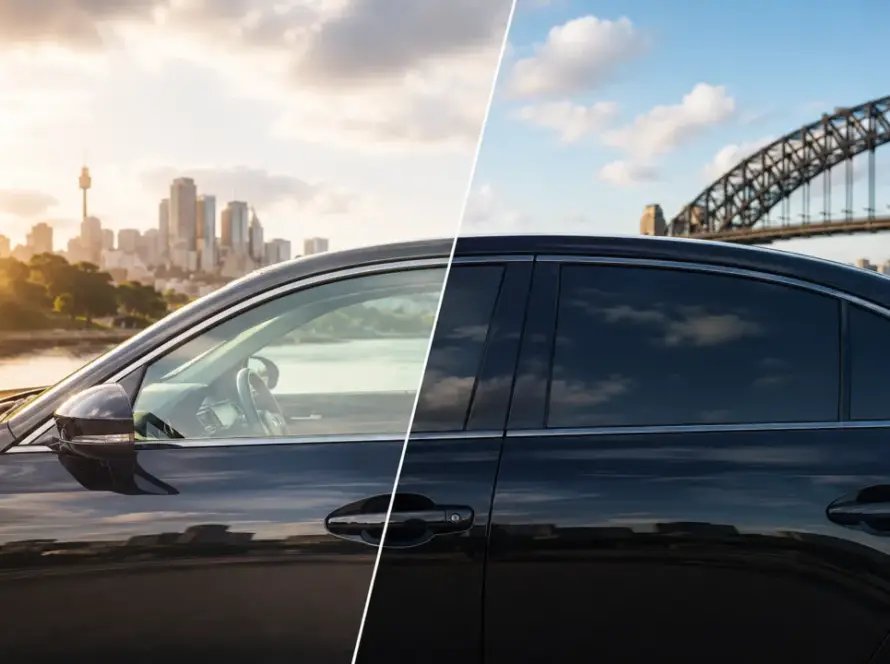
Driving after dark can be challenging, especially on roads with limited street lighting. Headlights from oncoming vehicles, reflections on wet roads, and reduced visibility through dark windows can make an ordinary journey feel more demanding.
If you are considering car window tinting for night driving, choosing the right film matters more than choosing the darkest shade. A suitable tint can help manage glare and daytime heat while still letting enough light through for clear vision after sunset.
At Seven Star Window, we help drivers in Sydney, including Rouse Hill and Blacktown, understand their tinting options. Here is what to consider before choosing a film for your vehicle.
Why Does Window Tint Matter for Night Driving?
Window tint changes how much visible light passes through your car’s glass. While darker film can add privacy and reduce bright light entering the cabin, it can also make it harder to see pedestrians, cyclists, and other vehicles in low light.
The effect is particularly noticeable when reversing, turning into an unlit street or checking your surroundings at an intersection.
For night commuters and frequent evening drivers, the goal should be to maintain clear visibility without giving up the benefits of window tinting altogether.
How tint darkness affects visibility
A darker tint allows less visible light into the vehicle. This can make it harder to distinguish objects in shadow, particularly when the road is poorly lit.
For example, a driver travelling through a well-lit Sydney shopping district may find visibility comfortable with a particular tint. The same film could feel much darker when driving along a rural road outside the city.
Your driving conditions should therefore influence your choice of film.
Understanding VLT: The Key to Choosing the Right Tint
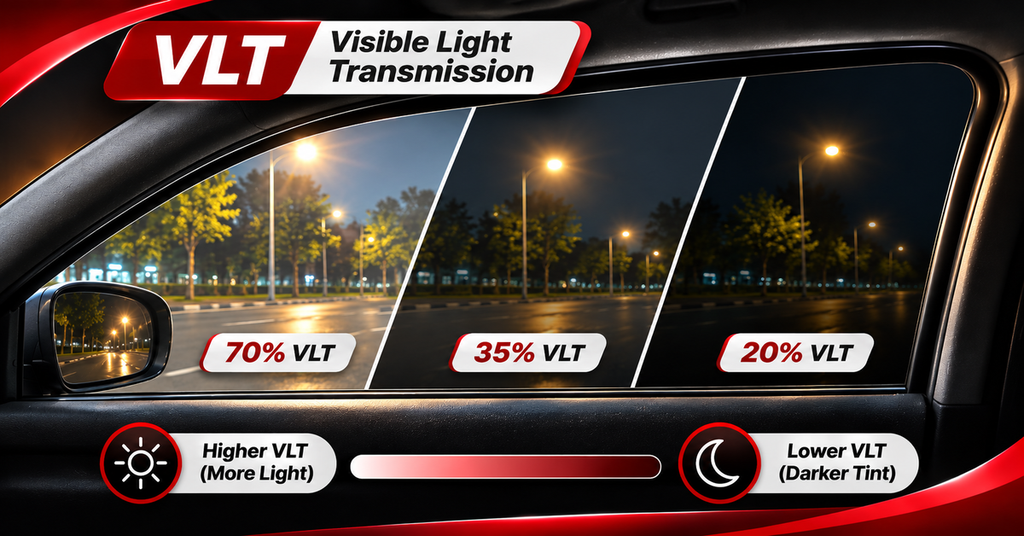
Visible light transmission (VLT) is the percentage of visible light that passes through a window.
A higher VLT means more light passes through the glass, while a lower VLT means the window is darker.
For example:
- 70% VLT allows approximately 70% of visible light through.
- 35% VLT allows approximately 35% of visible light through.
- 20% VLT allows approximately 20% of visible light through.
VLT is one of the most useful measurements when comparing window films for night driving. Understanding the difference between light and dark tint can help you choose a film that suits your driving conditions. Read our window tint VLT guide to understand how different tint percentages affect visibility, privacy and the appearance of your vehicle.
Why the advertised film percentage is not the whole story
Your vehicle’s original glass may already have a slight tint. When an aftermarket film is applied, the combined glass and film determine the final VLT.
A film advertised as 35% VLT will not necessarily produce a finished window with 35% VLT.
This is important when checking legal VLT requirements and deciding how much light will reach the driver.
Ask your installer to measure the finished glass and film together rather than relying only on the film’s advertised specification.
Which Window Tint Is Best for Night Driving?
There is no single tint percentage that suits every driver. The best option depends on your vehicle, existing glass, driving habits, and the amount of light available on your usual routes.
For drivers who regularly travel after dark, a lighter film is generally the more practical starting point.
Lighter films for frequent night drivers
Lighter films allow more visible light through the windows. This can help drivers maintain a clearer view of their surroundings, especially when driving through poorly lit areas.
They are worth considering if you:
- Commute early in the morning or late at night.
- Regularly drive on roads without street lighting.
- Need to reverse or park in dark areas.
- Find it difficult to see through heavily tinted windows.
A lighter film can still provide useful daytime heat and UV protection, depending on the product selected.
Darker films for daytime privacy
Darker films can provide greater privacy and reduce the amount of visible light entering the cabin. However, they may be less suitable for drivers who spend a significant amount of time on unlit roads.
If you prefer a darker appearance, discuss the trade-off with your installer before choosing a film.
Do not assume that a darker film automatically offers better heat rejection or glare reduction. These properties depend on the film’s construction and specifications, not simply its shade.
Tint Darkness and Night Driving
| Film VLT | Light transmission | Night driving considerations |
| 70% | High | Allows substantial light through and is worth considering for drivers who prioritise visibility. |
| 50% | Moderate to high | Offers a balance of light transmission and a tinted appearance. |
| 35% | Moderate | May suit some drivers, but visibility should be assessed carefully on dark roads. |
| 20% | Low | Provides a darker appearance but can make night driving more difficult. |
These figures describe light transmission, not a guarantee of visibility or safety. Your vehicle’s original glass, eyesight, road lighting and weather conditions also matter.
Legal VLT Requirements for Window Tinting in NSW
Before selecting a film, make sure it complies with the requirements for your vehicle and the window being tinted.
For ordinary passenger vehicles in NSW, the general requirements include:
| Window | Minimum VLT |
| Windscreen | 70% |
| Front side windows | 35% |
| Rear side windows | 20% |
| Rear window | 20% |
The rear-window allowance applies where the vehicle has a rear-vision mirror fitted on each side. Other vehicle types and circumstances may have different requirements.
Aftermarket film is generally not permitted on the main viewing area of the windscreen. A tinted band may be permitted at the top, subject to the applicable requirements.
These are legal limits, not recommendations for the ideal night-driving tint. A window can meet the legal minimum and still feel too dark for a particular driver’s needs.
For the latest requirements, check the official Transport for NSW guidance before arranging installation.
Choosing Film for Different Driving Conditions
| Driving situation | What to prioritise | Film choice to discuss |
| Night commuting | Clear side-window visibility | Lighter film with higher VLT |
| Poorly lit roads | Maximum practical light transmission | Avoid unnecessarily dark film |
| Frequent evening driving | Visibility in changing conditions | Film with suitable VLT and low reflectivity |
| Daytime city driving | Heat control and glare management | Compare lighter solar-control films |
| Drivers who value privacy | Privacy without compromising visibility | Discuss legal VLT and window-specific options |
Can Window Tint Reduce Glare at Night?
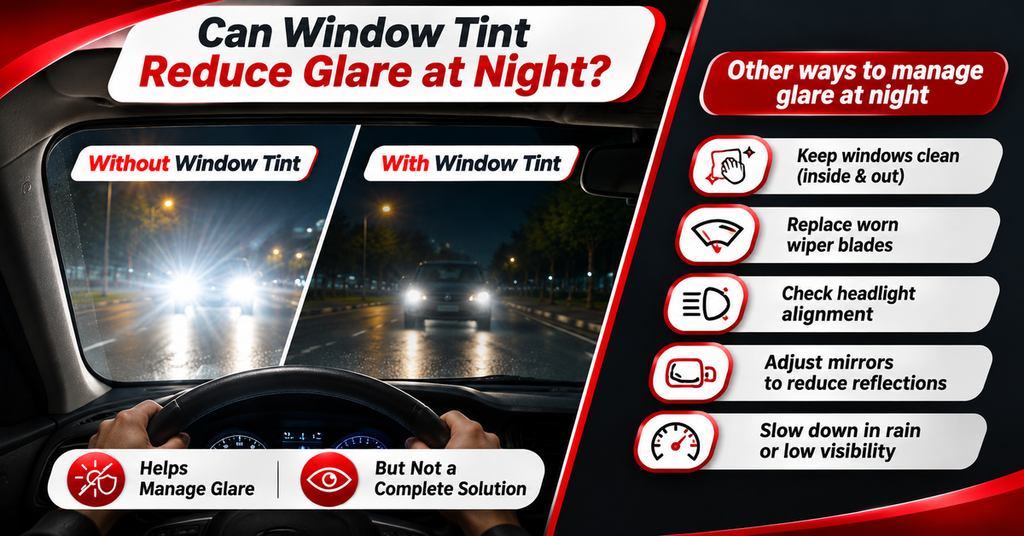
Window tint can influence how much light enters the cabin, but it should not be treated as a complete solution to headlight glare.
Glare may come from oncoming headlights, bright LED lights, reflections from wet roads or poorly adjusted mirrors.
A film’s ability to manage glare depends on its optical properties and how it interacts with incoming light. Darker film may reduce some bright light, but it also reduces the light available to see the road.
For this reason, drivers should not choose a dark tint solely to reduce headlight glare.
Other ways to manage night-time glare
- Keep the windscreen and windows clean inside and out.
- Replace worn windscreen wiper blades.
- Check that headlights are correctly aimed.
- Adjust mirrors to reduce reflections from vehicles behind you.
- Slow down when visibility is reduced by rain or poor lighting.
If glare remains a problem, consider having your eyesight and vehicle lighting checked.
Expert Tips for Choosing Night Driving Window Film
Before booking car window tinting in Sydney, use these practical tips to make an informed decision.
1. Choose visibility before appearance. Think about where and when you drive most often. A film that looks attractive in daylight may feel uncomfortable on a dark road.
2. Ask for the final VLT measurement. Make sure the installer considers your existing glass and confirms the finished light transmission.
3. Compare film specifications. Look at visible light transmission, heat rejection, UV protection, and reflectivity separately. One specification does not automatically indicate another.
4. Consider each window individually. Your front side windows have a different role from your rear windows. Discuss a suitable combination rather than selecting one darkness level for the entire vehicle.
5. Test your visibility after installation. Once the film has been fitted and cured according to the installer’s instructions, check your view through the side windows in different lighting conditions.
Common Mistakes to Avoid
Choosing the darkest legal tint
The legal limit is not necessarily the best choice for night driving. Drivers who regularly travel on unlit roads may prefer a lighter film.
Assuming all dark films provide better heat rejection
Film shade and heat rejection are not the same thing. Ask about the product’s actual solar performance rather than judging it by appearance.
Ignoring factory-tinted glass
Applying additional film to factory-tinted windows can reduce the finished VLT below the legal requirement.
Applying film to the wrong part of the windscreen
The main windscreen viewing area has specific restrictions. Do not assume a clear film or a dark strip can be applied anywhere on the glass.
Neglecting the condition of the glass
Scratches, haze, dirt and damaged wipers can make night driving more difficult, regardless of the tint you choose.
Conclusion
Choosing car window tinting for night driving is about finding the right balance between comfort, privacy and clear visibility. A darker film may provide a more private appearance, but it can also reduce the light available when driving after sunset.
For night commuters and drivers who regularly use poorly lit roads, a lighter film with higher VLT is often worth considering. It is also important to check the finished glass-and-film measurement, follow NSW tinting requirements, and choose a product based on its actual performance rather than its shade alone.
If you are considering window tinting in Sydney, Seven Star Window can help you compare suitable film options for your vehicle. Whether you drive around Rouse Hill, Blacktown or elsewhere in the region, choose a tint that supports comfortable daytime driving without compromising your visibility at night.
Frequently Asked Questions
A 35% VLT film allows less light through than a 50% or 70% film. Some drivers find it comfortable, while others may find it too dark on poorly lit roads. Your vehicle’s original glass and driving conditions should be considered.
A higher VLT allows more visible light through the glass, which is generally helpful in low-light conditions. The best choice depends on the vehicle, the existing glass and the driver’s needs.
The main viewing area of a windscreen generally cannot have aftermarket film applied in NSW. A permitted upper tint band is subject to specific requirements. Check the current Transport for NSW guidance before making changes.
Seven Star Window provides automotive window tinting services in Sydney, including Rouse Hill and surrounding areas. Contact the team to discuss film options, legal VLT requirements and a suitable tint for your driving conditions.