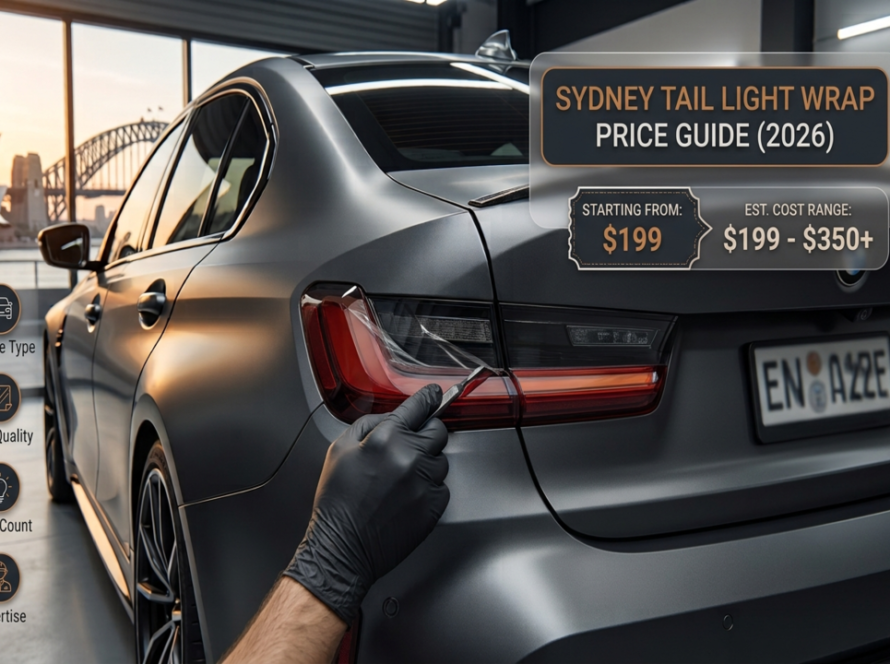
Changing the appearance of your car does not always require permanent modifications. Tail Light Wrapping and tail light tinting are two popular ways to give rear lights a darker, cleaner or more customized appearance while keeping the original light assembly in place.
Although the two options can look similar, they are not exactly the same. The film, application method, finish, maintenance requirements and removal process can vary. Your choice should also consider visibility and local vehicle regulations.
So, which option is better? The answer depends on whether your priority is styling, protection, removability or a particular finish.
What Is Tail Light Wrapping?
Tail light wrapping involves applying a flexible film directly over the exterior surface of a vehicle’s tail lights.
The film can be shaped around the contours of the light and trimmed carefully around its edges. Depending on the product selected, the finish can range from relatively subtle to noticeably darker.
Common reasons people choose a tail light wrap include:
- Creating a customised appearance
- Giving tail lights a smoked or darker look
- Protecting the surface from minor environmental exposure
- Changing the appearance without replacing the light assembly
- Making a reversible cosmetic change
If you want to learn more about the process, styles, pricing and installation involved, see our car tail light wrapping guide.
What Is Tail Light Tint?
Tail Light Tint generally refers to applying a tinted film over the tail light to change its appearance.
In everyday automotive terminology, the terms tail light tint and tail light wrap are sometimes used interchangeably. However, products and installation techniques can differ depending on the film manufacturer and installer.
Tint films are commonly selected when the main goal is to create a smoked or darker appearance.
The important point is that darkening a light should never take priority over safe and compliant lighting performance.
In NSW, for example, vehicle regulations require a tail light to show a red light visible from 200 metres when operating.
Tail Light Wrapping vs Tinting: What’s the Difference?
The biggest difference is not necessarily the appearance. Both can produce a similar smoked effect. The real difference often comes down to the specific film, finish, installation method and intended purpose.
| Feature | Tail Light Wrapping | Tail Light Tint |
| Main purpose | Styling and surface customisation | Darkened or smoked appearance |
| Appearance | Clear, smoked, coloured or customised | Usually smoked or tinted |
| Removability | Generally removable | Generally removable |
| Protection | Depends on the film | Depends on the film |
| Customisation | Can offer several finish options | Usually focused on tint levels |
| Installation | Requires careful shaping | Requires careful shaping |
| Best for | Owners wanting styling flexibility | Owners wanting a darker appearance |
There is no universal winner because the terminology can overlap. The actual film quality and installation technique can matter more than whether a service is marketed as wrapping or tinting.
Which Is Better for Your Car?
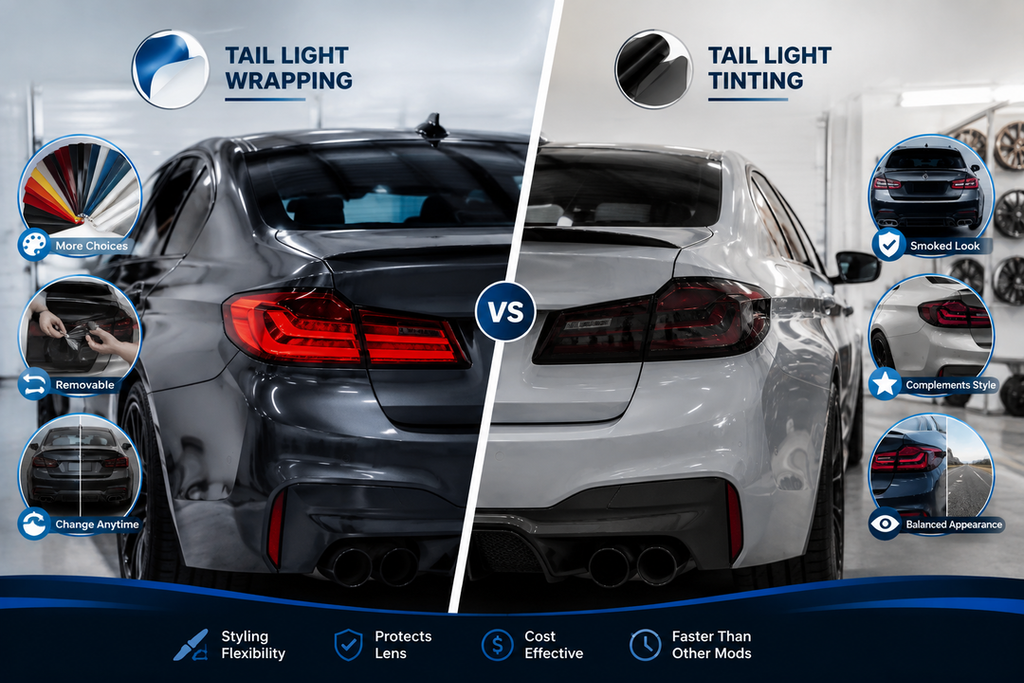
Choose Tail Light Wrapping If You Want More Flexibility
Tail Light Wrapping may be the better choice if you want to experiment with your vehicle’s appearance.
Depending on the available film, you may be able to choose from different shades, finishes or colours. A wrap can also be removed later if you decide to return the vehicle to its original appearance.
This makes wrapping appealing for enthusiasts who regularly change their vehicle’s styling.
Choose Tail Light Tinting If You Want a Smoked Appearance
Tail light tinting can make sense when your main goal is a darker, more understated rear-end appearance.
A professionally selected tint can complement black trim, dark wheels, a black roof or other exterior styling elements.
However, darker does not automatically mean better. The film should be selected and installed with visibility and applicable regulations in mind.
Tail Light Wrapping vs Tinting for Protection
Protection is another area where you need to look beyond the name of the service.
Some automotive films are designed primarily for appearance, while others may offer greater surface protection. Therefore, you should ask the installer what the particular film is designed to do rather than assuming every tail light film provides the same level of protection.
A suitable film may help protect the underlying surface from everyday environmental exposure, but it should not be treated as a substitute for proper care or a guarantee against damage.
Is Tail Light Tinting or Wrapping Legal in Australia?
This is an important consideration for Australian vehicle owners.
Rules can vary between states and territories, so it is important to understand Australian tail light wrapping laws before installing a dark film on your vehicle.
For NSW vehicles, tail lights must meet prescribed performance requirements, including displaying a red light visible from 200 metres. NSW guidance also states that vehicles must remain compliant with applicable vehicle standards after modifications.
NSW Government guidance also advises drivers to ensure vehicle lights are clearly visible and warns against vehicle lighting that may dazzle or distract other road users.
Practical tip: Don’t choose a film solely because it looks darker in photographs. Ask a professional installer whether the proposed film is appropriate for your vehicle and intended road use.
How Professional Tail Light Wrapping Works
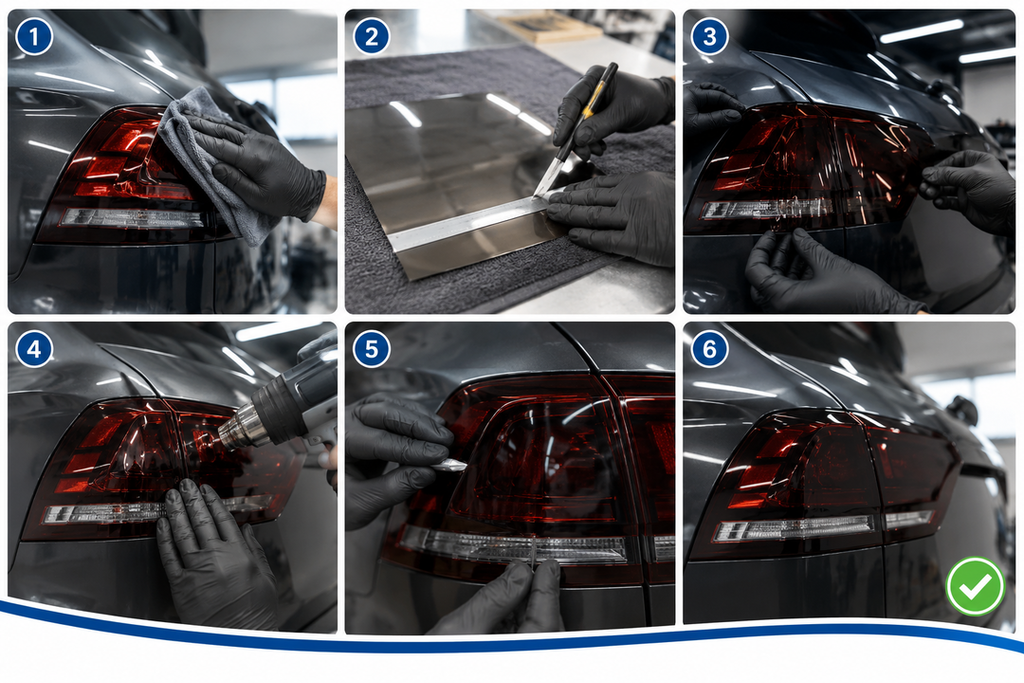
A quality installation usually starts with preparation rather than immediately applying the film.
1. Surface Cleaning
The tail light is thoroughly cleaned to remove dirt, dust, oils and other contaminants.
2. Film Preparation
The installer measures and prepares the appropriate film for the shape and size of the light.
3. Application
The film is positioned carefully over the tail light and worked around its contours.
4. Heat and Shaping
Where appropriate, controlled heat can help the film conform to curved surfaces.
5. Edge Finishing
The edges are trimmed and finished carefully to create a clean appearance.
6. Final Inspection
The installer checks for bubbles, wrinkles, lifting edges and other visible imperfections.
Professional preparation is particularly important because tail lights often have curved surfaces and detailed edges that can make DIY application difficult.. Choosing a professional tail light wrapping service can help achieve cleaner edges, smoother coverage and a more consistent finish.
Common Mistakes to Avoid
Choosing the Darkest Film
A very dark finish may look attractive in photos but may not be suitable for every vehicle or road environment.
Buying Film Based Only on Appearance
Two films can look similar but perform differently. Consider film quality, installation method and intended use.
Ignoring Local Requirements
Vehicle lighting requirements differ between jurisdictions. Check your applicable rules before modifying a safety-related light.
Attempting a Difficult Installation Without Experience
Tail lights have curves, corners and tight edges. Poor installation can result in bubbles, wrinkles or premature lifting.
Assuming Wrapping and Tinting Are Completely Different
The terminology can overlap. Always ask exactly what film and finish an installer is offering.
Expert Tips for Choosing the Right Option
Before booking a tail light wrapping or tinting service, consider these points:
- Start with your goal: Decide whether you want styling, protection or both.
- Look at the actual film: Ask about the product rather than relying only on the service name.
- Choose an appropriate shade: A subtle smoked finish can create a cleaner appearance without going excessively dark.
- Check road requirements: Make sure the modification does not compromise required lighting performance.
- Review previous work: Look for clean edges, consistent coverage and smooth finishes.
- Ask about removal: Find out whether the film can be removed without damaging the original light.
- Use professional installation: Particularly for complex or highly curved tail light designs.
When Should You Choose Tail Light Wrapping?
Tail Light Wrapping is a strong option when you want a flexible cosmetic upgrade without replacing the original tail lights.
It can suit:
- Daily drivers
- Modified cars
- Performance vehicles
- Show cars
- Car enthusiasts
- Owners planning other exterior styling changes
It is particularly useful when you want a reversible appearance change rather than a permanent replacement.
When Should You Choose Tail Light Tinting?
Tail light tinting may be suitable when your primary objective is a smoked or darker appearance.
It can work well with a vehicle that already has:
- Black exterior trim
- Dark wheels
- Smoked accessories
- A darker colour scheme
- A sporty styling theme
Again, the selected shade should not compromise required lighting performance or applicable road rules.
Conclusion
Choosing between Tail Light Wrapping and tinting comes down to what you want from the modification. Both can change the appearance of your vehicle without replacing the original tail light assembly, but the actual film and installation quality are more important than the label used for the service.
Wrapping can be attractive if you want greater styling flexibility and a removable cosmetic change. Tail light tinting may be preferable when your main goal is a darker, smoked appearance.
For Australian drivers, appearance should never be considered separately from lighting performance and local vehicle requirements. In NSW, for example, tail lights must meet specific visibility requirements, and modified vehicles must continue to comply with applicable standards.
If you’re unsure which option suits your car, discuss the desired finish, film type, removal process and compliance requirements with a professional installer before making a decision.
Frequently Asked Questions
Neither is automatically better. The best choice depends on the film, desired appearance, protection requirements, installation quality and applicable vehicle regulations.
A professionally selected and correctly installed removable film is designed to sit over the exterior surface. Ask your installer about compatibility and removal before application.
Many automotive tint films are removable, although the result can depend on the film, installation quality, vehicle age and how long it has been applied.
No. A darker appearance does not necessarily mean a better result. Required lighting performance and road compliance should remain important consiterations.