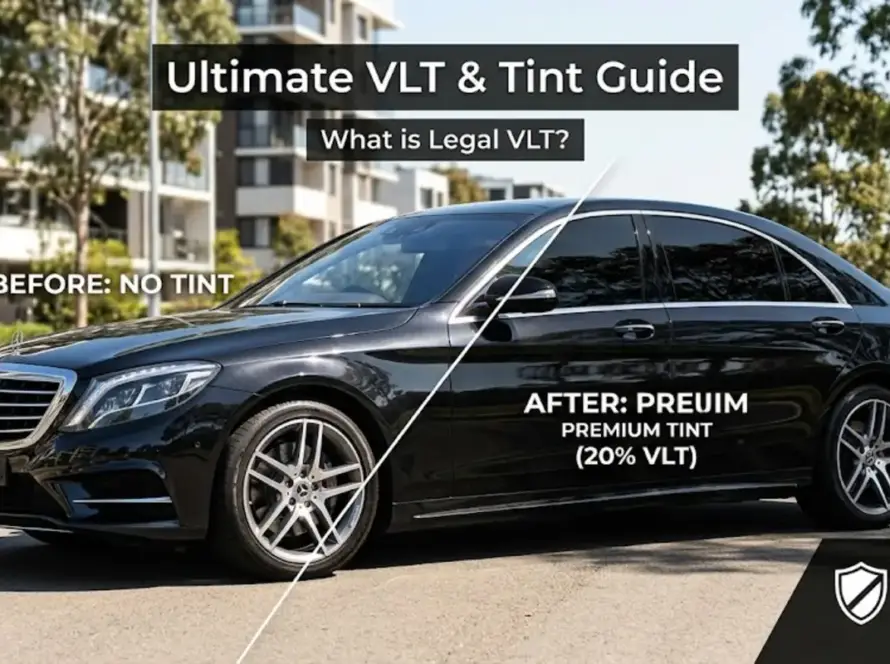
Choosing the right Hyundai Tucson window tint is about more than making your SUV look darker. In Sydney, the right film can improve cabin comfort, reduce glare, and add privacy while still keeping your vehicle compliant with NSW requirements. The key is choosing the right Visible Light Transmission (VLT) level for each window.
Whether you drive your Tucson around Sydney, commute through Rouse Hill, or are searching for a window tint near me, understanding VLT levels can help you make a better decision. This guide explains the practical differences between common tint shades, NSW legal requirements, and which options may suit your Hyundai Tucson.
What Does VLT Mean for Hyundai Tucson Window Tint?
VLT stands for Visible Light Transmission. It describes how much visible light passes through the glass after the tint is installed.
A higher VLT means more light passes through, so the window appears lighter. A lower VLT means less visible light passes through, making the glass look darker.
For example:
- 70% VLT: Very light appearance with high visibility.
- 50% VLT: Moderate shade with a relatively open appearance.
- 35% VLT: Darker appearance and the general minimum for relevant side windows in NSW.
- 20% VLT: Very dark appearance, commonly considered for rear glazing where NSW rules permit it.
One important point is that VLT applies to the finished glass, not simply the film’s advertised percentage. Your Tucson’s original factory glass can already have some tint, so the final VLT can be different from the film rating.
What VLT Is Legal for a Hyundai Tucson in NSW?
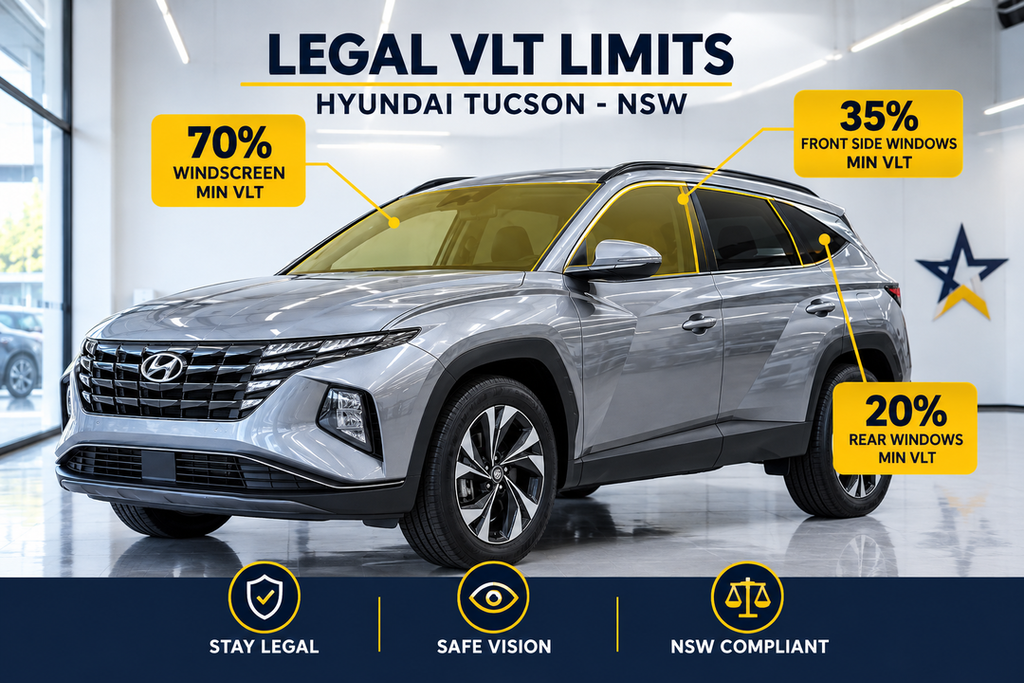
For passenger vehicles in NSW, the NSW window tint laws determine the minimum VLT requirements for different areas of the vehicle: the windscreen must have at least 70% VLT, while applicable side windows require at least 35% VLT. Rear windows can generally have at least 20% VLT where the vehicle has the required rear-vision mirrors.
This means you should not choose a film based only on how dark it looks in the showroom.
NSW VLT Requirements at a Glance
| Window area | NSW minimum VLT | Practical choice |
| Windscreen | 70% | Keep clear; no conventional tint film |
| Front side windows | 35% | 35% VLT is a common legal target |
| Rear side windows | 35% | 20–35% depending on preference |
| Rear window | 20% | 20–35% depending on preference |
The exact application should always be checked against the current NSW requirements and the vehicle’s existing glazing.
Transport for NSW also notes that a vehicle’s glazing and tint need to meet applicable vehicle standards.
Best VLT Options for a Hyundai Tucson in Sydney
There is no single VLT level that is perfect for every Tucson owner. Your choice depends on whether you prioritise visibility, privacy, appearance or a balanced combination.
35% VLT: Best All-Round Option
For many Tucson owners, 35% VLT is a sensible choice for the front side windows because it provides a darker appearance while aligning with the NSW minimum requirement for applicable side windows.
It can work particularly well if you want your Hyundai Tucson to look refined without making the front cabin excessively dark.
It is also a practical option for drivers who regularly travel through Sydney traffic and want to maintain good outward visibility.
20% VLT: Better Privacy for Rear Windows
A 20% VLT tint creates a noticeably darker appearance and can provide more privacy for passengers and belongings in the rear of the Tucson.
However, it should generally be reserved for glazing where the NSW rules allow that level. It is not the appropriate choice for front side windows simply because the film is available.
50% VLT: A Lighter Appearance
A lighter VLT can be useful if you prefer a subtle appearance or want to retain a brighter cabin.
It may also suit drivers who are particularly concerned about visibility in low-light conditions. However, the finished VLT still needs to comply with the applicable NSW requirements for the window position.
Comparing Popular VLT Choices
| VLT | Appearance | Privacy | Visibility | Best suited for |
| 50% | Light | Moderate | High | Subtle tint |
| 35% | Medium-dark | Good | Good | Front side windows |
| 20% | Dark | High | Lower | Rear glazing where permitted |
| 15% | Very dark | Very high | Lower | Generally not suitable for standard NSW |
The table is a practical comparison rather than a substitute for checking the legal VLT of the completed glass.
What Is the Best Tucson Tint Combination for Sydney?
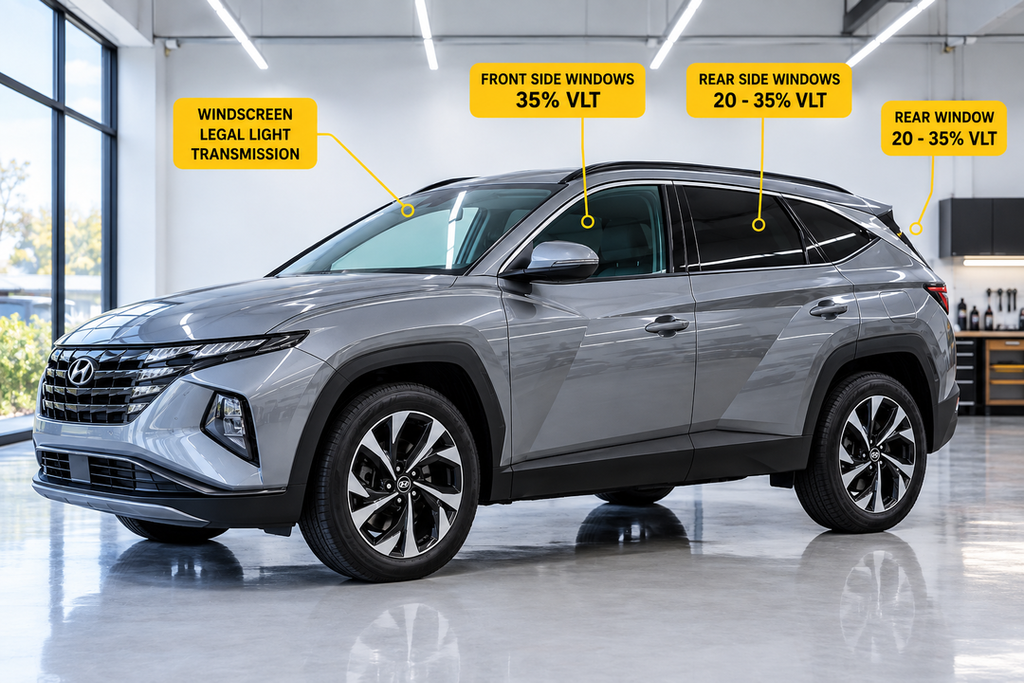
For a balanced setup, many Tucson owners may prefer a lighter, compliant front window shade combined with a darker rear treatment where permitted.
A typical approach could be:
Front side windows: 35% VLT
Rear side windows: 20–35% VLT
Rear window: 20–35% VLT
Windscreen: Maintain the required legal light transmission
This combination can give the Tucson a cohesive appearance without unnecessarily reducing visibility at the front.
However, the final selection should account for the Tucson’s existing factory glazing. A professional installer should measure the finished glass rather than assuming the film’s labelled VLT will equal the final result.
Hyundai Tucson Window Tint for Sydney’s Driving Conditions
Sydney driving can involve long periods in direct sunlight, heavy traffic and frequent exposure to glare.
A good window tinting service can make the cabin more comfortable by reducing the amount of solar energy and visible glare entering through the glass. The performance depends heavily on the film technology, not simply its darkness.
For that reason, choosing a high-quality film with suitable heat and UV-rejection characteristics can make more sense than simply choosing the darkest shade available.
This is especially relevant for Tucson owners who regularly drive longer distances around Sydney or commute between areas such as Rouse Hill and other parts of Greater Sydney.
Privacy vs Visibility
Darker tint generally gives you more visual privacy, but it can also reduce visibility, particularly at night.
If your Tucson is regularly driven after dark, consider whether you actually need the darkest possible rear shade. A slightly lighter rear VLT can provide a useful balance between privacy and practical visibility.
Does Factory Glass Affect Tucson Tint VLT?
Yes. This is an important consideration.
Some Hyundai Tucson models may have factory-tinted or privacy-style glazing, particularly toward the rear. When additional film is installed, the final VLT is determined by the combination of the original glass and the film.
For example, installing a film labelled 20% does not necessarily mean the finished window will measure 20% VLT.
This is why professional measurement matters.
A reputable window tint installer should consider the existing glass before recommending a film. If you are searching for a Hyundai Tucson window tint near me, ask whether the installer checks the finished VLT rather than relying solely on the film’s advertised percentage.
35% vs 20% VLT: Which Should You Choose?
| Factor | 35% VLT | 20% VLT |
| Overall appearance | Moderately dark | Dark |
| Privacy | Good | Higher |
| Night visibility | Better | Lower |
| Front side windows in NSW | Generally suitable minimum | Generally too dark |
| Rear glazing | Suitable where compliant | Suitable where permitted |
| Best for | Balanced driving | Greater rear privacy |
For most drivers, the decision becomes easier when you think about where the tint will be installed.
A 35% option can make sense for front side windows, while 20% can be considered for rear glazing where legally permitted.
Expert Tips for Choosing Tucson Window Tint
1. Check the finished VLT
Don’t assume the film’s advertised percentage is the final VLT. Existing vehicle glass can affect the result.
2. Consider night driving
A very dark rear tint may look excellent during the day but can make reversing and checking surrounding traffic more difficult at night.
3. Choose film performance, not just darkness
Two films with similar VLT can perform differently in terms of heat rejection, glare control, UV protection, and appearance.
4. Think about the whole vehicle
A mismatched tint shade between the front and rear windows can make the Tucson look uneven. A professional installer can recommend a combination that produces a consistent appearance.
5. Ask about NSW compliance
If you’re booking tinting in Sydney, Rouse Hill or nearby suburbs, ask the installer to confirm the finished glass complies with the relevant NSW requirements.
6. Use a professional installer
Clean preparation, accurate cutting, and careful edge finishing all contribute to the final appearance and durability of automotive window film.
Common Mistakes to Avoid
Choosing the Darkest Tint Available
Dark does not automatically mean better. Going too dark can compromise visibility and may create compliance problems.
Assuming 20% Is Legal Everywhere
NSW requirements differ according to the window position. A 20% VLT option that may be acceptable for rear glazing is not automatically appropriate for front side windows.
Ignoring Factory Privacy Glass
Factory glass can change the final VLT after film installation. Always consider the complete glass-and-film combination.
Choosing Based Only on Appearance
A tint may look impressive but still provide disappointing heat rejection or optical quality. Film construction and installation quality matter too.
Forgetting About Night-Time Visibility
Think about how you actually use your Tucson. If you frequently drive at night, a balanced VLT may be more practical than an extremely dark rear setup.
Where to Get Hyundai Tucson Window Tint Near Me in Sydney
If you’re looking for Hyundai Tucson window tint near me, choose an installer that understands both automotive film performance and NSW compliance.
For drivers in Sydney and Rouse Hill, it is worth asking a few practical questions before booking:
- What VLT will the finished glass measure?
- Does Tucson have existing privacy glass?
- Which film technology is being recommended?
- Is the film suitable for front and rear applications?
- Does the installer provide a workmanship warranty?
- Will the final installation have clean edges and a consistent appearance?
These questions can help you compare installers based on quality rather than simply choosing the darkest or cheapest option.
Conclusion
Choosing the right Hyundai Tucson window tint in Sydney comes down to finding the right balance between appearance, privacy, visibility and NSW compliance. For many Tucson owners, 35% VLT is a practical starting point for applicable front side windows, while 20% VLT can be considered for rear glazing where permitted.
The important detail is that the film’s advertised VLT is not necessarily the finished VLT. Existing factory glass can affect the final result, so professional assessment is worthwhile.
Whether you’re based in Sydney, Rouse Hill, or searching for a window tint near me, focus on the complete installation rather than simply choosing the darkest shade. A quality film, accurate VLT measurement, and professional installation can give your Tucson a cleaner appearance while making everyday driving more comfortable.
Frequently Asked Questions
For applicable front side windows, 35% VLT is generally the NSW minimum. Rear glazing can generally use 20% VLT where the required mirrors are fitted.
Generally, no. NSW passenger-vehicle side windows require at least 35% VLT, so a 20% finished VLT would normally be too dark for applicable front side windows.
35% VLT is a relatively balanced shade, but individual visibility depends on the glass, film, and lighting conditions. Consider your night-driving habits before choosing darker options.
Yes. Existing glazing can affect the final VLT after film is applied. A professional installer should assess the existing glass and select a compliant combination.