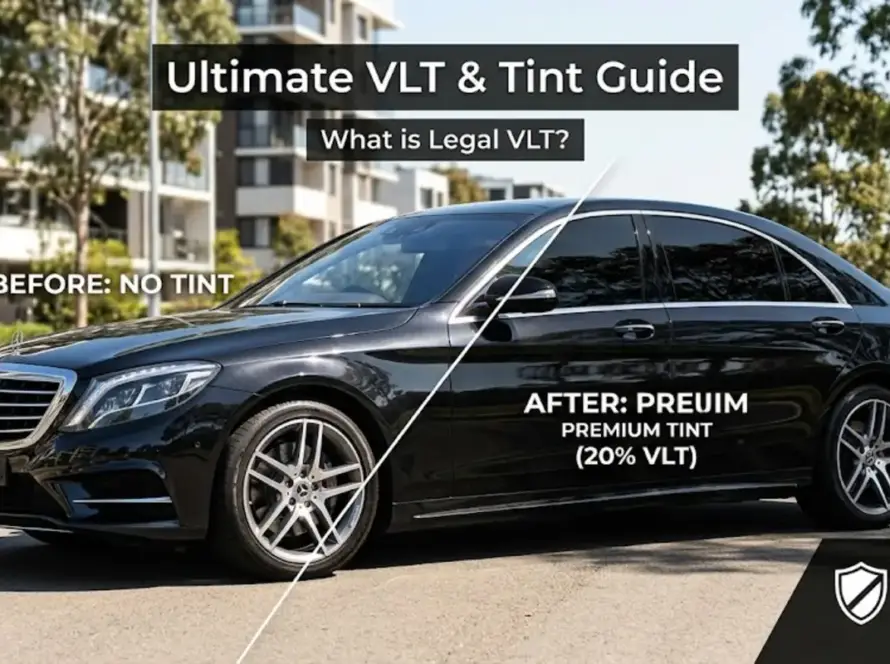
Car window tinting in Sydney typically costs between $250 and $500 for a standard sedan, and up to $700 for a large SUV, depending on the film type and how many windows you tint. “Affordable” doesn’t have to mean low quality — the real value comes from choosing a film that’s legal, durable, and installed correctly the first time, so you’re not paying to have it redone in two years.
This guide breaks down what drives the price of car tint in Sydney, which film types give you the best balance of cost and performance, what NSW law allows, and how to spot a cheap quote that will actually cost you more down the track.
What Does Car Window Tinting Cost in Sydney?
A full car window tint in Sydney generally costs $250–$500 for entry- to mid-range film on a standard passenger vehicle, rising to $400–$700 for premium ceramic film or larger vehicles like SUVs and vans. Tinting a single window typically costs around $60–$100 if you’re only doing part of the car.
Three factors drive most of that price range:
- Vehicle size and window count — a small hatchback needs less film and less labour than an SUV, wagon, or van with a third row of windows.
- Film type — dyed and carbon films sit at the lower end; ceramic film costs more because of its heat-rejection performance and manufacturing process.
- Number of windows tinted — a full package (front doors, rear doors, rear windscreen) costs more than tinting just the front two windows.
Labour is usually included in the quoted price, since tinting is a fitted service rather than a product you buy off the shelf. A job typically takes 1–3 hours for a sedan and up to 4 hours for larger vehicles, so pricing reflects both material and technician time rather than material cost alone.
If you want a full breakdown by vehicle type, the Seven Star Window car window tinting price list for Sydney covers pricing by make and model in more detail.
What Affects the Price of Car Tint?
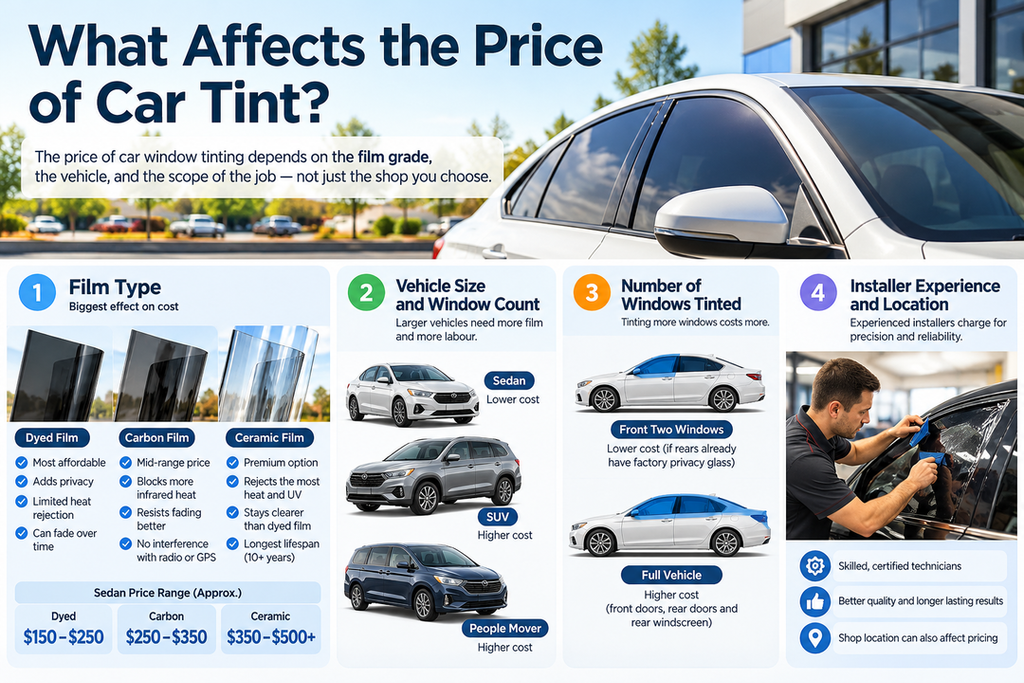
The price of car window tinting changes based on the film grade, the vehicle, and the scope of the job — not just the shop you choose. Understanding these factors helps you compare quotes properly instead of picking on price alone.
Film Type
Film type has the biggest effect on cost because it determines how much heat and UV the tint blocks, and how long it lasts.
- Dyed film is the most affordable option. It darkens the glass and adds privacy but offers limited heat rejection and can fade over several years.
- Carbon film sits in the mid-range. It blocks more infrared heat than dyed film, resists fading better, and doesn’t interfere with radio or GPS signals.
- Ceramic film is the premium option. It uses non-metallic ceramic particles to reject the most heat and UV while staying clearer than darker dyed films, and typically carries the longest lifespan — often a decade or more with proper care.
A basic dyed tint on a sedan might start around $150–$250, while the same vehicle in ceramic film can run $350–$500 or more. The gap reflects real performance differences, not just branding.
Vehicle Size and Window Count
Larger vehicles need more film and more labour, which increases cost. SUVs, wagons, and people movers have more glass surface area — and often curved or oddly shaped windows — than a small hatchback or sedan, so expect to pay toward the higher end of any quoted range for these vehicle types.
Number of Windows Tinted
Tinting the full vehicle (front doors, rear doors, and rear windscreen) costs more than a partial job. Some drivers only tint the front two windows because the rear windows already have factory privacy glass — a lightly tinted glass fitted from the factory that offers some visual privacy but far less UV protection than an actual film. If UV and heat protection matter to you, a genuine tint film on the rear windows still adds meaningful benefit over privacy glass alone.
Installer Experience and Location
Technician experience and shop location also factor into pricing. Experienced, certified installers price their work based on precision and reliability rather than being the cheapest quote in the area, since incorrect installation leads to bubbling, peeling, or a failed windscreen inspection later.
Is Car Window Tinting Legal in Sydney?
Yes, car window tinting is legal in NSW provided the film’s Visible Light Transmission (VLT) meets the state’s minimum requirements for each window. VLT measures the percentage of light that passes through the combined glass and film — the lower the percentage, the darker the tint.
Under NSW road rules:
| Window | Minimum VLT | Notes |
| Front windscreen | No tint on the main area | Only the top strip, up to 10% of the windscreen’s depth (or above the wiper-swept area), may be tinted |
| Front side windows | 35% VLT minimum | Applies to vehicles first registered after 1 August 1994 |
| Rear side windows | 20% VLT minimum | Can be darker than the front for privacy |
| Rear windscreen | 20% VLT minimum | Vehicle must have dual external mirrors if this window is tinted |
Reflective or mirror-like tint film is not permitted on any window. Tint that is bubbling, peeling, discoloured, or otherwise deteriorated is also non-compliant, since it can obstruct the driver’s view.
Installing tint darker than these limits can result in a defect notice and fines, and may affect an insurance claim if the vehicle is found to be non-compliant at the time of an incident. A reputable installer will confirm the VLT rating of the film before fitting it and won’t apply anything that breaches the NSW limit, even if a customer asks for it. For a deeper explanation of how VLT works and how it’s measured, see Seven Star Window guide on what VLT means in window tinting.
How to Get the Best Value on Car Tint (Without Cutting Corners)
The best value in car window tinting comes from paying for correct installation and a film that suits your climate and budget — not from choosing the absolute lowest quote. A cheap job that bubbles, purples, or peels within two years costs more overall than a mid-range job done properly once.
Practical ways to get good value:
- Compare quotes on film type, not just price. Ask what film brand and VLT percentage is included, so you’re comparing like for like rather than a dyed film quote against a ceramic film quote.
- Check what’s included. Confirm whether the quote covers all windows or only the front two, and whether it includes the rear windscreen.
- Ask about the warranty. Established installers typically back their work with a warranty against bubbling, peeling, or colour change — this protects your investment if the film fails prematurely.
- Choose carbon or ceramic film if you drive often in summer. Sydney’s summer heat means the extra upfront cost of better heat rejection often pays for itself in cabin comfort and reduced air-conditioning use.
- Confirm the film is NSW road-legal before it’s applied. A legitimate installer will tell you the VLT rating for each window and won’t apply tint that would fail a roadworthy check.
- Get it done in one visit rather than piecemeal. Tinting all windows in a single appointment is usually more cost-effective than paying a separate call-out fee to add windows later.
Common Mistakes That Make “Affordable” Tint Cost More
A few avoidable mistakes turn a budget-friendly tint job into an expensive one:
- Choosing tint that’s too dark for the front windows. Illegal front-window tint risks fines and can complicate insurance claims after an accident, since insurers may treat a non-compliant vehicle differently at claim time.
- Going with the cheapest dyed film on a vehicle that sits in full sun daily. Low-grade film can fade to a purple tinge within a few years, especially without garage parking — meaning you pay to have it stripped and redone.
- Skipping the warranty conversation. Without a warranty, any bubbling or peeling becomes an out-of-pocket repeat cost.
- DIY tint kits. Pre-cut DIY film is cheaper upfront but prone to bubbles, dust inclusion, and uneven edges, and doesn’t come with professional-grade UV or heat rejection — most of the long-term value of tinting comes from correct, bubble-free installation.
Choosing an Installer for Affordable Car Tint in Sydney
Look for an installer who is upfront about film type, VLT percentage, and warranty terms before you book — this is the clearest sign you’re getting real value rather than just a low number on a quote. Ask to see examples of completed work, confirm the estimated job time, and check that the quote specifies which windows are included.
Seven Star Window provides window tinting across Sydney using carbon and ceramic films suited to Australian conditions, with installation typically completed in 2–4 hours depending on vehicle size. View current window tinting options, check indicative costs on the pricing page, or request a free, no-obligation quote through the contact page.
Frequently Asked Questions
Most full-vehicle jobs on a sedan or small SUV in Sydney cost between $250 and $500 with carbon or mid-range film, and up to $700 for ceramic film on a larger vehicle.
Dyed film is generally the most affordable legal option, provided it meets the NSW VLT minimums (35% on front side windows, 20% on rear side windows and the rear windscreen). It offers less heat rejection than carbon or ceramic film but is still road-legal when applied correctly.
No, not across the main viewing area. NSW law only permits a tinted strip across the top of the windscreen, limited to 10% of its depth or the area above the wiper sweep, whichever leaves less exposed.
Not always — VLT percentage alone doesn’t drive price as much as film type does. A darker dyed film can cost less than a lighter-shade ceramic film, because ceramic film’s heat-rejection technology is the main cost driver, not darkness.